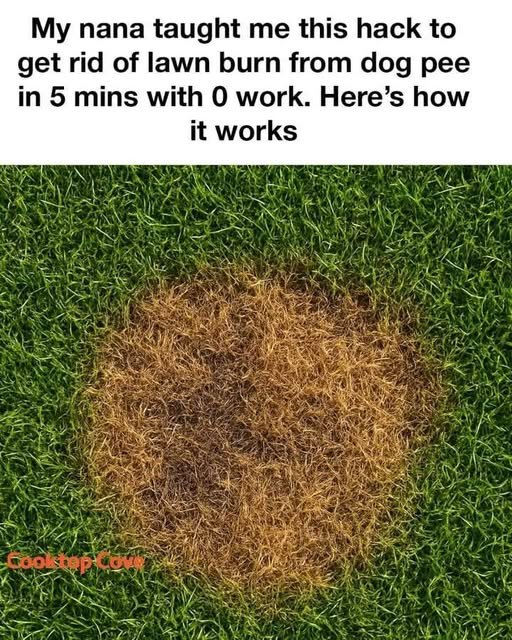
If you have a dog and a lawn, you have probably seen them: those frustrating yellow or brown circles where your grass looks burned after your pup’s bathroom breaks.
A popular old-fashioned tip claims there is a quick fix that takes only a few minutes and requires almost no effort. While some lawn tricks are exaggerated online, the idea behind this one comes from a real gardening problem: dog urine contains concentrated nitrogen and salts that can damage grass.
Here is what is actually happening — and what may help.
Why Dog Pee Creates Brown Spots
Dog urine is naturally rich in nitrogen. In small amounts, nitrogen can act like fertiliser and help grass grow greener.
But when a dog repeatedly urinates in the same spot, the concentration can become too strong.
This can cause:
- Grass blades to turn yellow or brown
- Burned-looking patches
- Dead areas surrounded by unusually green grass
Female dogs often create noticeable spots because they tend to urinate in one concentrated area rather than spreading it over a larger space.
The Simple “Dilution” Trick
The easiest solution is not a magic ingredient — it is water.
After your dog urinates on the lawn, soaking the area with water can help dilute the urine and move excess nitrogen deeper into the soil.
A simple method:
- Notice where your dog has gone.
- Pour a generous amount of water over the spot.
- Let the area drain naturally.
This works best when done soon after the urine hits the grass.
Why Water Helps
The problem is not that dog urine is “toxic.” The issue is concentration.
By adding water, you reduce the amount of nitrogen and salts sitting around the grass roots.
It is similar to the difference between adding a small amount of fertiliser and accidentally applying too much — the amount makes the difference.
Other Ways to Prevent Lawn Burn
1. Train a Bathroom Area
One of the most effective solutions is creating a designated toilet area for your dog.
You can use:
- Gravel
- Mulch
- A small patch of hardy grass
- Artificial turf
This protects the rest of your lawn.
2. Keep Your Grass Healthy
A strong lawn is better able to handle stress.
Helpful habits include:
- Watering deeply rather than frequently
- Mowing at the correct height
- Feeding your lawn appropriately
- Improving soil quality
Healthy roots make grass more resilient.
3. Consider Grass Type
Some grasses tolerate dog traffic and urine better than others.
Depending on your climate, varieties such as certain fescues or ryegrasses may recover more easily than delicate lawn types.
4. Ignore “Miracle Cure” Claims
You may see advice suggesting that adding random household products to the lawn will instantly erase dog spots.
Be careful with these methods. Some can:
- Change soil chemistry
- Harm beneficial organisms
- Damage plants
- Create new lawn problems
A gentle approach is usually safer.
The Real Secret Behind Nana’s Trick
The reason the old lawn trick seems to work is not because it transforms dead grass instantly — it is because it prevents the damage from becoming severe in the first place.
Watering after your dog’s bathroom break is a simple habit that can help keep your lawn healthier.
The best “5-minute fix” is often the one that stops the problem before it starts. 🌿🐾
(If a patch is already completely brown and the grass is dead, it may need reseeding or repair rather than just a quick treatment.)