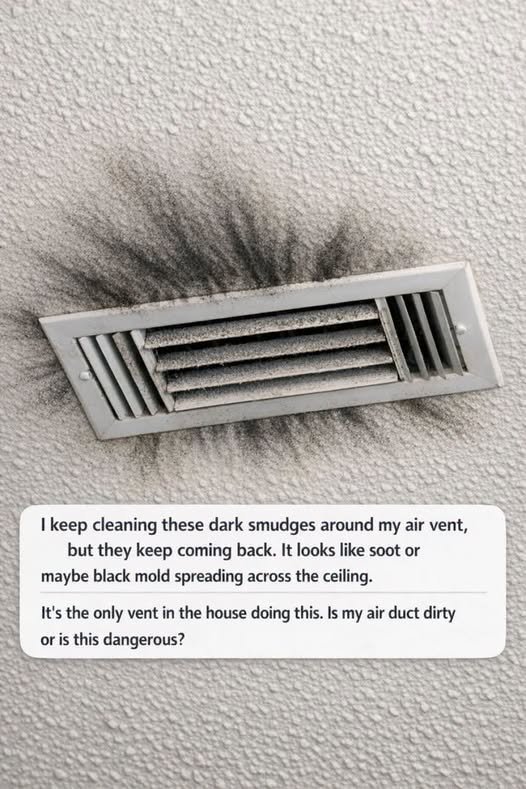
If you keep wiping away dark marks around an air vent and they return, that is a sign that the cause may be inside the ventilation system, around the vent, or related to airflow, rather than just surface dirt.
A black ring or shadow around a vent can look alarming, but it does not automatically mean black mold. Several different things can create similar-looking stains.
Here are the most common possibilities.
1. Dust and Airflow Staining (Often Called “Ghosting”)
One of the most common causes is something known as airflow staining or ghosting.
As air moves through the vent, tiny particles can collect around the edges where the airflow pattern changes. These particles may include:
- Dust
- Smoke residue
- Cooking particles
- Candle soot
- Pet dander
Over time, the area around the vent becomes darker, even though the rest of the ceiling looks clean.
A clue that this is happening:
✅ The mark follows the shape of the vent
✅ It comes back after cleaning
✅ It looks like a grey or black outline rather than fuzzy growth
2. Mold Growth From Moisture
Mold is also possible, especially if there is moisture involved.
A vent area can develop mold if:
- The duct is sweating from condensation
- Insulation around the duct is damaged
- There is a roof or plumbing leak nearby
- Humid air is entering a cold area
Signs that suggest possible mold include:
- A musty smell
- Fuzzy or textured growth
- Expanding patches
- Dampness around the vent
- Water stains
Simply wiping the surface may remove the visible marks but not the source.
3. A Dirty or Contaminated HVAC System
If the vent is blowing out dirty air, the staining may keep returning.
Possible causes include:
- A dusty air filter
- Dirty ductwork near that vent
- Debris inside the register
- Problems with the return-air system
Check whether the affected vent is:
- Blowing weaker than others
- Producing visible dust
- Making unusual noises
4. Candle, Fireplace, or Smoke Residue
Fine black particles from combustion can travel through a home and settle near airflow points.
Common sources include:
- Scented candles
- Wood-burning fireplaces
- Smoking indoors
- Gas appliances with poor combustion
- Oil lamps
Even if the source is not near the vent, air circulation can concentrate particles around certain spots.
What You Can Check Yourself
Before assuming the worst, try a few simple checks:
1. Remove the vent cover
Look behind it for:
- Dust buildup
- Moisture
- Discolouration
- Visible growth
2. Check your HVAC filter
A dirty filter can increase airborne particles and reduce air quality.
3. Feel around the vent
Ask:
- Is the ceiling damp?
- Is the vent unusually cold or wet?
- Is there condensation?
4. Compare other vents
Since you mentioned it is only one vent, that is an important clue. A local issue with that duct, insulation, or airflow is more likely than a whole-house problem.
When to Get It Checked
Consider professional inspection if:
- The stain keeps expanding
- There is a persistent musty smell
- You find moisture
- The ceiling feels soft or damaged
- Someone in the home has worsening allergy or respiratory symptoms
- The mark returns quickly after cleaning
The Important Question: What Does It Look Like?
A few details can help narrow it down:
- Is the mark a flat black/grey ring, or does it look fuzzy or raised?
- Is the vent blowing warm air, cool air, or does it seem inactive?
- Is the vent on the ceiling near a bathroom, kitchen, attic space, or exterior wall?
A photo of the vent and the surrounding ceiling would also make it much easier to identify what is happening.