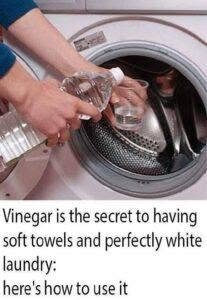
The image shows a common laundry tip: pouring vinegar into a washing machine while washing towels or clothes. This household trick has become popular because many people claim vinegar can make towels softer, remove odours, and help laundry look fresher.
But what does vinegar actually do — and what is the safest way to use it?
Why Vinegar Can Help Your Laundry
Plain white vinegar contains acetic acid, which gives it mild cleaning properties.
When used correctly in the washing machine, vinegar may help with:
1. Softer Towels Without Fabric Softener
Over time, towels can become stiff because detergent residue, fabric softener buildup, minerals from hard water, and body oils can collect on the fibres.
Vinegar can help loosen some of this buildup, allowing towel fibres to feel less coated and more absorbent.
This is why some people notice that older towels feel softer after switching from fabric softener to a vinegar rinse.
2. Reducing Musty Smells
Towels are especially prone to holding onto odours because they stay damp for long periods.
Vinegar may help remove some unpleasant smells caused by:
- Detergent residue
- Sweat
- Damp storage
- Bacteria buildup on fabric surfaces
For particularly stubborn smells, washing habits also matter:
- Do not overload the machine
- Allow towels to dry completely
- Wash them regularly
- Clean the washing machine itself
3. Helping Remove Detergent Residue
Using too much laundry detergent can leave behind a film that makes clothes feel stiff and look dull.
Vinegar can help break down some soap and mineral deposits, which may leave fabrics feeling cleaner.
How to Use Vinegar in the Washing Machine
For towels and regular laundry:
✅ Use plain white distilled vinegar
✅ Add about 120–250 ml (½–1 cup) to the fabric softener compartment or during the rinse cycle
✅ Wash as normal
Do not pour vinegar directly onto dry clothes if you are unsure how your machine distributes liquids.
Important: Vinegar Does Not Actually “Whiten” Like Bleach
The claim that vinegar makes laundry “perfectly white” is a little exaggerated.
Vinegar may help remove residue that makes fabrics look dull, but it is not a powerful whitening agent like oxygen bleach or chlorine bleach.
For bright whites, other methods may work better, depending on the fabric.
Mistakes to Avoid
❌ Do Not Mix Vinegar With Bleach
This is extremely important.
Mixing vinegar with chlorine bleach can create dangerous chlorine gas.
Never combine them in the washing machine or cleaning bucket.
❌ Avoid Using Vinegar With Certain Materials
Frequent vinegar use may not be ideal for some items, including:
- Some rubber seals and machine components over very long periods
- Certain delicate fabrics
- Natural stone surfaces (outside laundry use)
Occasional laundry use is different from repeatedly soaking materials in vinegar.
❌ Don’t Expect Vinegar to Replace Good Laundry Habits
Soft towels also depend on:
- Not using too much detergent
- Avoiding excessive fabric softener
- Using the correct wash temperature
- Drying towels thoroughly
- Cleaning your washing machine
A Simple Towel Refresh Routine
For towels that feel rough or smell stale:
- Wash towels with hot water if the care label allows.
- Add white vinegar instead of fabric softener.
- Run an extra rinse if needed.
- Dry completely.
Some people alternate between vinegar washes and normal detergent washes.
The Real Secret to Soft Towels
Vinegar can be a useful laundry helper, especially for reducing buildup and odours, but it is not a miracle solution.
The biggest secrets are actually simple:
🧺 Use the right amount of detergent
🧺 Avoid overloading the washer
🧺 Keep towels fully dry between uses
🧺 Wash and maintain your machine regularly
That bottle of vinegar in your kitchen cupboard may have a second job — but the best results come from using it as part of good laundry care, not as a magic replacement for everything else. ✨