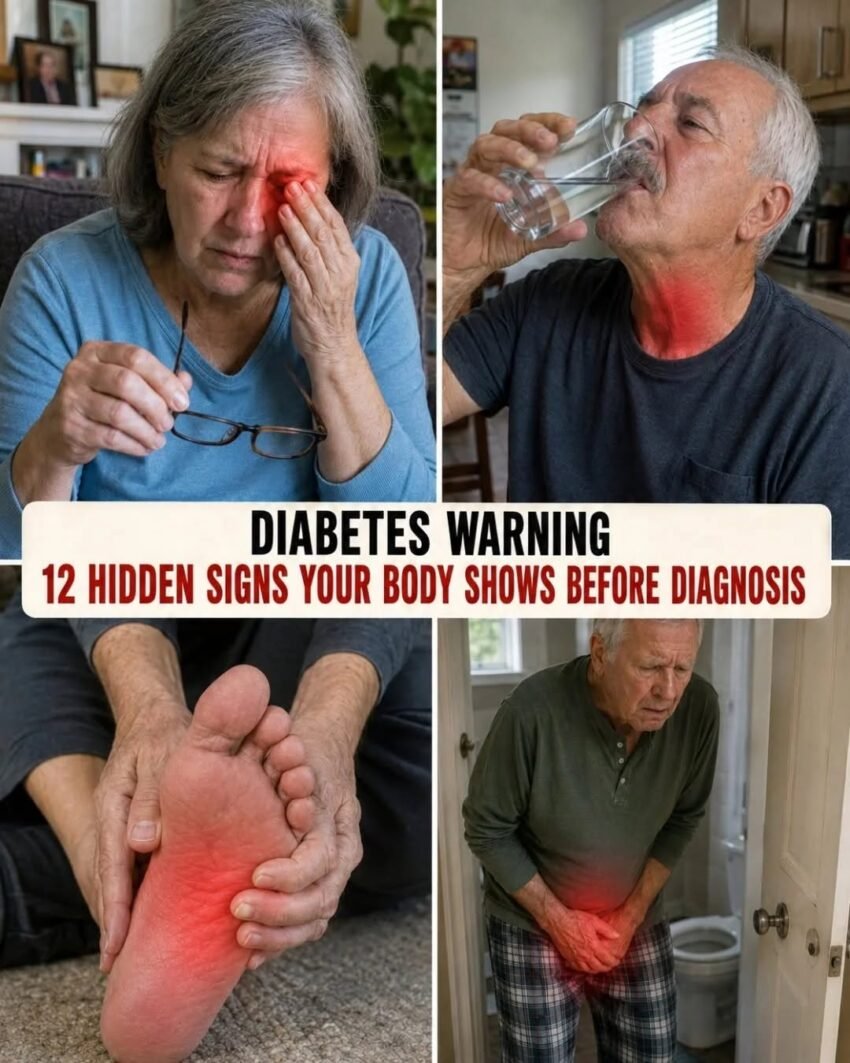
Diabetes often develops gradually, and many people don’t realise something is wrong until symptoms become difficult to ignore. In fact, millions of people live with prediabetes or undiagnosed diabetes because the early warning signs can be subtle and easy to mistake for normal ageing, stress, or a busy lifestyle.
Recognising these signs early doesn’t necessarily mean you have diabetes, but it does mean it’s worth discussing your symptoms with a healthcare professional. Early diagnosis and treatment can help prevent serious complications affecting the heart, kidneys, eyes, and nerves.
Here are 12 common signs your body may show before a diabetes diagnosis.
1. You’re Constantly Thirsty
Feeling thirsty after exercise or on a hot day is normal. However, if you find yourself drinking water constantly and still feeling thirsty, it could be a sign that your blood sugar is elevated.
When blood glucose levels become too high, the kidneys work harder to remove excess sugar through urine, leading to increased fluid loss.
2. Frequent Urination
One of the earliest signs of diabetes is needing to urinate more often than usual, particularly during the night.
This happens because excess glucose draws water into the urine, increasing urine production.
3. Unexplained Fatigue
If you feel tired even after getting enough sleep, diabetes may be one possible cause.
Without enough insulin—or when the body becomes resistant to insulin—cells cannot efficiently use glucose for energy, leaving you feeling drained.
4. Blurred Vision
High blood sugar can temporarily change the shape of the eye’s lens, making it difficult to focus.
Blurred vision that comes and goes should always be evaluated by a healthcare professional.
5. Slow-Healing Cuts and Bruises
Minor cuts, scrapes, or bruises that take longer than expected to heal may be another warning sign.
Persistently high blood sugar can affect circulation and the body’s ability to repair damaged tissue.
6. Tingling or Numbness in the Hands and Feet
High blood sugar can damage nerves over time, causing tingling, burning, numbness, or “pins and needles,” especially in the feet and hands.
7. Increased Hunger
Despite eating regular meals, you may still feel unusually hungry.
This can happen because glucose remains in the bloodstream instead of entering cells efficiently, leaving the body searching for more energy.
8. Unexplained Weight Loss
Losing weight without trying can sometimes occur, particularly in type 1 diabetes but also in some people with type 2 diabetes.
When the body can’t use glucose effectively, it begins breaking down fat and muscle for energy.
9. Frequent Infections
Repeated skin infections, urinary tract infections, or yeast infections may occur more often when blood sugar levels remain elevated.
High glucose levels can make it easier for certain microorganisms to grow and may impair the immune system’s response.
10. Darkened Skin Patches
Velvety, darker patches of skin—often found on the neck, under the arms, or in the groin—may be a sign of insulin resistance.
This condition, known as acanthosis nigricans, is associated with an increased risk of developing type 2 diabetes.
11. Persistent Itching or Dry Skin
High blood sugar can contribute to dry skin and itching, particularly if dehydration or reduced circulation is present.
Although many skin conditions can cause itching, persistent symptoms deserve medical attention.
12. Bad Breath with a Fruity Odour
A fruity or sweet-smelling breath can occur when the body produces high levels of ketones, particularly in people with type 1 diabetes. This may signal diabetic ketoacidosis (DKA), a medical emergency requiring immediate treatment.
If fruity breath occurs alongside nausea, vomiting, abdominal pain, rapid breathing, confusion, or extreme drowsiness, seek emergency medical care without delay.
Who Is at Higher Risk?
Your risk of developing type 2 diabetes may be higher if you:
- Are overweight or have obesity
- Are physically inactive
- Have a family history of diabetes
- Have high blood pressure or abnormal cholesterol levels
- Had gestational diabetes during pregnancy
- Are over age 45, although younger adults can also develop diabetes
When to See a Healthcare Professional
If you notice one or more of these symptoms—especially increased thirst, frequent urination, unexplained fatigue, or blurred vision—schedule an appointment with your healthcare professional. A simple blood test can determine whether your blood sugar is within a healthy range.
The Bottom Line
Many early diabetes symptoms are subtle and can easily be overlooked. Paying attention to changes in your body and seeking medical advice early can lead to earlier diagnosis, more effective treatment, and a lower risk of long-term complications.
Remember, these signs do not confirm that you have diabetes. They are potential warning signs that warrant medical evaluation rather than self-diagnosis.