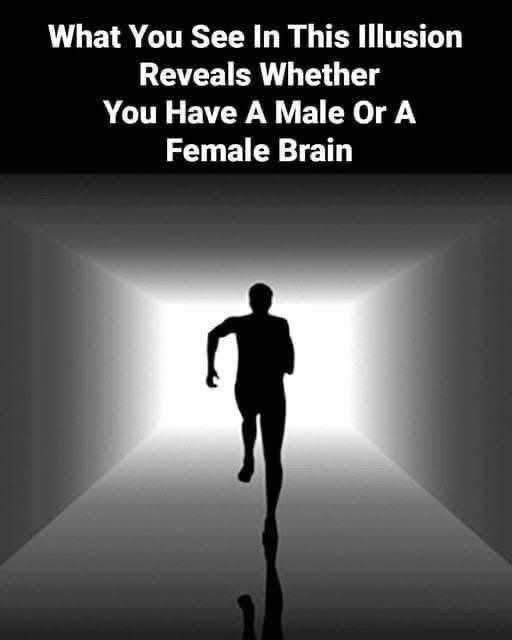
Have you ever looked at a picture and wondered why someone else saw something completely different? Optical illusions are far more than entertaining internet puzzles—they reveal how your brain interprets the world around you. Every second, your eyes send millions of pieces of visual information to your brain, which then fills in gaps, makes predictions, and creates the reality you experience.
Sometimes, however, the brain’s shortcuts lead to surprising results. That’s where optical illusions come in. They expose the fascinating ways perception, attention, emotions, and personality influence what we see. While these images aren’t scientific personality tests, they can encourage self-reflection and help you better understand your own thinking patterns.
Let’s explore eight fascinating optical illusions that may challenge your self-awareness and reveal how uniquely your mind works.
Why Optical Illusions Fascinate Us
Optical illusions demonstrate that seeing isn’t simply a matter of opening your eyes. Your brain constantly interprets colours, shapes, shadows, movement, and depth based on past experiences and expectations.
Researchers in psychology and neuroscience use visual illusions to better understand perception, attention, memory, and decision-making. For everyday people, they’re simply a fun reminder that our minds don’t always perceive reality in the same way.
1. The Young Woman or Old Lady Illusion
One of the world’s most famous optical illusions features an image that can appear as either:
- A young woman looking away
- An elderly woman facing sideways
What It Reveals
The first image you notice often depends on where your attention naturally focuses.
People who immediately notice the young woman may be drawn to overall shapes and larger visual patterns.
Those who first spot the older woman may naturally pay closer attention to smaller facial details.
The illusion reminds us that perspective matters—and different viewpoints can exist simultaneously.
Self-Awareness Lesson
Sometimes your first impression isn’t the only correct one. Learning to shift perspectives can improve empathy and problem-solving.
2. The Duck-Rabbit Illusion
At first glance, you may see:
- A duck facing left
- A rabbit facing right
Once you’ve seen both, your brain can switch back and forth.
Why It’s Interesting
Your brain quickly categorises unfamiliar images using previous experiences.
The ease with which you switch between the two animals highlights your mental flexibility.
Self-Awareness Lesson
Being able to see multiple interpretations reflects the importance of remaining open-minded instead of becoming fixed on a single viewpoint.
3. Rubin’s Vase
This elegant black-and-white illusion shows either:
- A white vase
- Two black faces looking at each other
What’s Happening?
Your brain must decide which area is the foreground and which becomes the background.
You cannot fully focus on both at the same time.
Self-Awareness Lesson
Life often requires choosing what deserves your attention. What you focus on becomes your reality.
4. The Spinning Dancer
A famous silhouette of a dancer appears to spin:
- Clockwise
- Counter-clockwise
Interestingly, the image itself is ambiguous.
Why People Disagree
Without clear depth cues, the brain creates its own interpretation of movement.
Many viewers can even train themselves to reverse the spinning direction.
Self-Awareness Lesson
Your mind actively constructs reality rather than simply recording it.
Sometimes changing your viewpoint changes the entire experience.
5. The Checker Shadow Illusion
In this illusion, two squares appear dramatically different in colour.
Surprisingly…
They are actually identical shades of grey.
Why?
The brain automatically compensates for shadows and lighting to maintain colour consistency.
Your eyes aren’t fooled—your brain is making educated guesses.
Self-Awareness Lesson
Context strongly influences judgement.
Just as colours appear different because of surrounding shadows, people and situations can also seem different depending on context.
6. The Hidden Animal Illusion
Some illustrations hide multiple animals inside a single drawing.
For example, you may first notice:
- A tiger
- An elephant
- A dolphin
- Birds
- Fish
Each observer often spots different animals first.
What It Suggests
The order depends largely on where your eyes naturally scan an image.
It demonstrates selective attention—our brains notice some details while overlooking others.
Self-Awareness Lesson
Important information may be hiding in plain sight if you only slow down and observe carefully.
7. Impossible Objects
Impossible figures such as the Penrose Triangle appear perfectly normal at first.
Look longer…
The geometry suddenly becomes impossible.
Why?
Your brain assumes every object follows the rules of three-dimensional space.
Impossible objects exploit those assumptions.
Self-Awareness Lesson
Our minds often accept familiar patterns without questioning them.
Critical thinking sometimes requires examining assumptions that initially seem obvious.
8. Motion Illusions
Some completely still images appear to ripple, rotate, or pulse.
The picture never actually moves.
Your brain creates the sensation.
What’s Happening?
Tiny involuntary eye movements interact with contrast, colour, and repeating patterns.
The result is an astonishing illusion of movement.
Self-Awareness Lesson
Perception is constantly changing—even when reality remains stable.
Our emotions, fatigue, stress levels, and attention can all influence how we experience the world.
What Optical Illusions Teach About Self-Awareness
Although optical illusions aren’t reliable tools for measuring personality or intelligence, they offer valuable reminders about human perception. They show that:
- Our brains fill in missing information automatically.
- First impressions can be misleading.
- Different people may honestly perceive the same image differently.
- Context shapes interpretation.
- Attention influences what we notice—and what we miss.
- Being open to alternative perspectives can improve understanding.
These lessons extend beyond puzzles and into everyday conversations, relationships, and decision-making.
Can Optical Illusions Reveal Your Personality?
Many viral social media posts claim that “the first thing you see reveals your personality.”
While these quizzes are entertaining, there is little scientific evidence that a single illusion can accurately describe someone’s character.
Instead, psychologists view optical illusions as demonstrations of visual perception rather than diagnostic tools.
That doesn’t make them any less enjoyable. They encourage curiosity, spark conversations, and remind us that every brain interprets information a little differently.
Final Thoughts
Optical illusions are fascinating because they expose the hidden processes behind everyday perception. They remind us that our brains are constantly interpreting, predicting, and simplifying the world around us. What seems obvious to one person may look entirely different to another—and that’s part of what makes human perception so remarkable.
The next time you encounter an optical illusion, resist the urge to find the “correct” answer immediately. Instead, take a moment to appreciate how your mind works. You may discover that the greatest illusion isn’t in the image itself, but in how confidently we believe we always see the world exactly as it is.
SEO Title: 8 Fascinating Optical Illusions That Challenge Your Self-Awareness
Meta Description: Discover 8 fascinating optical illusions that reveal how your brain interprets the world. Learn what these visual puzzles can teach about perception, attention, and self-awareness.