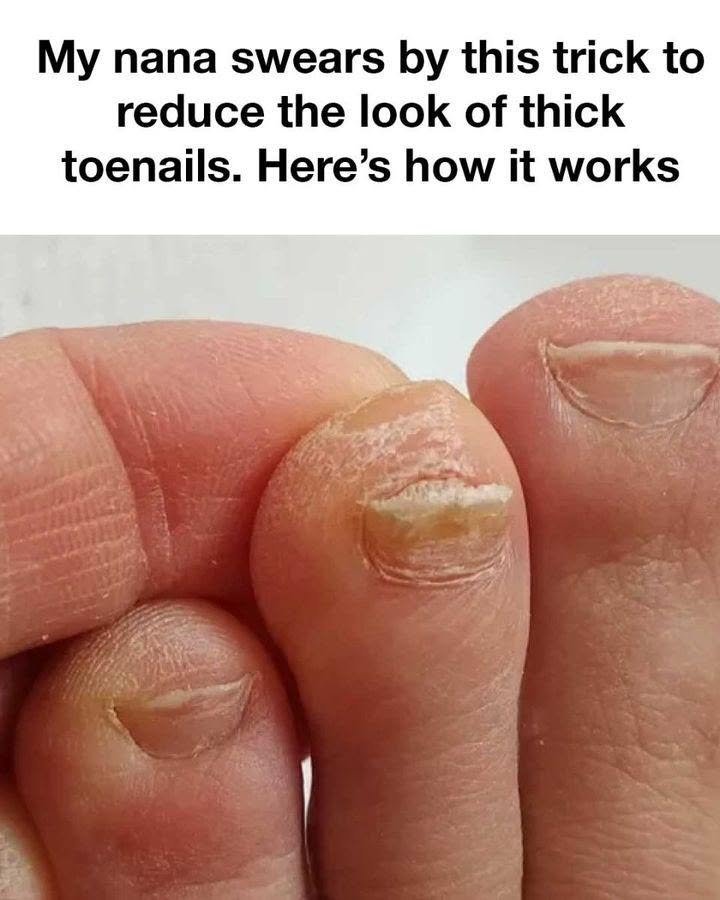
Thick toenails are a common problem, especially as we get older. They can be difficult to trim, uncomfortable in shoes, and may even make people feel self-conscious about wearing sandals or going barefoot. Over the years, countless home remedies have been passed down through families, and many grandparents have their own trusted tricks for keeping toenails looking healthier.
One popular saying is, “Soak your feet, gently file the nail, and keep it moisturised.” While this simple routine won’t cure every cause of thick toenails, it can help improve their appearance and make them easier to manage when used consistently.
But what actually causes thick toenails, and which remedies are backed by evidence? Let’s separate fact from fiction.
Why Do Toenails Become Thick?
Healthy toenails are usually smooth, slightly curved, and easy to trim. When a nail becomes unusually thick, it’s often a sign that something has changed in the nail or the surrounding tissue.
Common causes include:
- Age-related nail changes
- Repeated pressure from tight shoes
- Previous nail injuries
- Fungal nail infections
- Psoriasis or eczema affecting the nails
- Reduced circulation
- Certain medical conditions, including diabetes
Because the treatment depends on the cause, persistent thick nails should be assessed by a healthcare professional or podiatrist.
Nana’s Simple Foot Soak Trick
Many families recommend soaking thick toenails before trimming them.
A warm water soak helps soften the nail, making it easier to cut without cracking or splitting.
For a simple foot soak:
- Fill a basin with comfortably warm (not hot) water.
- Soak your feet for 10 to 15 minutes.
- Dry your feet thoroughly, especially between the toes.
- Trim the nails straight across using clean nail clippers.
Some people add Epsom salts to the water for comfort, although there is limited scientific evidence that they reduce nail thickness.
Gently File the Surface
After soaking, lightly filing the surface of a thick nail can reduce its bulky appearance.
Use a clean nail file or emery board and work slowly. Avoid filing too aggressively, as this may weaken or damage the nail.
This technique doesn’t treat the underlying cause but may make the nail look smoother and help topical treatments penetrate more effectively if prescribed.
Moisturise the Nails and Surrounding Skin
Dry nails can become brittle and more likely to crack.
Applying a moisturiser containing ingredients such as urea, glycerine, or lanolin can help improve the condition of the surrounding skin and, in some cases, soften the nail over time.
Moisturising is particularly helpful after bathing or before bed.
Keep Your Feet Dry
Although moisturising the skin is beneficial, constantly damp feet create an environment where fungi thrive.
To reduce the risk of fungal infections:
- Change socks daily.
- Wear breathable footwear.
- Dry feet carefully after washing.
- Alternate shoes to allow them to dry completely between uses.
Good foot hygiene supports healthier nails.
Could It Be a Fungal Nail Infection?
One of the most common causes of thick toenails is a fungal nail infection.
Signs may include:
- Yellow, white, or brown discolouration
- Thickened nails
- Crumbly or brittle edges
- Nails lifting away from the nail bed
- Distorted nail shape
Fungal infections often require treatment with antifungal medication. Mild cases may respond to topical treatments, while more severe infections sometimes need prescription oral medication.
A healthcare professional can confirm the diagnosis before treatment begins.
Don’t Ignore Nail Injuries
Dropping something heavy on your toe or years of repeated pressure from running or tight shoes can permanently change the nail.
Trauma may lead to:
- Thickened nails
- Discolouration
- Slow nail growth
- Irregular nail shape
Wearing properly fitting shoes can help prevent further damage.
When Thick Toenails Need Medical Attention
You should consult a healthcare professional if:
- The nail becomes painful.
- Redness or swelling develops around the nail.
- You notice pus or signs of infection.
- The nail changes colour suddenly.
- The thickening continues to worsen.
- You have diabetes, poor circulation, or a weakened immune system and notice changes in your feet.
Prompt assessment is especially important for people with diabetes because even minor foot problems can become serious if left untreated.
Healthy Habits That Support Better Nails
Simple daily habits can make a difference over time.
These include:
- Keeping toenails trimmed straight across
- Wearing shoes with adequate toe room
- Choosing moisture-wicking socks
- Avoiding walking barefoot in public changing rooms and swimming pools
- Cleaning nail tools after each use
- Replacing old shoes if they remain damp or worn
Consistency is more important than quick fixes.
Home Remedies: What Works and What Doesn’t?
Many internet remedies claim to “cure” thick toenails, but evidence varies.
Warm Water Soaks
Helpful for softening nails before trimming but do not treat the underlying cause.
Vinegar Soaks
Some people use diluted vinegar because it may slow the growth of certain fungi in laboratory settings. However, there is limited clinical evidence that vinegar alone can cure fungal nail infections.
Tea Tree Oil
Tea tree oil has natural antifungal properties, but research suggests it is generally less effective than prescription antifungal treatments for established nail infections.
Baking Soda
Baking soda may help absorb moisture inside shoes, but there is no strong evidence that it reduces nail thickness or cures fungal infections.
Common Myths About Thick Toenails
Myth: Thick toenails are simply a normal part of ageing.
Fact: Nails often change with age, but thickening can also result from fungal infections, injury, or medical conditions that may need treatment.
Myth: Cutting the nail shorter fixes the problem.
Fact: Trimming makes thick nails easier to manage but doesn’t address the underlying cause.
Myth: Every thick nail is caused by fungus.
Fact: Trauma, skin conditions, ageing, and circulation problems can also lead to thickened nails.
Myth: Home remedies always cure thick toenails.
Fact: While some home care measures improve comfort and appearance, persistent thick nails often require professional evaluation and, in some cases, medical treatment.
Frequently Asked Questions
Can thick toenails become normal again?
It depends on the cause. If the underlying problem is treated and a healthy new nail grows, the appearance may improve. Because toenails grow slowly, noticeable improvement often takes several months.
Is it safe to file thick toenails?
Yes, gentle filing can help reduce bulk and smooth rough edges. Avoid excessive filing, especially if you have diabetes or reduced sensation in your feet unless advised by a healthcare professional.
Should I remove a thick toenail myself?
No. Attempting to remove a toenail at home can lead to pain, bleeding, or infection. Seek professional care if the nail is causing significant problems.
How often should I trim thick toenails?
Trim them as needed, usually every few weeks, after soaking them to soften the nail. Cut straight across to help reduce the risk of ingrown toenails.
Final Thoughts
Your nana’s advice to soak, gently file, and care for thick toenails has some practical value. Softening the nail before trimming, keeping the feet clean and dry, and moisturising the surrounding skin can improve comfort and make thick nails easier to manage.
However, these steps are best viewed as supportive care rather than a cure. Persistent thickened toenails may be caused by fungal infections, repeated trauma, or underlying medical conditions that require professional diagnosis and treatment.
If your toenails continue to thicken, become painful, change colour, or show signs of infection, don’t rely solely on home remedies. A healthcare professional or podiatrist can identify the cause and recommend the most appropriate treatment, helping you maintain healthy feet for years to come.