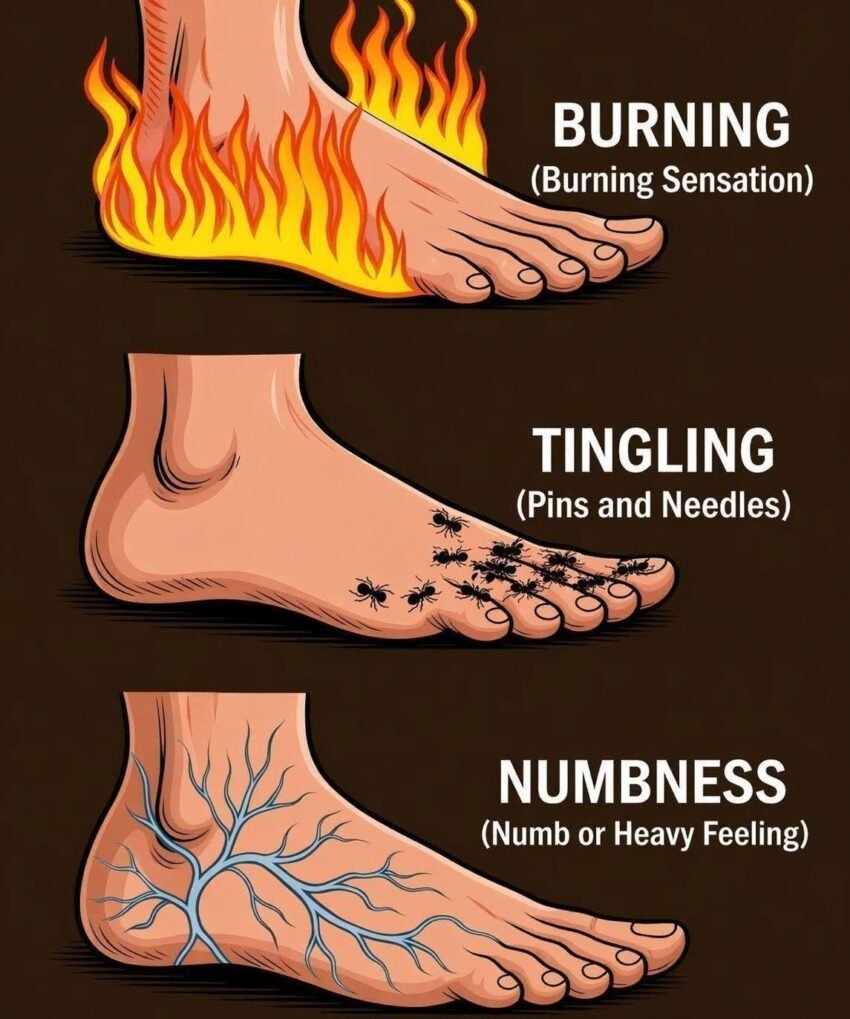
Have you ever experienced a burning sensation, pins and needles, or numbness in your feet? These uncomfortable symptoms can range from mildly annoying to severely painful, making it difficult to walk, sleep, or carry out everyday activities.
Occasional tingling after sitting in one position for too long is usually harmless. However, persistent or recurring burning, numbness, or tingling may indicate an underlying health condition that deserves medical attention.
The good news is that identifying the cause early and making healthy lifestyle changes can often help relieve symptoms and prevent further nerve damage. In this guide, we’ll explore the most common causes, warning signs, treatment options, and natural ways to support healthy feet.
What Causes Burning, Numbness, and Tingling in the Feet?
These sensations often occur when the nerves that carry signals between your feet and brain become irritated, compressed, or damaged. Problems with blood circulation can also contribute.
Below are some of the most common causes.
1. Peripheral Neuropathy
Peripheral neuropathy is one of the leading causes of burning and tingling feet. It occurs when the peripheral nerves become damaged.
Symptoms may include:
- Burning pain
- Tingling or “pins and needles”
- Numbness
- Sharp or stabbing pain
- Muscle weakness
- Increased sensitivity to touch
There are many possible causes of peripheral neuropathy, including diabetes, vitamin deficiencies, certain medications, alcohol misuse, infections, and autoimmune conditions.
2. Diabetes
High blood sugar levels can gradually damage the nerves, leading to diabetic neuropathy.
Early symptoms often begin in the toes and gradually spread upward.
People with diabetes should never ignore numbness or foot injuries, as reduced sensation increases the risk of unnoticed cuts, infections, and foot ulcers.
3. Vitamin Deficiencies
Healthy nerves depend on several vitamins to function properly.
Deficiencies in:
- Vitamin B12
- Vitamin B6
- Vitamin B1 (thiamine)
- Vitamin E
can contribute to numbness, tingling, and weakness.
Eating a balanced diet and correcting confirmed deficiencies may improve symptoms.
4. Poor Blood Circulation
Reduced blood flow limits the oxygen and nutrients reaching the nerves and tissues.
Poor circulation may be linked to:
- Peripheral artery disease (PAD)
- Smoking
- High cholesterol
- Heart disease
- Long periods of inactivity
Symptoms often include cold feet, cramping while walking, slow-healing wounds, and changes in skin colour.
5. Nerve Compression
Compressed nerves in the feet, ankles, or lower back can produce burning or tingling sensations.
Examples include:
- Tarsal tunnel syndrome
- Sciatica
- Herniated discs
- Spinal stenosis
Symptoms may worsen with standing, walking, or certain movements.
6. Alcohol Misuse
Long-term excessive alcohol consumption can damage peripheral nerves and interfere with the absorption of essential nutrients, particularly B vitamins.
Reducing alcohol intake and addressing nutritional deficiencies may help slow progression.
7. Autoimmune Disorders
Certain autoimmune diseases can affect the nerves, including:
- Rheumatoid arthritis
- Lupus
- Sjögren’s syndrome
- Hashimoto’s disease
Treating the underlying condition often helps improve symptoms.
8. Certain Medications
Some medications, including certain chemotherapy drugs and a few other medicines, can cause peripheral neuropathy as a side effect.
Never stop taking prescribed medication without discussing it with your healthcare provider.
Common Symptoms
Symptoms vary depending on the underlying cause and the nerves involved.
Common signs include:
- Burning sensation
- Tingling or pins and needles
- Numbness
- Sharp or shooting pain
- Electric shock-like sensations
- Increased sensitivity to touch
- Reduced ability to feel heat or cold
- Muscle weakness
- Difficulty maintaining balance
- Pain that worsens at night
Symptoms may affect one foot or both.
When Should You See a Doctor?
Arrange a medical evaluation if you experience:
- Symptoms lasting more than a few days without improvement
- Increasing numbness or weakness
- Difficulty walking
- Frequent falls
- Foot wounds that don’t heal
- New symptoms if you have diabetes
- Severe or worsening pain
Seek emergency medical care immediately if numbness develops suddenly, especially if accompanied by weakness, facial drooping, difficulty speaking, severe headache, or loss of bladder or bowel control, as these may indicate a medical emergency.
How Are These Symptoms Diagnosed?
Your healthcare provider may recommend:
Medical History
Questions about:
- Existing medical conditions
- Medications
- Alcohol use
- Family history
- Recent injuries
- Dietary habits
Physical Examination
Your doctor may check:
- Reflexes
- Muscle strength
- Sensation
- Balance
- Blood circulation
- Foot health
Blood Tests
These may look for:
- Diabetes
- Vitamin deficiencies
- Thyroid disorders
- Kidney disease
- Inflammatory conditions
Imaging or Nerve Tests
Depending on your symptoms, your doctor may recommend:
- Nerve conduction studies
- Electromyography (EMG)
- MRI or CT scans
- Ultrasound in selected cases
Medical Treatment
Treatment depends on the underlying cause.
It may include:
- Better blood sugar management for diabetes
- Vitamin replacement for confirmed deficiencies
- Medications for nerve pain
- Physical therapy
- Treatment for circulation problems
- Surgery in selected cases of nerve compression
The goal is to manage the underlying condition while relieving symptoms.
Natural Ways to Support Healthy Feet
While natural approaches cannot cure every cause of burning or numb feet, they may complement medical treatment.
1. Eat a Nutrient-Rich Diet
Choose foods rich in:
- Whole grains
- Fruits
- Vegetables
- Lean proteins
- Healthy fats
- Nuts and seeds
A balanced diet helps support nerve health.
2. Stay Physically Active
Regular exercise improves circulation, helps control blood sugar, and supports nerve function.
Walking, cycling, swimming, and gentle stretching are excellent options for many people.
3. Keep Blood Sugar Well Controlled
For people with diabetes, managing blood glucose levels is one of the most effective ways to reduce the risk of further nerve damage.
Follow your healthcare provider’s treatment plan carefully.
4. Wear Comfortable Footwear
Choose shoes that:
- Fit properly
- Provide cushioning
- Offer good arch support
- Allow enough room for your toes
Avoid shoes that squeeze or rub the feet.
5. Inspect Your Feet Daily
This is especially important if you have diabetes.
Check for:
- Cuts
- Blisters
- Redness
- Swelling
- Cracks
- Nail problems
Early detection helps prevent complications.
6. Stay Hydrated
Adequate hydration supports overall health and healthy circulation.
Aim to drink enough fluids throughout the day unless you’ve been advised to restrict fluid intake for a medical reason.
7. Avoid Smoking
Smoking damages blood vessels and reduces circulation, increasing the risk of nerve damage and delayed wound healing.
Stopping smoking benefits both nerve health and cardiovascular health.
8. Limit Alcohol
Reducing excessive alcohol intake may help prevent further nerve damage and improve nutritional status.
Common Myths
Myth: Tingling feet are always caused by poor circulation.
Fact: Although circulation problems can contribute, nerve disorders, diabetes, vitamin deficiencies, and spinal conditions are often responsible.
Myth: Numb feet are a normal part of ageing.
Fact: While some age-related changes occur, persistent numbness should always be evaluated to identify potentially treatable causes.
Myth: Home remedies alone can cure nerve damage.
Fact: Natural measures may help relieve symptoms, but treating the underlying cause is essential.
Myth: If the pain goes away, the problem is gone.
Fact: Some nerve disorders can progress even if symptoms temporarily improve. Ongoing medical follow-up may still be necessary.
Frequently Asked Questions
Can burning feet be caused by stress?
Stress itself doesn’t usually damage nerves, but it may increase awareness of symptoms or worsen existing nerve pain in some people.
Will vitamin supplements cure tingling feet?
Only if the symptoms are caused by a vitamin deficiency. Taking supplements without a confirmed deficiency is unlikely to help and, in some cases, excessive intake of certain vitamins (such as vitamin B6) can actually worsen nerve problems.
Are burning feet always related to diabetes?
No. Diabetes is a common cause, but many other conditions—including nerve compression, vitamin deficiencies, autoimmune diseases, medication side effects, and circulation problems—can also produce similar symptoms.
Can exercise help?
For many people, regular physical activity improves circulation, supports blood sugar control, strengthens muscles, and promotes overall nerve health. However, if you have severe pain, ulcers, or significant loss of sensation, consult your healthcare provider before starting a new exercise programme.
Final Thoughts
Burning, numbness, and tingling in the feet are symptoms—not diagnoses. While occasional pins and needles are usually harmless, persistent or worsening symptoms may indicate nerve damage, circulation problems, diabetes, vitamin deficiencies, or other medical conditions that require evaluation.
The key to protecting your foot health is early diagnosis and appropriate treatment. A healthy lifestyle, balanced nutrition, regular exercise, proper footwear, and careful foot care can all support healthy nerves and circulation, but they should complement—not replace—professional medical care.
If your symptoms are ongoing, severe, or accompanied by weakness, balance problems, or non-healing foot wounds, don’t delay seeking medical advice. Early intervention can improve quality of life and help prevent long-term complications.