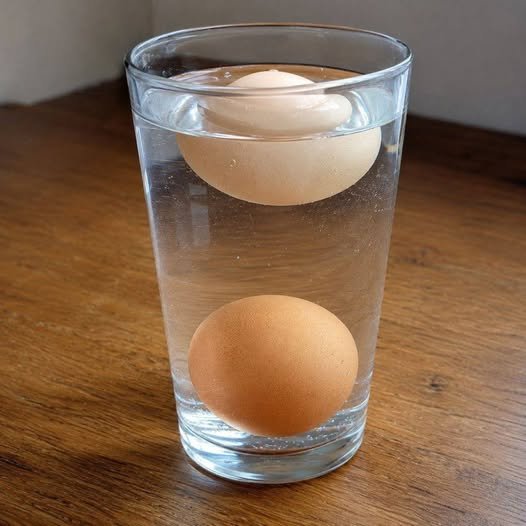
Have you ever opened your refrigerator, noticed that your eggs are past the date printed on the carton, and wondered whether they’re still safe to eat? Before you toss them in the bin, there’s a simple kitchen trick that many people use: the egg float test.
But how reliable is it? And if an egg floats to the top of a glass of water, does that automatically mean it’s dangerous? Here’s what you need to know.
Understanding the Date on the Carton
First, it’s important to know that the date on an egg carton is often a “best before” date rather than a strict expiration date.
A “best before” date indicates when the eggs are expected to be at their best quality. Eggs may still be safe to eat for a short time after this date if they have been stored properly in the refrigerator and show no signs of spoilage.
Always follow your local food safety guidance regarding storage and use-by dates.
The Simple Water Test
The float test works because eggs naturally lose moisture and carbon dioxide through their shells as they age. As this happens, the air cell inside the egg grows larger, making the egg more buoyant.
To perform the test:
- Fill a bowl or glass with cold water.
- Gently place the egg into the water.
- Observe how it behaves.
If the Egg Sinks and Lies Flat
This is the best result.
A fresh egg will sink to the bottom and lie flat on its side because it contains very little air.
Verdict: Fresh and generally suitable for cooking.
If the Egg Sinks but Stands Upright
An older egg may still sink but stand upright on one end.
This means the air pocket has grown, but the egg may still be safe to eat if it has been refrigerated properly and passes other checks.
Verdict: Use soon, preferably in thoroughly cooked dishes.
If the Egg Floats to the Top
A floating egg has developed a much larger air cell due to age.
Important: A floating egg is not automatically dangerous, but it should not be considered safe based on the float test alone. Floating simply indicates that the egg is older. Before deciding whether to use it, crack it into a separate bowl and check for signs of spoilage.
Discard the egg if you notice:
- A strong sulphur or rotten smell.
- An unusual or discoloured egg white or yolk.
- Visible mould or an abnormal appearance.
When in doubt, it’s safest to throw it away.
Why Eggs Float
Eggshells are porous, allowing tiny amounts of air to enter over time.
As the egg ages:
- Moisture evaporates.
- The air pocket enlarges.
- The egg becomes more buoyant.
That’s why older eggs tend to stand upright or float.
Other Ways to Check Freshness
The float test is only one indicator. You should also:
Smell the Egg
A rotten egg has a very noticeable, unpleasant odour once cracked.
Look at the Shell
Avoid eggs with:
- Cracks
- Sticky residue
- Powdery mould
- Leaking contents
Examine the Contents
A fresh egg usually has:
- A firm, rounded yolk.
- A thick egg white that doesn’t spread excessively.
Older eggs often have thinner whites, but that alone doesn’t necessarily mean they are unsafe.
Store Eggs Properly
To keep eggs fresh for as long as possible:
- Store them in the refrigerator.
- Keep them in their original carton to reduce moisture loss and protect them from absorbing odours.
- Avoid leaving eggs at room temperature for extended periods.
- Handle eggs carefully to prevent cracks.
When to Throw Eggs Away
Discard eggs if they:
- Smell rotten after cracking.
- Have cracked shells with signs of contamination.
- Show mould or unusual discolouration.
- Have been stored improperly or left unrefrigerated longer than recommended by local food safety guidelines.
The Bottom Line
The float test is a useful way to estimate an egg’s age—but it cannot determine whether an egg is safe to eat on its own. A floating egg simply means it has aged and contains more air. Always combine the float test with proper storage, a visual inspection, and the smell test before deciding whether to use an egg.
When you’re unsure about an egg’s safety, it’s always better to err on the side of caution and discard it. A single egg isn’t worth the risk of foodborne illness.