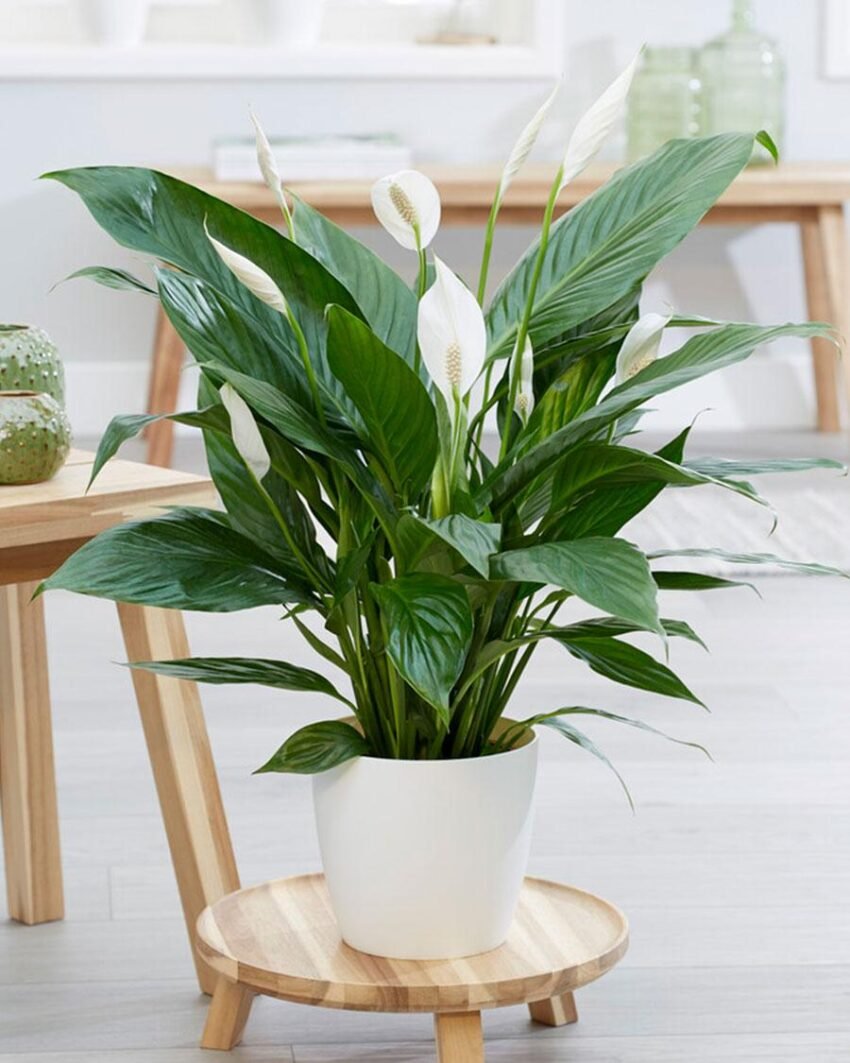
1. Give It the Right Amount of Light
One of the biggest reasons peace lilies fail to bloom is insufficient light.
Although peace lilies tolerate low light, they usually need bright, indirect sunlight to produce flowers.
✅ Best location:
- Near an east- or north-facing window.
- A spot with filtered sunlight.
- Away from harsh direct afternoon sun.
Too much direct sunlight can burn leaves, while too little light often results in beautiful foliage but few or no flowers.
2. Water Correctly (Avoid Overwatering)
Peace lilies like consistently moist soil, but they do not like sitting in water.
Signs of watering problems:
Too little water:
- Drooping leaves.
- Dry, crispy leaf edges.
- Soil pulling away from the pot.
Too much water:
- Yellow leaves.
- Soft stems.
- Root problems.
- No flowers.
A good rule:
- Water when the top 2–3 cm of soil feels dry.
- Always use a pot with drainage holes.
3. Increase Humidity
Peace lilies are tropical plants and naturally enjoy humid conditions.
To increase humidity:
- Place a humidifier nearby.
- Group plants together.
- Put the pot on a tray filled with pebbles and water (without letting the pot sit directly in water).
- Mist occasionally if your home air is very dry.
Higher humidity helps maintain healthy leaves and encourages better growth.
4. Use the Right Fertilizer
A peace lily that never blooms may need extra nutrients.
During the growing season:
- Feed with a balanced indoor plant fertilizer every 4–6 weeks.
- Avoid over-fertilizing, as this can damage roots and cause leaf problems.
For more flowers, a fertilizer slightly higher in phosphorus may support blooming, but too much fertilizer can do the opposite and reduce flowering.
5. Keep It Slightly Root-Bound
Peace lilies often flower better when their roots slightly fill the pot.
If you repot too frequently into a much larger container, the plant may focus on growing roots instead of producing flowers.
Repot when:
- Roots are growing out of drainage holes.
- Water runs straight through the pot.
- Growth has slowed significantly.
Choose a pot only slightly larger than the current one.
6. Remove Old Flowers
Once a flower turns green or begins to fade, cut it off near the base.
Removing old blooms allows the plant to direct energy toward producing new growth and future flowers.
7. Maintain the Right Temperature
Peace lilies prefer comfortable indoor temperatures.
Ideal range:
- Around 18–29°C.
Avoid placing them near:
- Cold drafts.
- Air conditioners.
- Heating vents.
- Sudden temperature changes.
Stress can reduce flowering.
8. Clean the Leaves Regularly
Dust-covered leaves cannot absorb light efficiently.
Every few weeks:
- Wipe leaves gently with a damp cloth.
- Remove dust from both sides.
Clean leaves help the plant photosynthesize better and stay healthier.
9. Give It Time to Adjust
A newly purchased peace lily may stop flowering after coming home because of environmental changes.
It may need several weeks to adjust to:
- Different lighting.
- New humidity levels.
- New watering routine.
Patience is often part of successful plant care.
Common Mistakes That Stop Peace Lilies From Flowering
❌ Keeping it in a dark corner
❌ Overwatering
❌ Using too much fertilizer
❌ Ignoring humidity needs
❌ Repotting too often
❌ Allowing dust to build on leaves
❌ Expecting flowers all year without a rest period
A Simple Peace Lily Bloom Routine
Weekly:
- Check soil moisture.
- Rotate the pot for even growth.
- Remove damaged leaves.
Monthly:
- Clean leaves.
- Feed lightly during active growth.
Seasonally:
- Adjust watering based on temperature and sunlight.
Final Thoughts
A peace lily that refuses to flower usually isn’t unhealthy—it is often missing one key condition. The most important factors are bright indirect light, proper watering, humidity, and balanced feeding.
With the right care, your peace lily can reward you with lush green leaves and beautiful white blooms throughout the year. 🌿