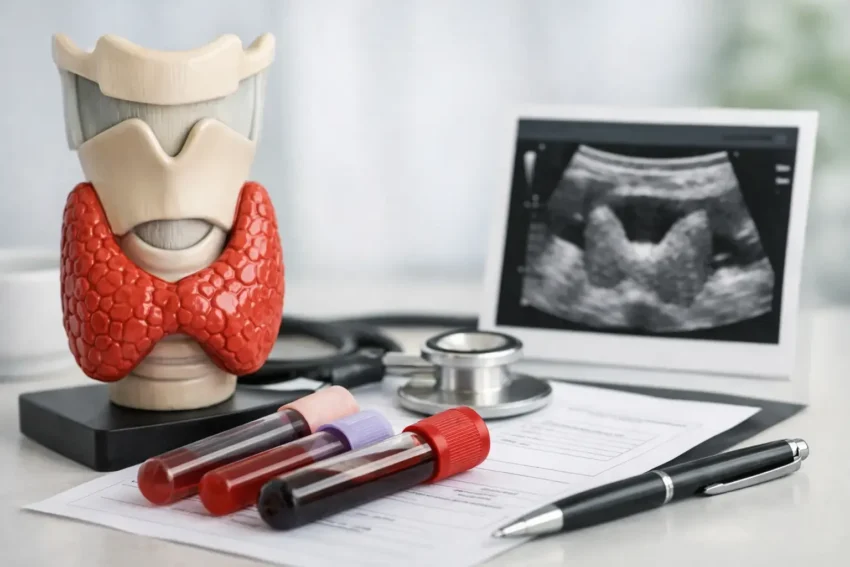
The thyroid is a small, butterfly-shaped gland located at the front of your neck. Despite its size, it plays a vital role in regulating your metabolism, energy levels, body temperature, heart rate, growth, and many other bodily functions. When the thyroid produces too much or too little hormone, it can affect nearly every organ in the body.
Thyroid blood tests help doctors determine whether your thyroid is functioning normally or if you have conditions such as hypothyroidism (underactive thyroid) or hyperthyroidism (overactive thyroid).
Why You Might Need a Thyroid Test
Your healthcare provider may recommend thyroid testing if you experience symptoms such as:
- Persistent fatigue
- Unexplained weight gain or weight loss
- Hair thinning or hair loss
- Dry skin
- Constipation
- Feeling unusually cold or hot
- Depression or anxiety
- Irregular menstrual cycles
- Difficulty becoming pregnant
- Rapid or irregular heartbeat
- Neck swelling (goiter)
- Tremors
- High cholesterol without another clear cause
Routine screening may also be recommended if you:
- Have a family history of thyroid disease
- Have autoimmune disorders
- Are pregnant or planning pregnancy
- Are over age 60
- Take medications that can affect thyroid function
Common Thyroid Tests
1. TSH (Thyroid-Stimulating Hormone)
This is usually the first and most important thyroid test.
TSH is produced by the pituitary gland in the brain and tells the thyroid how much hormone to make.
Typical Reference Range
Approximately:
0.4–4.0 mIU/L
(The exact range varies between laboratories.)
High TSH Usually Means
Your thyroid isn’t producing enough hormones.
Possible causes include:
- Hypothyroidism
- Hashimoto’s thyroiditis
- Iodine deficiency
- Recovery from thyroid inflammation
Common symptoms:
- Fatigue
- Weight gain
- Cold intolerance
- Dry skin
- Constipation
- Slow heart rate
Low TSH Usually Means
Your thyroid is making too much hormone.
Possible causes:
- Hyperthyroidism
- Graves’ disease
- Toxic thyroid nodules
- Excess thyroid medication
Symptoms may include:
- Weight loss
- Rapid heartbeat
- Sweating
- Anxiety
- Tremors
- Difficulty sleeping
2. Free T4 (Free Thyroxine)
T4 is the main hormone produced by the thyroid gland.
Only the “free” (unbound) hormone is active.
Typical Range
Approximately:
0.8–1.8 ng/dL
High Free T4
Often indicates:
- Hyperthyroidism
- Graves’ disease
- Excess thyroid medication
Symptoms:
- Weight loss
- Increased appetite
- Fast heartbeat
- Nervousness
- Heat intolerance
Low Free T4
Usually suggests:
- Hypothyroidism
- Hashimoto’s disease
- Pituitary disorders
Symptoms:
- Fatigue
- Cold intolerance
- Weight gain
- Puffy face
- Depression
3. Free T3 (Free Triiodothyronine)
T3 is the active thyroid hormone responsible for many of the body’s metabolic effects.
Doctors often measure Free T3 if hyperthyroidism is suspected.
Typical Range
Approximately:
2.3–4.2 pg/mL
High Free T3
May indicate:
- Hyperthyroidism
- Graves’ disease
- Toxic thyroid nodules
Low Free T3
Can occur with:
- Severe illness
- Advanced hypothyroidism
- Starvation
- Chronic disease
4. Thyroid Antibody Tests
These tests help identify autoimmune thyroid diseases.
Anti-TPO (Thyroid Peroxidase Antibodies)
High levels commonly suggest:
- Hashimoto’s thyroiditis
- Graves’ disease
Thyroglobulin Antibodies (TgAb)
Often elevated in:
- Hashimoto’s disease
- Autoimmune thyroid disorders
TSH Receptor Antibodies (TRAb)
Usually associated with:
- Graves’ disease
5. Thyroglobulin (Tg)
Thyroglobulin is a protein made by thyroid cells.
It is not typically used to diagnose common thyroid problems.
Instead, doctors mainly use it to monitor people after treatment for thyroid cancer.
Understanding Common Test Combinations
High TSH + Low Free T4
This pattern strongly suggests:
Primary hypothyroidism
The thyroid is not producing enough hormone.
Low TSH + High Free T4
This pattern usually indicates:
Hyperthyroidism
The thyroid is producing too much hormone.
High TSH + Normal Free T4
This may indicate:
Subclinical hypothyroidism
Hormone levels remain normal, but the thyroid is beginning to struggle.
Some people have no symptoms.
Low TSH + Normal Free T4
This may indicate:
Subclinical hyperthyroidism
Often found before symptoms develop.
What Can Affect Thyroid Test Results?
Several factors can temporarily alter thyroid blood tests, including:
- Pregnancy
- Severe illness
- Certain medications (such as steroids, lithium, amiodarone, or high-dose biotin supplements)
- Recent thyroid surgery
- Radioactive iodine treatment
- Pituitary gland disorders
Tip: High-dose biotin (vitamin B7) supplements can interfere with some thyroid lab tests. If you take biotin, tell your healthcare provider before testing.
Thyroid Imaging Tests
Sometimes blood tests are combined with imaging.
Thyroid Ultrasound
Used to evaluate:
- Thyroid nodules
- Goiter
- Cysts
- Thyroid enlargement
Radioactive Iodine Uptake Scan
Used mainly for:
- Hyperthyroidism
- Graves’ disease
- Toxic thyroid nodules
Preparing for a Thyroid Blood Test
Generally:
- Fasting is usually not required.
- Drink plenty of water unless instructed otherwise.
- Tell your healthcare provider about all medications and supplements.
- If you take thyroid hormone replacement (such as levothyroxine), follow your healthcare provider’s instructions about whether to take it before the blood draw.
When Should You See a Doctor?
Seek medical evaluation if you experience:
- Ongoing fatigue
- Significant unexplained weight changes
- Persistent rapid or irregular heartbeat
- Neck swelling
- Difficulty swallowing
- Hair loss with other thyroid symptoms
- Severe anxiety or depression without another explanation
- Menstrual irregularities
- Fertility problems
Early diagnosis and treatment can often prevent complications.
Frequently Asked Questions
Can thyroid problems be cured?
Many thyroid conditions cannot be permanently cured but can usually be managed effectively with medication, lifestyle adjustments, or, in some cases, surgery or radioactive iodine treatment.
Can thyroid disease cause weight gain?
Yes. An underactive thyroid slows metabolism, which can contribute to modest weight gain, often along with fluid retention.
Can thyroid disease cause hair loss?
Yes. Both hypothyroidism and hyperthyroidism can lead to diffuse hair thinning. Hair often improves once thyroid hormone levels are well controlled.
How often should thyroid tests be repeated?
It depends on your situation. People taking thyroid medication may need testing every 6–12 months (or more often when starting or adjusting treatment), while healthy individuals generally do not need routine testing unless they have symptoms or risk factors.
Key Takeaway
Thyroid blood tests provide valuable information about how well your thyroid gland is functioning. The TSH test is usually the starting point, while Free T4, Free T3, and thyroid antibody tests help pinpoint the cause of abnormal thyroid function. Test results should always be interpreted alongside your symptoms, medical history, medications, and physical examination by a qualified healthcare professional. Never adjust or stop thyroid medication based solely on lab numbers without medical guidance.