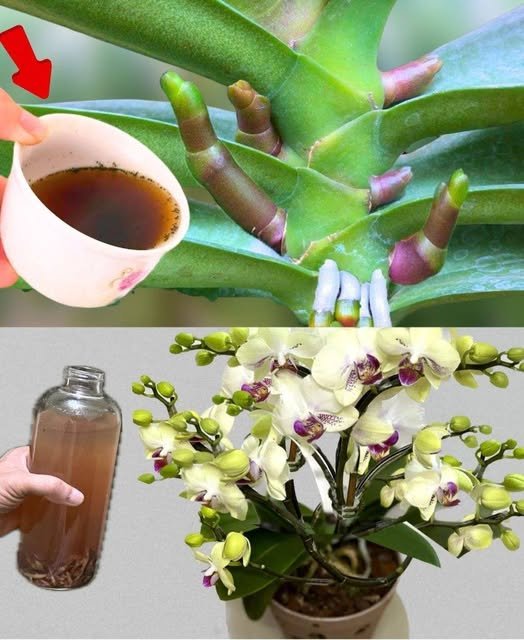
Why Orchid Leaves Matter
The leaves are the plant’s energy factories. Healthy leaves should be:
- Firm and upright
- Bright or medium green
- Smooth and free of wrinkles
- Free from yellowing, black spots, or mushy areas
Wrinkled leaves often indicate watering issues or damaged roots rather than a lack of fertilizer.
The Best Thing to Water Orchids With
The safest and most effective choice is plain water, ideally:
- Rainwater
- Distilled water
- Filtered water
- Tap water that has been left out overnight if it is heavily chlorinated
Most orchids dislike water with a high mineral or salt content.
Feed with a Balanced Orchid Fertilizer
Instead of relying on home remedies, use a fertilizer formulated for orchids. A balanced fertilizer (such as 20-20-20 or a product labeled specifically for orchids) provides:
- Nitrogen for lush green leaves
- Phosphorus for healthy roots and flowers
- Potassium for overall plant health
Feed at about one-quarter to one-half the recommended strength every 2–4 weeks during active growth.
Can Rice Water, Banana Water, or Coffee Help?
Many internet tips recommend homemade mixtures, but evidence for their effectiveness is limited.
- Rice water: May contain small amounts of nutrients but can spoil quickly and encourage mold.
- Banana peel water: Contains some potassium but doesn’t provide balanced nutrition and may attract insects.
- Coffee: Not recommended. Most orchids prefer a slightly acidic but well-balanced growing medium, and coffee can alter the medium and promote fungal growth.
Commercial orchid fertilizer is generally a more reliable and safer option.
Watering Tips for Lush Growth
- Water only when the potting mix is nearly dry.
- Soak the roots thoroughly, then allow excess water to drain completely.
- Never let the pot sit in standing water.
- Water less frequently during cooler months.
Most indoor orchids need watering about once a week, though this varies with temperature, humidity, and the potting medium.
Give Your Orchid the Right Environment
Even the best fertilizer won’t help if growing conditions are poor.
For healthy leaves and frequent blooms:
- Provide bright, indirect light.
- Maintain temperatures around 18–27°C (65–80°F).
- Keep humidity between 40–70%.
- Ensure good air circulation.
- Repot every 1–2 years into fresh orchid bark if the potting mix has broken down.
Signs Your Orchid Is Happy
With proper care, you should notice:
- New green leaves emerging from the crown.
- Thick, silvery-green roots with bright green tips.
- Strong leaf growth.
- Better chances of producing flower spikes during the blooming season.
Final Thoughts
There is no magic liquid that makes an orchid “10 times more beautiful.” The healthiest orchids come from proper watering, bright indirect light, good humidity, and regular feeding with a balanced orchid fertilizer. Avoid overwatering and be cautious with homemade remedies, as they often do more harm than good. With consistent care, your orchid can develop lush foliage and produce spectacular blooms year after year.