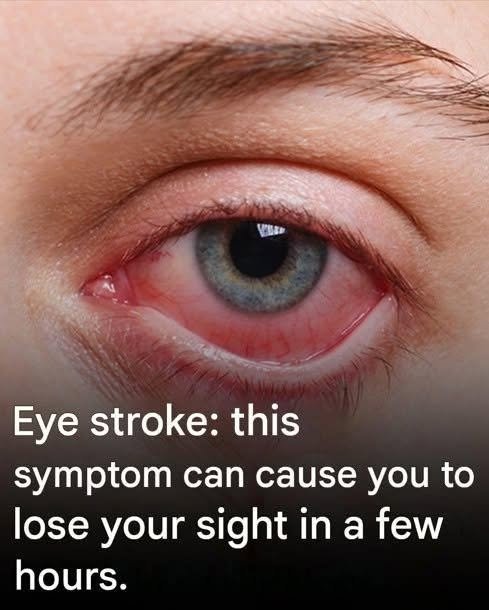
An eye stroke happens when the blood supply to the retina — the delicate layer at the back of the eye responsible for detecting light and sending images to the brain — becomes blocked. Without enough oxygen, retinal cells can become damaged, affecting your ability to see.
The Biggest Warning Sign: Sudden Vision Loss
The most common and alarming symptom of an eye stroke is:
Sudden loss of vision in one eye
It may feel like:
- A dark curtain coming down over your eye
- A shadow blocking part of your vision
- Sudden blurry or dim eyesight
- A sudden blind spot
- Loss of vision without any pain
Unlike normal eyesight changes that develop slowly, an eye stroke can happen within minutes or hours.
Other Symptoms You Should Not Ignore
1. Sudden Blurry Vision
If your vision suddenly becomes unclear, especially in only one eye, it should not be ignored. Even if it improves after a short time, it may be a warning sign of a circulation problem.
2. Missing Areas in Your Vision
Some people notice they cannot see certain areas clearly, such as:
- The side of their vision
- Objects in specific areas
- Parts of words while reading
3. Changes in Color Vision
A person may notice that colors appear:
- Faded
- Less bright
- Different compared to the other eye
4. Eye Symptoms Without Pain
One reason eye strokes can be dangerous is that they often happen without eye pain. A person may feel completely normal while vision is being affected.
Why Does an Eye Stroke Happen?
An eye stroke is usually caused by a blockage in the small blood vessels that supply the retina. This can happen due to:
- High blood pressure
- High cholesterol
- Diabetes
- Smoking
- Blood clotting problems
- Heart conditions that affect blood flow
- Aging-related blood vessel changes
Who May Be at Higher Risk?
People with the following factors may have a higher risk:
- Poorly controlled blood pressure
- History of heart disease
- Diabetes
- High cholesterol levels
- Smoking habits
- Previous circulation problems
What Should You Do If Vision Suddenly Changes?
Sudden vision loss is not something to “wait and see.”
If you experience:
- Sudden blindness in one eye
- A curtain-like shadow
- Sudden severe blurring
- New vision changes
seek emergency medical care as soon as possible. Quick evaluation may help doctors protect remaining vision and identify whether there is a larger blood vessel problem affecting your health.
How to Protect Your Eye Health
You can lower your risk by:
- Checking and controlling blood pressure
- Managing cholesterol levels
- Keeping diabetes under control
- Avoiding smoking
- Eating a balanced diet
- Getting regular eye examinations
Final Thoughts
Your eyesight can change suddenly when your body sends an urgent warning. An eye stroke may not cause pain, but sudden vision loss is always a reason to seek immediate medical attention. Protecting your eye health also means protecting your overall circulation and heart health.