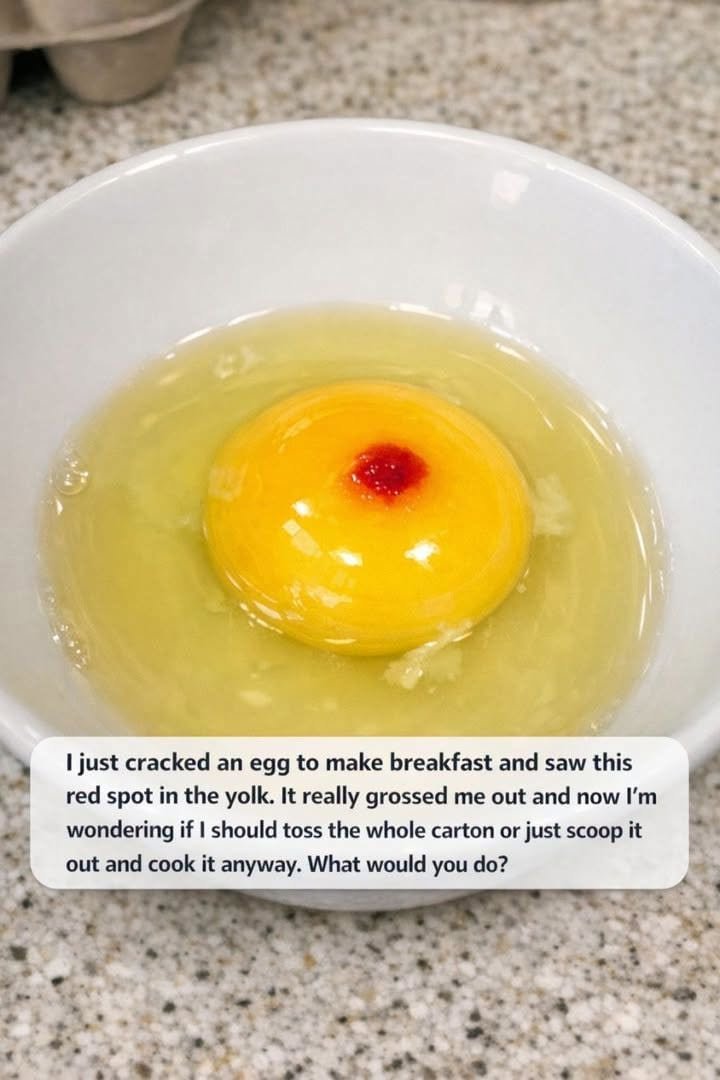
Cracking open an egg only to find a small red spot in the yolk can be surprising—and for many people, a little unsettling. It’s a common reason people question whether the egg is still safe to eat or if it should go straight into the trash.
The good news is that, in most cases, a tiny red spot inside an otherwise normal egg is harmless and doesn’t mean the egg is spoiled.
What Is the Red Spot?
The red spot, often called a blood spot, is a small amount of blood that appears when a tiny blood vessel in the hen’s ovary or oviduct breaks during the egg-forming process. It becomes trapped in the egg before the shell is formed.
Although it may look alarming, it is not a developing chick or a sign that the egg was fertilized.
Is It Safe to Eat?
Yes, according to food safety experts, an egg with a small blood spot is generally safe to eat as long as:
- The egg is fresh.
- The shell isn’t cracked or damaged.
- There are no signs of spoilage, such as a foul odor, unusual discoloration, or a slimy texture.
Many people simply remove the spot with the tip of a clean spoon or knife before cooking, while others choose to leave it in since it poses no known health risk when the egg is properly cooked.
Does It Mean the Egg Is Fertilized?
No. A blood spot does not indicate fertilization.
In commercial egg production, the eggs sold in grocery stores are typically unfertilized. Even on farms where fertilized eggs are produced, a blood spot is unrelated to whether an embryo is present.
Blood Spots vs. Meat Spots
Sometimes you’ll notice a brown, tan, or darker-colored speck instead of a bright red one.
These are called meat spots. Despite the name, they are usually tiny bits of tissue that became incorporated into the egg during formation. Like blood spots, they are generally considered harmless in fresh eggs.
Why Don’t We See Them More Often?
Modern egg grading facilities use bright lights—a process called candling—to inspect eggs before they reach grocery stores. Many eggs with visible blood spots are removed during quality control, but some small spots can still pass inspection because they’re difficult to detect.
When Should You Throw an Egg Away?
Discard the egg if you notice any of the following:
- A strong sulfur or rotten smell.
- Pink, green, or iridescent egg white.
- Mold on the shell.
- A cracked shell with signs of leakage or contamination.
- An unusually slimy texture.
These signs may indicate bacterial spoilage, and the egg should not be eaten.
Tips for Safe Egg Handling
To reduce the risk of foodborne illness:
- Store eggs in the refrigerator at 40°F (4°C) or below.
- Keep them in their original carton to help protect them and reduce moisture loss.
- Wash your hands after handling raw eggs.
- Cook eggs until both the white and yolk are firm if serving people at higher risk, such as young children, older adults, pregnant women, or those with weakened immune systems.
The Bottom Line
Finding a small red spot in an egg can be unexpected, but it’s usually nothing to worry about. In most cases, it’s simply a blood spot caused by a tiny broken blood vessel during the egg’s formation. If the egg is fresh, smells normal, and shows no signs of spoilage, it’s generally considered safe to cook and eat.
If the appearance makes you uncomfortable, you can remove the spot before cooking—or choose another egg. Either way, a small blood spot alone isn’t a reason to assume the egg has gone bad.