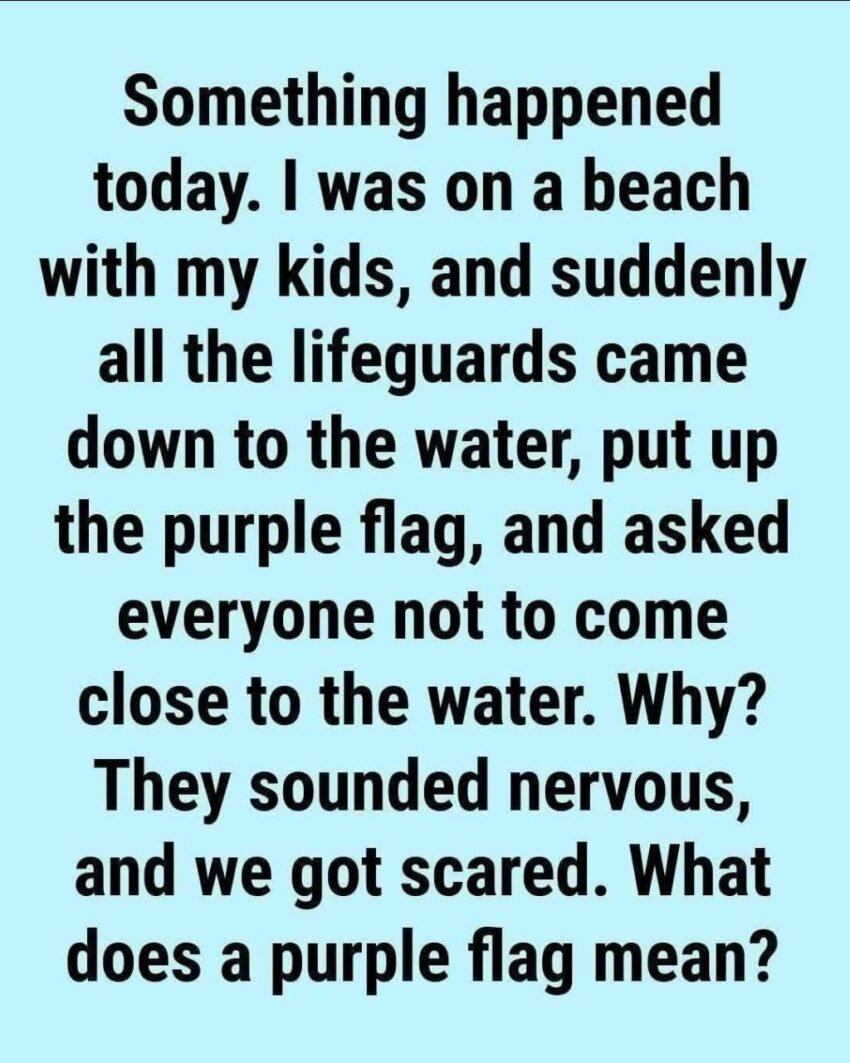
A relaxing day at the beach usually brings to mind warm sunshine, gentle waves, and the soothing sound of the ocean. But before you spread out your towel or dive into the water, it’s worth taking a moment to look at the flags flying near the shoreline.
Most people recognize the red and yellow beach flags, but there’s one color that often goes unnoticed—the purple flag. While it may not seem as alarming as a red warning flag, it carries an important message that every beachgoer should understand.
If you’ve ever spotted a purple flag waving near the lifeguard station and wondered what it means, here’s everything you need to know before stepping into the water.
What Does a Purple Beach Flag Mean?
A purple flag is used to warn visitors that dangerous marine life has been spotted in the water. It doesn’t necessarily mean the beach is closed, but it does indicate that swimmers should exercise extra caution.
Depending on the location and the season, the warning could relate to:
- Jellyfish
- Portuguese man o’ war
- Stingrays
- Sea urchins
- Lionfish
- Certain species of sharks in some regions
- Other potentially harmful marine creatures
Unlike red flags, which warn about hazardous water conditions like strong currents or rough surf, the purple flag specifically alerts people to risks from marine animals.
Why Is the Purple Flag Important?
Many marine animals aren’t naturally aggressive toward humans. In fact, most encounters happen by accident.
Stepping on a stingray hidden beneath the sand, brushing against jellyfish tentacles, or swimming too close to marine wildlife can quickly turn a fun beach outing into a painful experience.
The purple flag reminds visitors to stay alert and reduce the risk of accidental encounters.
Common Marine Hazards Behind a Purple Flag
Jellyfish
Jellyfish are among the most common reasons for a purple flag warning.
Their tentacles contain tiny stinging cells that can cause:
- Sharp burning pain
- Red welts
- Swelling
- Itching
- In rare cases, allergic reactions
Some jellyfish species have only mild stings, while others can cause severe pain requiring medical attention.
Portuguese Man o’ War
Although often mistaken for a jellyfish, the Portuguese man o’ war is actually a different type of marine organism.
Its long tentacles can deliver extremely painful stings that may remain dangerous even after washing ashore.
Never touch one—even if it appears dead.
Stingrays
Stingrays often rest beneath shallow sand near the shoreline.
Most injuries happen when someone accidentally steps on one.
If startled, a stingray may defend itself with its venomous tail spine.
To reduce the risk:
- Shuffle your feet while walking through shallow water.
- Avoid jumping into areas where visibility is poor.
Sea Urchins
Sea urchins have sharp spines that can puncture the skin.
Stepping on one can result in:
- Pain
- Swelling
- Difficulty walking
- Infection if the wound isn’t cleaned properly
Water shoes can help provide protection in rocky coastal areas.
Lionfish
In some tropical waters, lionfish are another reason beaches may raise a purple flag.
Their beautiful appearance hides venomous spines capable of causing:
- Severe pain
- Swelling
- Nausea
- Temporary numbness
Admire them from a distance rather than attempting to touch or capture them.
Does a Purple Flag Mean You Can’t Swim?
Not necessarily.
Unlike a double red flag—which usually means the water is closed to the public—a purple flag serves as a warning, not an automatic swimming ban.
Whether it’s safe to enter the water depends on several factors:
- The type of marine life present
- The number of sightings
- Local beach policies
- Advice from lifeguards
Always check with beach staff if you’re unsure.
How to Stay Safe When a Purple Flag Is Flying
If you see a purple flag, a few simple precautions can greatly reduce your risk.
Pay Attention to Lifeguards
Lifeguards are trained to monitor changing ocean conditions and wildlife activity.
Follow their instructions, even if the water appears calm.
Watch Where You Walk
When entering shallow water:
- Walk slowly.
- Shuffle your feet across the sand.
- Avoid stepping blindly into rocky areas.
This technique gives stingrays time to swim away before you get too close.
Avoid Touching Marine Animals
Even harmless-looking sea creatures can sting or bite when disturbed.
Never pick up:
- Jellyfish
- Shells with living animals inside
- Sea stars
- Sea urchins
- Unknown marine creatures
Observe wildlife from a safe distance.
Wear Protective Footwear
Water shoes can help protect your feet from:
- Sharp shells
- Rocks
- Sea urchins
- Hidden marine animals
They’re especially useful on rocky or coral-covered beaches.
Supervise Children Closely
Children are naturally curious and may try to touch marine animals washed onto shore.
Explain why they should leave sea creatures alone and keep them within sight while they’re in the water.
What Should You Do If You’re Stung?
The right response depends on the type of injury, but these general steps can help:
- Exit the water calmly.
- Tell a lifeguard immediately.
- Rinse the area as recommended for the specific injury (fresh water is not always appropriate for every marine sting).
- Remove visible tentacles or spines only if it is safe to do so.
- Seek medical care if pain is severe, the sting covers a large area, or you develop trouble breathing, dizziness, or swelling of the face or throat.
People with allergies or underlying medical conditions should be especially cautious after any marine sting.
Understanding Other Beach Flag Colors
Knowing the full beach flag system can help you make safer decisions.
Green Flag
Conditions are generally calm, though normal ocean risks still exist.
Yellow Flag
Use extra caution. Moderate surf or currents may be present.
Red Flag
High hazard due to rough surf or dangerous currents. Swimming is strongly discouraged.
Double Red Flag
The water is closed to the public. Do not enter.
Purple Flag
Dangerous marine life has been spotted in or near the water.
Keep in mind that flag systems can vary slightly between countries and beaches, so always read posted signs and follow local guidance.
Can Marine Animals Be Avoided Completely?
Not entirely.
The ocean is a natural habitat for countless species, and wildlife sightings are a normal part of coastal environments. Fortunately, most marine animals prefer to avoid humans and only sting or injure people when they feel threatened or are accidentally disturbed.
By staying aware of warning flags, respecting wildlife, and following beach safety advice, you can greatly reduce the risk of an unpleasant encounter.
Final Thoughts
A purple beach flag isn’t meant to scare visitors away—it serves as an important reminder that the ocean is home to many fascinating creatures, some of which can pose a risk if approached too closely.
Before heading into the water, take a quick look at the beach flags, listen to lifeguards, and stay informed about local conditions. A few moments of awareness can help ensure your beach day remains enjoyable, safe, and free from unexpected encounters with marine life.
Whether you’re swimming, surfing, or simply wading along the shoreline, respecting the ocean and its wildlife is one of the best ways to protect both yourself and the incredible ecosystems that make our beaches so special.