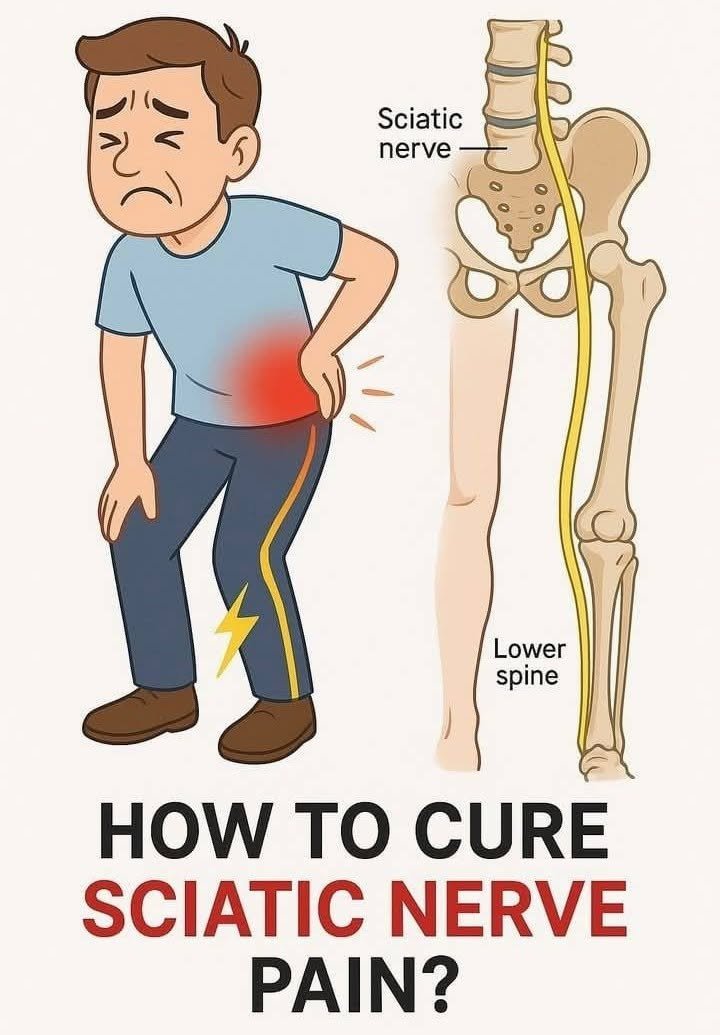
Sciatic nerve pain can turn everyday activities into a challenge. Whether it’s a sharp pain shooting down your leg, a persistent ache in your lower back, or tingling and numbness in your foot, sciatica can significantly affect your quality of life.
The good news is that many cases of sciatica improve over time with self-care, gentle movement, and healthy lifestyle habits. While natural remedies won’t cure every cause of sciatic nerve pain, they can help ease discomfort and support recovery when used alongside appropriate medical care.
Here’s a comprehensive guide to natural ways to manage sciatic nerve pain safely and effectively.
What Is Sciatica?
Sciatica isn’t a disease itself—it’s a symptom caused by irritation or compression of the sciatic nerve, the longest nerve in the body.
The sciatic nerve begins in the lower spine, passes through the buttocks, and travels down each leg to the feet.
When this nerve becomes compressed or inflamed, it can cause pain that radiates from the lower back into the buttock and down one leg.
Common Symptoms of Sciatica
Symptoms vary from person to person but often include:
- Sharp or burning pain in the lower back or buttock
- Pain that travels down one leg
- Tingling or “pins and needles”
- Numbness in the leg or foot
- Muscle weakness
- Pain that worsens after prolonged sitting
- Discomfort when coughing or sneezing
Most people experience symptoms on only one side of the body.
What Causes Sciatic Nerve Pain?
Several conditions can irritate or compress the sciatic nerve, including:
- Herniated (slipped) disc
- Degenerative disc disease
- Spinal stenosis
- Bone spurs
- Piriformis syndrome
- Pregnancy-related pressure on the nerve
- Spinal injuries
Identifying the underlying cause is important because treatment may differ depending on what’s triggering the pain.
Can Natural Remedies Help?
Natural remedies may help reduce pain, inflammation, and muscle tension, especially in mild to moderate cases. However, they should not replace medical treatment if symptoms are severe or persistent.
1. Stay Gently Active
While resting for a day or two may help during a pain flare-up, prolonged bed rest can actually slow recovery.
Low-impact activities that may help include:
- Walking
- Gentle stretching
- Swimming
- Water aerobics
- Stationary cycling
Movement helps maintain flexibility, improve circulation, and prevent muscles from becoming stiff.
2. Try Gentle Stretching
Stretching may reduce tension around the sciatic nerve and improve mobility.
Helpful stretches include:
Knee-to-Chest Stretch
Lie on your back and gently pull one knee toward your chest while keeping the other leg bent. Hold for 20–30 seconds.
Piriformis Stretch
Cross one ankle over the opposite knee and gently pull the supporting leg toward your chest until you feel a stretch in the buttock.
Hamstring Stretch
Slowly stretch the back of your thigh without forcing the movement or bouncing.
Move slowly and stop if a stretch causes sharp pain.
3. Alternate Heat and Cold Therapy
Applying cold packs during the first day or two may help reduce inflammation.
After the initial phase, gentle heat may relax tight muscles and improve blood flow.
Use either therapy for about 15–20 minutes at a time, placing a cloth between the skin and the pack to avoid skin injury.
4. Improve Your Posture
Poor posture can place extra stress on the lower back.
Try to:
- Sit with your feet flat on the floor.
- Keep your back supported.
- Avoid slouching.
- Take breaks to stand and stretch every 30–60 minutes if sitting for long periods.
Small posture improvements can reduce strain on the spine over time.
5. Sleep in a Comfortable Position
Sleeping positions may influence sciatic pain.
Some people find relief by:
- Sleeping on their side with a pillow between the knees.
- Sleeping on their back with a pillow under the knees to reduce pressure on the lower back.
A supportive mattress and pillow may also improve comfort.
6. Maintain a Healthy Weight
Extra body weight can increase stress on the spine and surrounding muscles.
A balanced diet combined with regular physical activity may help reduce pressure on the lower back and support long-term spinal health.
7. Eat Foods That Support Overall Health
Although no food can cure sciatica, a nutritious diet may help support recovery and reduce overall inflammation.
Consider including:
- Fatty fish like salmon or sardines
- Leafy green vegetables
- Berries
- Nuts and seeds
- Olive oil
- Whole grains
- Beans and lentils
Staying well hydrated is also important for overall health.
8. Manage Stress
Chronic pain and stress can influence each other.
Relaxation techniques such as:
- Deep breathing
- Meditation
- Gentle yoga
- Mindfulness
- Listening to calming music
may help reduce muscle tension and improve coping with chronic discomfort.
9. Consider Massage Therapy
Gentle massage may help relax tight muscles surrounding the sciatic nerve.
Some people experience temporary relief from:
- Reduced muscle tension
- Improved circulation
- Increased flexibility
Massage should not be painful, and it’s best performed by a qualified therapist if symptoms are significant.
10. Know When to Seek Medical Care
Many cases of sciatica improve within a few weeks, but medical evaluation is important if:
- Pain is severe or worsening
- Symptoms last longer than several weeks
- You develop significant leg weakness
- Walking becomes difficult
- Pain follows a serious injury
Seek emergency medical attention immediately if you experience:
- Loss of bladder or bowel control
- Numbness around the groin or inner thighs (saddle numbness)
- Sudden, severe weakness in one or both legs
These symptoms may indicate a serious condition requiring urgent treatment.
Myths About Sciatica
Myth: Complete bed rest is the best treatment.
In reality, prolonged inactivity can make recovery slower for many people.
Myth: Surgery is always necessary.
Most people with sciatica improve with conservative treatment and do not require surgery.
Myth: Stretching through severe pain speeds healing.
Stretching should never cause intense pain. Gentle movement is generally safer and more effective.
Tips to Help Prevent Future Sciatica
Reduce your risk of recurring episodes by:
- Exercising regularly
- Strengthening your core muscles
- Lifting heavy objects with proper technique
- Avoiding prolonged sitting
- Maintaining good posture
- Keeping a healthy weight
- Staying physically active
Final Thoughts
Sciatic nerve pain can be frustrating, but many people find relief through a combination of gentle movement, stretching, good posture, heat or cold therapy, healthy lifestyle habits, and time. While these natural approaches may ease symptoms, they don’t treat every underlying cause of sciatica.
If your pain is severe, persists beyond a few weeks, or is accompanied by weakness, numbness, or changes in bladder or bowel control, seek prompt medical evaluation. A healthcare professional can determine the cause of your symptoms and recommend the most appropriate treatment plan to help you recover safely.