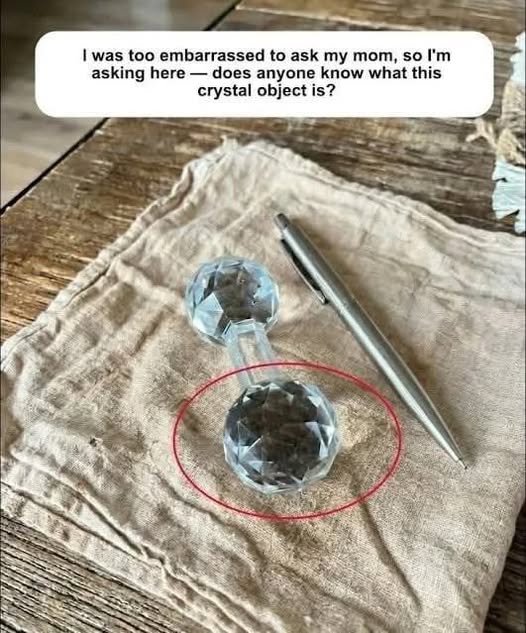
Sorting through a grandparent’s china cabinet can feel like stepping back in time. Between delicate teacups, crystal bowls, and treasured keepsakes, it’s not unusual to discover an unfamiliar object that leaves you scratching your head. One such curiosity is a small crystal glass dumbbell-shaped item—a piece that often sparks questions because it doesn’t resemble anything commonly used today.
Despite its unusual appearance, this elegant object likely had a practical purpose in households of the past.
A Curious Find
Imagine lifting a beautifully crafted piece of crystal that looks like a miniature dumbbell or barbell. It’s heavy for its size, smooth to the touch, and often features rounded ends connected by a short glass handle.
At first glance, it might seem like:
- A decorative ornament
- A paperweight
- A toy
- A perfume bottle accessory
But antique collectors often recognize it as something much more interesting.
The Most Likely Answer: A Crystal Knife Rest
In many cases, this mysterious object is actually a crystal knife rest.
Knife rests became popular during the 18th and 19th centuries and remained common on formal dining tables well into the early 20th century.
What Was a Knife Rest Used For?
Before modern table settings became common, diners placed their knives on these small rests between courses.
The purpose was simple:
- Keep the knife blade off the tablecloth.
- Help maintain cleanliness during meals.
- Add an elegant touch to formal table settings.
The raised design prevented food residue from touching the table linen.
Why Was It Made of Crystal?
Crystal knife rests weren’t just functional—they were decorative.
Fine crystal reflected candlelight beautifully, adding sparkle to dinner tables during formal gatherings.
High-quality versions were often:
- Hand-cut
- Lead crystal
- Etched with decorative patterns
- Sold as matching sets
Families frequently displayed them in china cabinets alongside fine dinnerware.
Could It Be Something Else?
Although a crystal knife rest is the most common explanation, similar-shaped glass objects have served other purposes over the years, including:
Paperweight
Some heavy crystal pieces were designed simply to hold papers in place on a desk.
Vanity Accessory
Occasionally, decorative glass tools were included in vintage dressing table or vanity sets.
Display Piece
Some glassmakers produced ornamental objects that were intended purely for decoration.
Examining the size, weight, craftsmanship, and any maker’s marks can provide clues to its original purpose.
How to Identify It
Look for these features:
- Approximately 3–5 inches (7–13 cm) long
- Rounded ends
- Thick crystal construction
- Flat points that allow it to rest steadily on a table
- Matching cut-glass or etched designs
If you own more than one, it’s even more likely they were part of a formal dining set.
Is It Valuable?
The value depends on several factors:
- Manufacturer
- Age
- Crystal quality
- Condition
- Whether it’s part of a complete set
- Presence of original packaging or documentation
Well-known crystal makers and complete matching sets may be more desirable to collectors, while single pieces often have modest value but can still be cherished as family heirlooms.
Caring for Vintage Crystal
If you believe you’ve found a vintage crystal knife rest:
- Wash it gently by hand with mild soap and warm water.
- Avoid sudden temperature changes that could crack the crystal.
- Dry it with a soft, lint-free cloth.
- Store it safely to prevent chips and scratches.
Avoid using abrasive cleaners or placing antique crystal in the dishwasher unless the manufacturer specifically indicates it is dishwasher-safe.
Final Thoughts
That unusual crystal “glass dumbbell” tucked away in your grandmother’s china cabinet is likely more than just an odd decorative object. In many cases, it’s a vintage crystal knife rest—a small but elegant accessory once used to keep dining tables clean during formal meals.
Whether it’s a valuable antique or simply a treasured family keepsake, discoveries like these offer a fascinating glimpse into the traditions and craftsmanship of earlier generations. Before discarding unfamiliar household items, it may be worth taking a closer look—you could be holding a small piece of history.