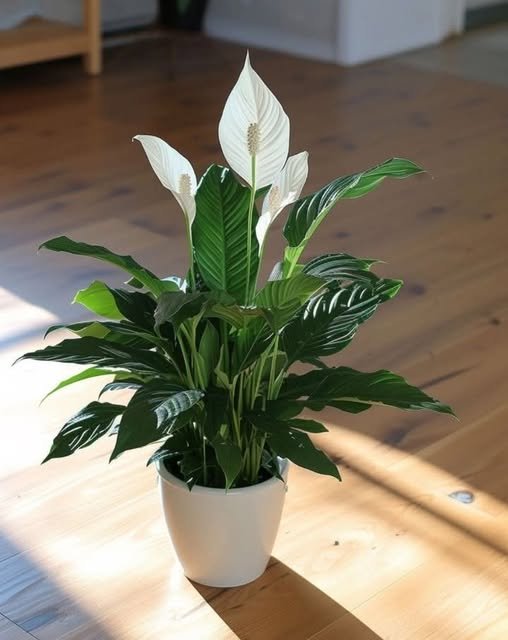
The peace lily is one of the most popular houseplants thanks to its glossy green leaves and elegant white blooms. While it’s known for being easy to care for, many plant owners wonder why their peace lily has stopped flowering. The good news is that with the right care, you can encourage your plant to bloom again.
Here are 11 simple ways to help your peace lily thrive and produce beautiful white flowers.
1. Give It Bright, Indirect Light
Light is one of the biggest factors in flowering. Peace lilies grow best in bright, indirect sunlight. Too little light encourages leafy growth but often prevents blooming, while direct sunlight can scorch the leaves.
Tip: Place your plant near an east- or north-facing window, or a few feet away from a sunny south- or west-facing window.
2. Water Consistently
Keep the soil evenly moist but not soggy. Water when the top inch (2–3 cm) of soil feels dry. Avoid letting the plant sit in standing water, which can lead to root rot.
3. Increase Humidity
Peace lilies are tropical plants that prefer humidity levels of around 50–60%.
Boost humidity by:
- Misting the leaves occasionally
- Using a pebble tray with water
- Running a humidifier nearby
4. Feed with a Balanced Fertilizer
Use a balanced liquid houseplant fertilizer every 6–8 weeks during spring and summer. Overfertilizing can lead to lush leaves but fewer flowers, so follow the label directions.
5. Repot When Necessary
A peace lily that’s severely root-bound may struggle to bloom. Repot every 2–3 years into a container that’s only slightly larger than the current one.
6. Keep Temperatures Comfortable
Peace lilies prefer temperatures between 65°F and 80°F (18°C–27°C). Avoid cold drafts, air conditioners, or heating vents, as temperature stress can reduce flowering.
7. Remove Dead Flowers and Yellow Leaves
Trim off faded blooms and damaged leaves with clean scissors. This helps the plant direct more energy into producing healthy new growth.
8. Clean the Leaves
Dust can block sunlight from reaching the leaves. Wipe them gently with a damp, soft cloth every few weeks to improve photosynthesis and keep the plant looking its best.
9. Use Well-Draining Potting Mix
Choose a light, well-draining indoor potting mix that retains some moisture without becoming waterlogged. Good drainage keeps the roots healthy.
10. Be Patient
Young peace lilies often need time to mature before they flower. Even healthy plants may bloom only once or twice a year, typically during spring and early summer.
11. Choose a Mature, Blooming Variety
Some nursery plants are treated to encourage flowering before sale, while younger plants may need time to establish themselves. If your peace lily is healthy but hasn’t bloomed yet, maturity may simply be the missing factor.
Common Reasons a Peace Lily Won’t Bloom
If your plant isn’t flowering, check for these common issues:
- Not enough bright, indirect light
- Overwatering or underwatering
- Too much fertilizer
- Low humidity
- Temperatures that are too cold
- An immature or recently repotted plant
Final Thoughts
A healthy peace lily rewards good care with elegant white blooms and lush green foliage. By providing the right balance of light, water, humidity, and nutrients, you can give your plant the best chance to flower year after year.
With a little patience and consistent care, your peace lily can become a stunning centerpiece that brightens your home with its graceful white blossoms.