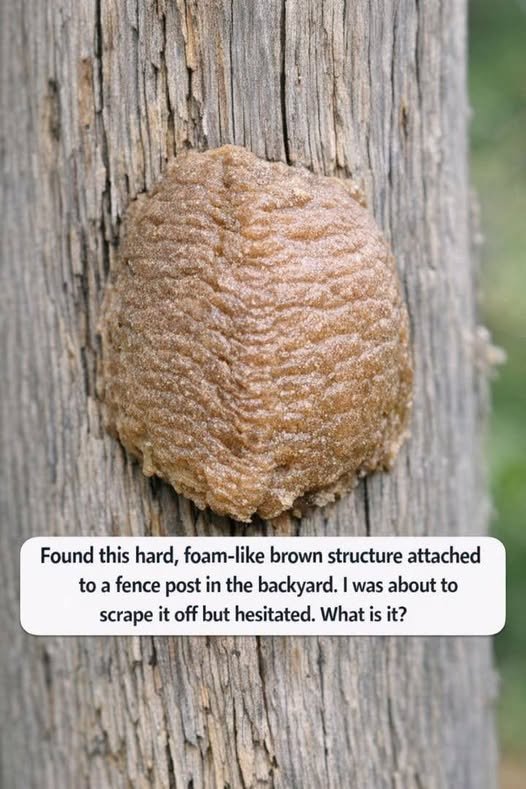
Found a Hard, Foam-Like Brown Structure on Your Fence? Don’t Scrape It Off Just Yet
If you’ve discovered a hard, tan or brown, foam-like mass attached to a fence post, tree branch, wall, or garden furniture, you may have found something fascinating rather than something harmful. In many cases, this unusual structure is a praying mantis egg case, known as an ootheca.
Although it may look like dried expanding foam or an odd insect nest, it’s actually a carefully constructed protective case containing dozens—or even hundreds—of baby praying mantises waiting to hatch.


What Is a Praying Mantis Egg Case?
A praying mantis ootheca is a protective egg case created by a female mantis after mating. She secretes a frothy substance that quickly hardens into a tough, insulating shell. Inside this shell are rows of tiny eggs protected from predators, rain, and cold weather.
Depending on the species, a single ootheca can contain anywhere from 50 to over 200 eggs.
The hard outer layer acts like natural armor, helping the eggs survive through winter until warmer temperatures signal it’s time to hatch.
Why Does It Look Like Foam?
When first produced, the egg case is soft and foamy. Within a short time it hardens into a durable structure with a spongy texture.
Its appearance often causes confusion because people mistake it for:
- Spray insulation foam
- A wasp or bee nest
- Fungus or mold
- A cocoon
- Tree sap
Unlike wasp nests, an ootheca has no openings with insects flying in and out and feels firm rather than papery.
Where Are They Commonly Found?
Female mantises attach egg cases to sturdy outdoor surfaces, including:
- Fence posts
- Tree branches
- Shrubs
- Garden stakes
- Deck railings
- Walls
- Plant stems
- Outdoor furniture
They choose locations that are relatively sheltered from heavy rain and direct disturbance.
Is It Dangerous?
No.
Praying mantis egg cases are harmless to people and pets. They:
- Do not sting
- Do not bite while inside the egg case
- Do not damage wood or structures
- Do not spread disease
The case simply protects developing mantises until they hatch.
Should You Remove It?
In most situations, it’s best to leave it where it is.
If the egg case is in a safe location, letting it remain undisturbed gives the young mantises the best chance of survival.
If you absolutely must move it because it’s on something that will be painted or removed, carefully cut the small twig or section it’s attached to and relocate it to a nearby shrub or branch. Avoid crushing or scraping the egg case itself.
When Will It Hatch?
The timing depends on climate.
Typically:
- Eggs are laid in late summer or autumn.
- They overwinter inside the case.
- Baby mantises hatch in spring or early summer when temperatures rise.
When hatching begins, dozens of tiny mantises emerge over several hours and disperse into nearby vegetation.
Why Are Praying Mantises Beneficial?
Adult praying mantises are valuable garden predators.
They feed on many insects, including:
- Flies
- Mosquitoes
- Moths
- Grasshoppers
- Some beetles
- Certain garden pests
Because of this, many gardeners welcome them as natural pest controllers.
Keep in mind that mantises are generalist predators—they may also eat beneficial insects such as butterflies, bees, or ladybugs if given the opportunity.
Can You Keep the Egg Case?
Some nature enthusiasts collect oothecae for observation. If kept indoors in a warm room, however, the eggs may hatch much earlier than they would outdoors. Without access to food and suitable habitat, the tiny mantises are unlikely to survive.
If you want to observe them, place the egg case in a ventilated container outdoors where the young can safely disperse after hatching.
How to Tell If It’s a Praying Mantis Egg Case
Look for these features:
- Hard, lightweight structure
- Tan, beige, or brown color
- Foamy or ridged appearance
- About 1–2 inches (2.5–5 cm) long
- Firmly attached to wood, branches, or other outdoor surfaces
- No visible insects entering or leaving
If it matches this description, there’s a good chance you’ve found an ootheca.
Final Thoughts
That strange brown, foam-like object on your fence isn’t something to fear—it’s one of nature’s clever survival strategies. A praying mantis egg case protects dozens of future garden predators that can help keep insect populations in balance.
So before scraping it off, consider leaving it in place. In a few months, you may witness the remarkable sight of dozens of tiny praying mantises emerging to begin their lives in your backyard.