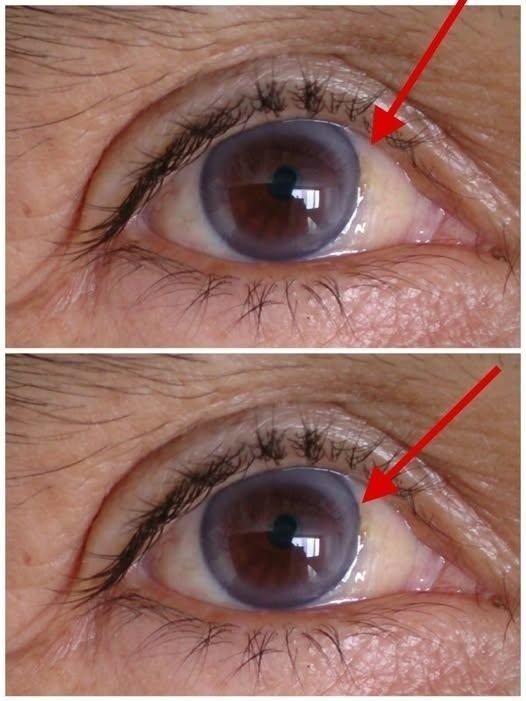
The image shows a gray-white ring around the edge of the cornea (the clear front part of the eye). The red arrows are pointing to this ring, which is commonly called arcus senilis (or corneal arcus).
What Is Arcus Senilis?
Arcus senilis is a ring made up of fatty (lipid) deposits that collect in the outer edge of the cornea. It usually appears as a white, gray, or bluish ring surrounding the colored part of the eye (iris).
In the image:
- The top photo shows the gray-white ring beginning near the edge of the cornea.
- The bottom photo highlights the same ring more clearly.
- The deposits are in the cornea, not on the iris or pupil, so they usually do not affect vision.
What Causes It?
The most common causes include:
- Natural aging (most common in adults over 60)
- Elevated cholesterol or triglycerides (especially in younger adults)
- Certain inherited lipid disorders
- Less commonly, other conditions affecting fat metabolism
Is It Dangerous?
Usually no.
For older adults, arcus senilis is generally considered a normal age-related change and does not require treatment.
However, if the ring appears in someone under 45–50 years old, doctors may recommend checking:
- Cholesterol
- LDL (“bad”) cholesterol
- HDL (“good”) cholesterol
- Triglycerides
- Blood sugar
Early corneal arcus can sometimes be associated with an increased risk of cardiovascular disease due to high cholesterol.
Symptoms
Most people have:
- No pain
- No redness
- No vision loss
- No discomfort
It is often noticed during a routine eye examination or by looking in the mirror.
Can It Be Removed?
The ring itself cannot be removed with eye drops or home remedies.
If it is caused by high cholesterol, treating the cholesterol is important for overall health, but the existing ring often remains even after cholesterol levels improve.
When Should You See a Doctor?
Arrange an eye exam if:
- The ring appears before age 45–50.
- It develops suddenly.
- You also have blurred vision, eye pain, redness, or vision loss.
- You have a family history of high cholesterol or early heart disease.
Important Note
While this image is consistent with arcus senilis (corneal arcus), a diagnosis cannot be made from a photo alone. An eye care professional can confirm the cause with a simple eye examination and determine whether blood tests for cholesterol are appropriate, especially in younger individuals.