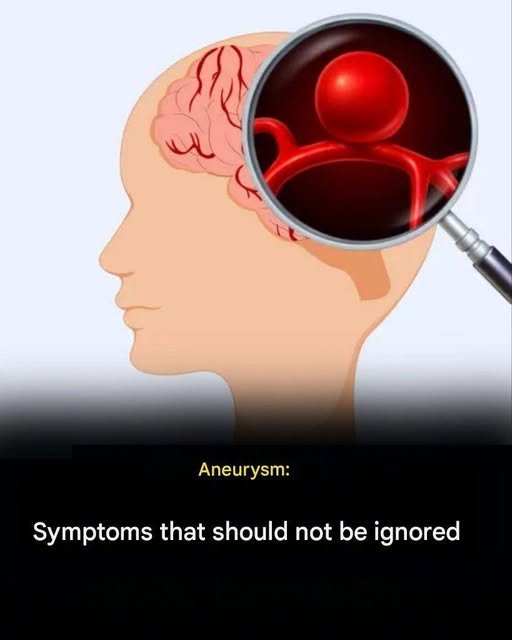
A brain aneurysm is a weak or bulging area in the wall of a blood vessel in the brain. Many brain aneurysms never cause symptoms and are discovered incidentally during imaging for another reason. However, if an aneurysm leaks or ruptures, it becomes a medical emergency that requires immediate treatment.
The symptoms below can occur with a ruptured aneurysm or, less commonly, with a large unruptured aneurysm pressing on nearby nerves. These symptoms are not specific to aneurysms and can be caused by many other conditions, but they should never be ignored.
1. Sudden, Severe Headache
A ruptured brain aneurysm often causes a sudden, extremely severe headache, sometimes described as the “worst headache of my life.”
This headache:
- Reaches maximum intensity within seconds to minutes
- May come on without warning
- Is unlike previous headaches
This symptom requires immediate emergency medical attention.
2. Nausea and Vomiting
A sudden severe headache accompanied by nausea or vomiting may occur because of bleeding around the brain.
3. Stiff Neck
Blood leaking around the brain can irritate the tissues covering the brain and spinal cord, causing neck stiffness and pain.
4. Blurred or Double Vision
A large aneurysm may press on nerves that control the eyes, leading to:
- Blurred vision
- Double vision
- Difficulty focusing
5. Drooping Eyelid
Pressure on the nerves controlling the eyelid can cause one eyelid to droop unexpectedly.
6. Dilated Pupil
One pupil may become larger than the other, especially if the aneurysm affects the third cranial nerve.
7. Sensitivity to Light
Bright light may become painful, particularly after a ruptured aneurysm.
8. Confusion or Difficulty Thinking
Bleeding in the brain can interfere with normal brain function, leading to:
- Confusion
- Difficulty concentrating
- Disorientation
9. Weakness or Numbness
An aneurysm may affect nearby brain tissue, causing:
- Weakness in the face, arm, or leg
- Numbness on one side of the body
- Difficulty moving normally
These symptoms can also occur with a stroke and require emergency evaluation.
10. Trouble Speaking
Some people experience:
- Slurred speech
- Difficulty finding words
- Trouble understanding speech
These symptoms may indicate bleeding or reduced blood flow in the brain.
11. Seizures
Although less common, seizures can occur if bleeding irritates the brain.
12. Loss of Consciousness
A severe ruptured aneurysm may cause:
- Fainting
- Sudden collapse
- Loss of consciousness
- Coma
This is a life-threatening emergency.
Symptoms of an Unruptured Brain Aneurysm
Most unruptured aneurysms cause no symptoms. However, if they become large enough to press on nearby nerves, they may cause:
- Pain above or behind one eye
- Vision changes
- Drooping eyelid
- Dilated pupil
- Facial numbness or weakness
Because these symptoms can have many causes, medical evaluation is important.
Risk Factors for Brain Aneurysms
Factors that increase the risk include:
- Smoking
- High blood pressure
- Family history of brain aneurysms
- Certain inherited connective tissue disorders
- Older age
- Female sex
- Heavy alcohol use
- Cocaine or other stimulant drug use
When to Call Emergency Services
Seek emergency medical care immediately if you or someone else experiences:
- A sudden, severe headache unlike any before
- Loss of consciousness
- Seizures
- Sudden weakness or numbness
- Difficulty speaking
- Sudden vision changes
- Confusion with a severe headache
- A severe headache with neck stiffness or vomiting
Do not try to drive yourself if these symptoms occur. Call your local emergency services immediately.
How Brain Aneurysms Are Diagnosed
Doctors may use:
- CT scan
- CT angiography (CTA)
- MRI
- MR angiography (MRA)
- Cerebral angiography
- Lumbar puncture (in selected cases if a CT scan does not show bleeding but suspicion remains high)
Can Brain Aneurysms Be Treated?
Yes. Treatment depends on:
- The size and location of the aneurysm
- Whether it has ruptured
- Your age and overall health
Treatment options may include:
- Careful monitoring for some small, unruptured aneurysms
- Endovascular coiling
- Surgical clipping
- Blood pressure management and other supportive care
The Bottom Line
A brain aneurysm often causes no symptoms until it leaks or ruptures. The most important warning sign of a ruptured aneurysm is a sudden, severe headache that reaches maximum intensity quickly, especially if it occurs with vomiting, neck stiffness, confusion, weakness, seizures, or loss of consciousness. Because a ruptured aneurysm is a medical emergency, seek immediate medical attention if these symptoms occur. Early diagnosis and treatment can be lifesaving.