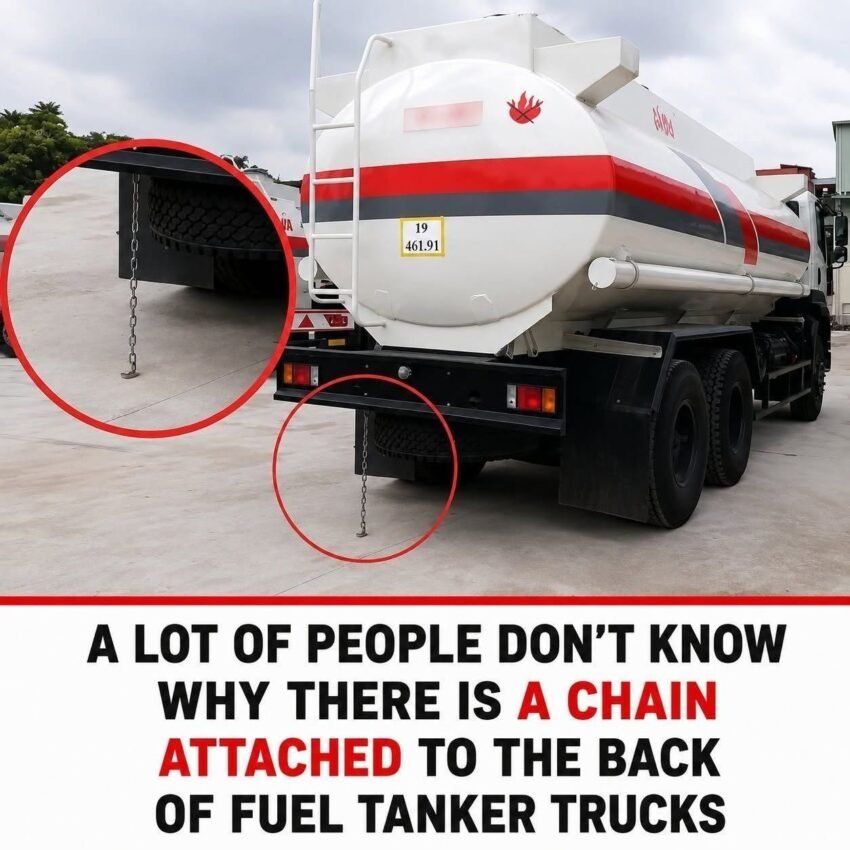
If you’ve ever driven behind a fuel tanker, you’ve probably noticed a short metal chain hanging from the back and dragging along the road. At first glance, it looks strange—almost like it was forgotten after a repair. Some people think it’s a towing chain, while others believe it’s just an old trucking tradition. In reality, this small chain serves a critical safety purpose that helps prevent potentially catastrophic accidents.
Why Fuel Tankers Need a Grounding Chain
Fuel tankers transport highly flammable liquids such as gasoline, diesel, and aviation fuel. As these liquids move and slosh around inside the tank during travel, they can generate static electricity. The truck itself can also accumulate static from friction between its tires and the road, as well as from moving through dry air.
If enough static builds up, a tiny electrical spark can occur. While such a spark would usually be harmless, it could ignite fuel vapors if it happened during loading, unloading, or in the presence of a fuel leak. Even a small ignition source can be dangerous around combustible vapors.
The Chain’s Important Job
The metal chain acts as a grounding device. By maintaining contact with the road surface, it helps dissipate accumulated static electricity from the tanker, reducing the chance of a spark forming.
Although modern tanker safety systems include many additional protective features, this simple chain provides an extra layer of protection and has long been a familiar sight on fuel transport vehicles.
Why Rubber Tires Aren’t Enough
Many people assume the truck’s tires automatically ground the vehicle. In reality, standard rubber tires are poor electrical conductors, meaning they do not effectively discharge static electricity.
The grounding chain creates a conductive path that allows electrical charge to dissipate more safely than relying on the tires alone.
Modern Alternatives
Not every fuel tanker uses a traditional metal chain today. Many newer vehicles are equipped with:
- Conductive static-discharge strips
- Specialized grounding systems
- Grounding clamps used during loading and unloading at fuel terminals
These systems are designed to accomplish the same goal—preventing dangerous static buildup while handling flammable liquids.
Other Safety Features on Tanker Trucks
The grounding chain is only one part of a comprehensive safety system. Modern tanker trucks also include:
- Pressure-relief valves
- Emergency shut-off systems
- Reinforced tanks designed to withstand impacts
- Vapor recovery equipment
- Multiple compartments that reduce fuel movement inside the tank
Together, these features help make fuel transportation significantly safer than many people realize.
Common Myths
Myth: The chain is for towing.
Fact: Tow chains are much stronger and connect differently. The hanging chain is not intended for pulling another vehicle.
Myth: Every truck needs one.
Fact: Grounding chains are mainly associated with vehicles transporting flammable or hazardous materials. Many ordinary trucks do not require them.
Myth: The chain creates sparks by scraping the road.
Fact: These chains are designed to minimize spark risk while helping dissipate static electricity, making them a safety feature rather than a hazard.
Final Thoughts
That mysterious chain dragging behind a fuel tanker isn’t an accident or leftover equipment—it’s a simple but effective safety device. By helping discharge static electricity, it reduces the risk of sparks that could ignite flammable vapors during fuel transport. While newer technologies have introduced alternative grounding methods, the humble chain remains one of the most recognizable symbols of tanker truck safety.