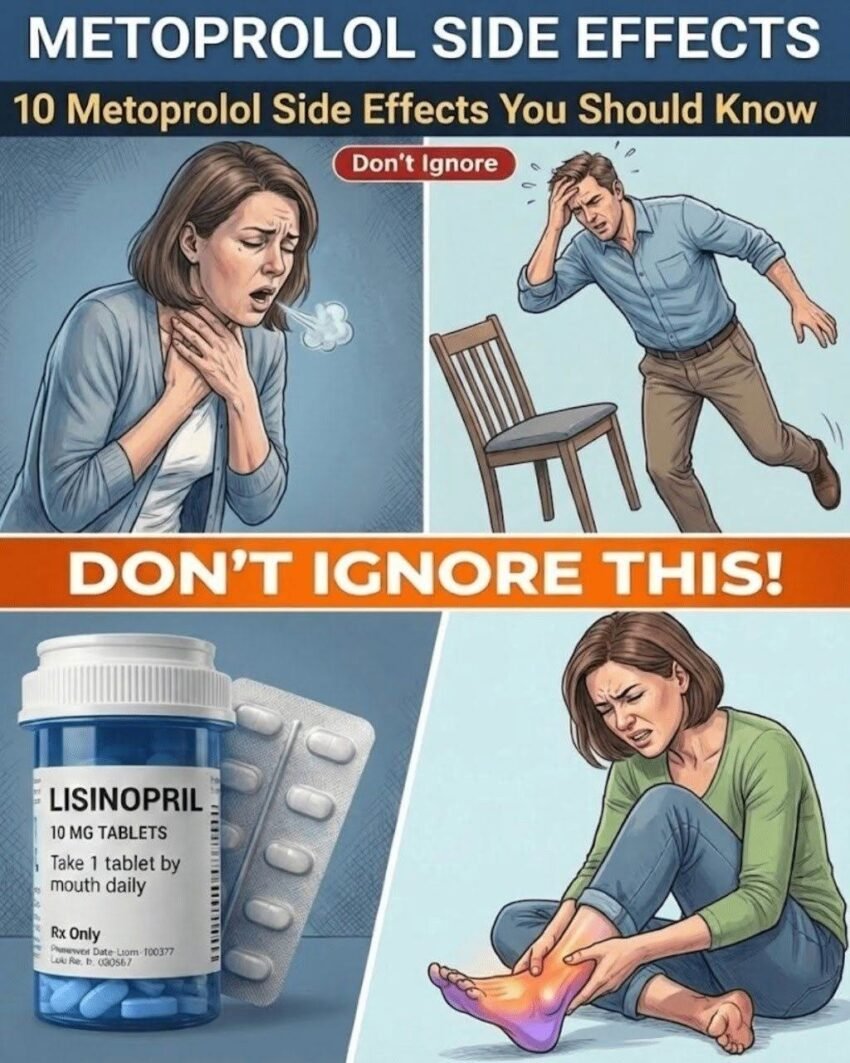
Metoprolol is a prescription medication known as a beta-blocker. It is commonly used to treat high blood pressure, chest pain (angina), heart failure, irregular heart rhythms, and to reduce the risk of future heart attacks. While metoprolol is effective for many people, it can also cause side effects ranging from mild to more serious.
Understanding these potential side effects can help you know when to seek medical advice and manage your treatment safely.
Important: Never stop taking metoprolol suddenly without consulting your healthcare provider. Abruptly stopping the medication can lead to serious heart-related complications.
1. Fatigue and Tiredness
One of the most common side effects of metoprolol is feeling unusually tired or lacking energy. Since the medication slows the heart rate, some people may experience fatigue, especially during the first few weeks of treatment.
If the tiredness becomes severe or doesn’t improve, speak with your doctor.
2. Dizziness or Lightheadedness
Metoprolol lowers blood pressure, which can sometimes cause dizziness, particularly when standing up quickly. This is known as orthostatic hypotension.
To reduce this effect:
- Stand up slowly from sitting or lying down.
- Stay well hydrated unless your doctor advises otherwise.
- Avoid sudden changes in position.
3. Slow Heart Rate (Bradycardia)
Because metoprolol slows the heart, some people may develop a heart rate that is lower than normal.
Seek medical advice if you experience:
- Fainting
- Severe dizziness
- Extreme fatigue
- Chest pain
- Shortness of breath
4. Cold Hands and Feet
Reduced blood circulation to the extremities may cause your hands and feet to feel cold. This side effect is generally mild but can be more noticeable in cold weather.
5. Digestive Problems
Some people experience mild gastrointestinal symptoms such as:
- Nausea
- Diarrhea
- Constipation
- Stomach discomfort
Taking metoprolol with food may help reduce stomach upset.
6. Sleep Disturbances
Although not everyone experiences this, metoprolol may contribute to:
- Trouble sleeping
- Vivid dreams
- Nightmares
If sleep problems become persistent, discuss them with your healthcare provider.
7. Shortness of Breath
Metoprolol is generally safe for many patients, but it can sometimes worsen breathing problems in people with asthma or certain chronic lung conditions.
Seek immediate medical attention if you develop:
- Wheezing
- Difficulty breathing
- Chest tightness
8. Depression or Mood Changes
Some people report feeling depressed, anxious, or emotionally different while taking beta-blockers. Research on this association is mixed, but any significant mood changes should be discussed with your doctor.
9. Sexual Dysfunction
Metoprolol may contribute to:
- Erectile dysfunction in some men
- Reduced sexual desire
- Difficulty maintaining an erection
If this side effect affects your quality of life, your healthcare provider may recommend treatment adjustments.
10. Low Blood Pressure (Hypotension)
Because metoprolol lowers blood pressure, excessive reductions may cause:
- Weakness
- Blurred vision
- Dizziness
- Fainting
Regular blood pressure monitoring can help ensure your medication is working safely.
Serious Side Effects That Require Immediate Medical Attention
Although uncommon, seek emergency medical care if you experience:
- Severe chest pain
- Difficulty breathing
- Swelling of the face, lips, tongue, or throat
- Fainting
- Confusion
- Blue lips or fingertips
- Signs of a severe allergic reaction
These symptoms require prompt evaluation.
Tips for Taking Metoprolol Safely
To help reduce side effects:
- Take your medication exactly as prescribed.
- Do not stop taking it suddenly.
- Monitor your blood pressure and heart rate if recommended.
- Limit alcohol, as it may increase dizziness.
- Inform your healthcare provider about all medications and supplements you take.
- Keep all scheduled medical appointments.
When to Contact Your Doctor
Contact your healthcare provider if you experience:
- Persistent fatigue
- A very slow heartbeat
- Frequent dizziness
- Difficulty breathing
- Swelling of the legs or feet
- Worsening depression or mood changes
- Side effects that interfere with daily life
Your doctor may adjust your dose or recommend an alternative medication.
Final Thoughts
Metoprolol is a widely prescribed medication that can be highly effective for managing several heart-related conditions. While many people take it without significant problems, it’s important to be aware of potential side effects such as fatigue, dizziness, slow heart rate, digestive issues, and low blood pressure.
Never stop taking metoprolol without medical guidance. If you notice concerning symptoms or experience side effects that persist or worsen, consult your healthcare provider promptly. Working closely with your doctor can help ensure you receive the benefits of treatment while minimizing potential risks.