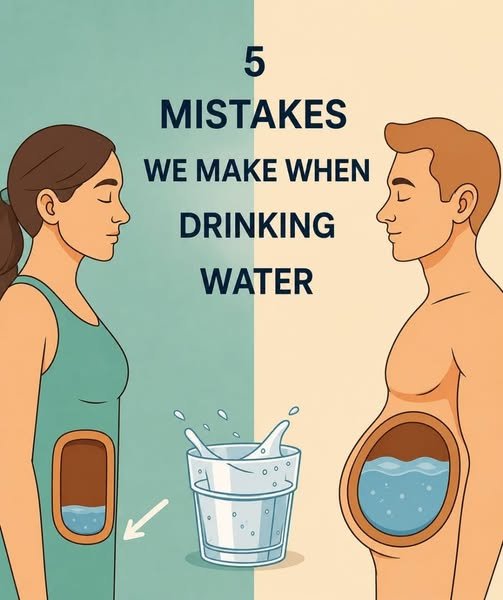
Water is essential for nearly every function in the body, from regulating temperature to supporting digestion and transporting nutrients. While most people know they should stay hydrated, many unknowingly make mistakes that can reduce the benefits of drinking water or even contribute to dehydration.
Here are five common mistakes to avoid.
1. Waiting Until You Feel Thirsty
Thirst is your body’s natural signal that it’s already starting to need more fluids. By the time you feel thirsty, you may already be mildly dehydrated.
Instead of waiting for thirst:
- Sip water regularly throughout the day.
- Increase your intake during hot weather or physical activity.
- Pay attention to signs like dry mouth, dark urine, or fatigue.
2. Drinking Too Much Water at Once
Gulping down a large amount of water in one sitting isn’t as effective as drinking it steadily throughout the day.
Drinking excessive amounts in a short period can:
- Cause temporary bloating.
- Increase frequent urination.
- In rare cases, lead to water intoxication (hyponatremia), especially during endurance sports.
Aim to spread your water intake across the day rather than consuming it all at once.
3. Ignoring Your Body’s Increased Water Needs
Your fluid needs change depending on your lifestyle and environment.
You may need more water if you:
- Exercise regularly.
- Spend time in hot or humid weather.
- Have a fever, vomiting, or diarrhea.
- Are pregnant or breastfeeding.
Listening to your body’s changing needs helps maintain proper hydration.
4. Replacing Water with Sugary or Caffeinated Drinks
Soft drinks, sweetened juices, and energy drinks may contain large amounts of added sugar. While moderate amounts of coffee and tea can contribute to daily fluid intake, relying mainly on sugary beverages isn’t the healthiest choice.
For better hydration:
- Choose plain water most often.
- Add slices of lemon, cucumber, or mint for flavor if desired.
- Limit sugar-sweetened beverages.
5. Not Paying Attention to Hydration Signs
One of the easiest ways to assess hydration is by observing your urine color.
Generally:
- Pale yellow: Usually indicates good hydration.
- Dark yellow or amber: May suggest you need more fluids.
- Completely clear all the time: Could indicate you’re drinking more water than necessary.
Other signs of dehydration include:
- Dry mouth
- Headache
- Dizziness
- Fatigue
- Reduced urine output
Tips for Healthy Hydration
To make hydration a daily habit:
- Carry a reusable water bottle.
- Drink a glass of water with meals.
- Eat water-rich foods like watermelon, cucumbers, oranges, and strawberries.
- Increase fluid intake during exercise and hot weather.
- Drink according to your thirst while considering your activity level and health needs.
Final Thoughts
Proper hydration is about more than simply drinking water—it’s about drinking the right amount at the right times. Avoiding these five common mistakes can help support your energy levels, digestion, concentration, and overall health. If you have kidney disease, heart failure, or another medical condition that affects fluid intake, follow your healthcare provider’s guidance on how much water you should drink.