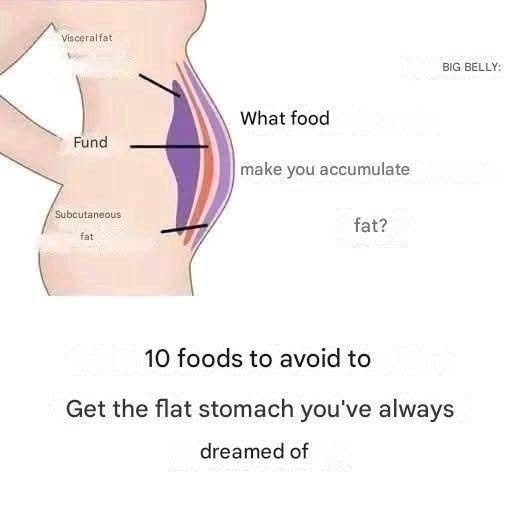
Many people believe that achieving a flatter stomach requires endless crunches or strict dieting. While regular exercise is important, your eating habits play an even bigger role. Certain foods can contribute to bloating, water retention, and excess calorie intake, making your stomach appear less flat.
It’s important to remember that no single food causes belly fat, and avoiding specific foods alone won’t magically flatten your stomach. However, limiting foods that promote bloating or make it easier to overeat can support your overall health and weight-management goals.
Here are 10 foods and drinks you may want to limit if you’re working toward a flatter stomach.
1. Sugary Soft Drinks
Regular sodas are loaded with added sugar and empty calories. They also contain carbonation, which can introduce extra gas into your digestive system and temporarily increase bloating.
Instead, choose water, sparkling water without added sugar (if carbonation doesn’t bother you), or unsweetened herbal tea.
2. Processed Snack Foods
Potato chips, cheese puffs, crackers, and similar snacks are often high in sodium, unhealthy fats, and refined carbohydrates. Excess sodium can cause your body to retain water, making you feel puffy and bloated.
Snack on fresh fruit, raw vegetables, nuts, or plain popcorn instead.
3. Fast Food
Many fast-food meals are high in calories, saturated fat, sodium, and refined carbohydrates. Eating them frequently can contribute to weight gain and increased belly fat over time.
Preparing more meals at home gives you greater control over ingredients and portion sizes.
4. Sugary Baked Goods
Cookies, doughnuts, pastries, cakes, and muffins are typically high in added sugars and refined flour while being low in fiber. These foods can cause blood sugar spikes and make it easier to consume excess calories.
Save these treats for occasional enjoyment rather than everyday snacks.
5. Alcohol
Alcohol provides extra calories with little nutritional value and may encourage overeating by lowering inhibitions. Some alcoholic drinks are also mixed with sugary beverages, adding even more calories.
If you drink alcohol, moderation is key.
6. Processed Meats
Bacon, sausage, hot dogs, and deli meats often contain high amounts of sodium and preservatives. Excess sodium may contribute to water retention and temporary bloating.
Choose lean, minimally processed protein sources such as chicken, fish, beans, or lentils more often.
7. Candy and Sweets
Candy is rich in added sugar and provides little nutritional value. Eating sugary treats regularly can make it more difficult to maintain a healthy calorie balance.
Satisfy your sweet tooth with fresh fruit or yogurt topped with berries.
8. Highly Processed Frozen Meals
Many frozen dinners are convenient but often contain high levels of sodium and preservatives. This can lead to temporary bloating and may not keep you full for very long.
Whenever possible, choose meals made with whole ingredients and plenty of vegetables.
9. White Bread and Refined Grains
Foods made with refined flour, such as white bread, many pastries, and some breakfast cereals, contain less fiber than whole-grain alternatives. Fiber helps promote fullness and supports healthy digestion.
Swap refined grains for whole-grain bread, brown rice, oats, or quinoa.
10. Sugar-Sweetened Coffee Drinks
Fancy coffee beverages can contain large amounts of sugar, flavored syrups, whipped cream, and whole milk, turning a simple drink into a high-calorie dessert.
Choose plain coffee or tea, and add small amounts of milk or a sugar-free alternative if desired.
Healthy Habits for a Flatter Stomach
Avoiding certain foods is only one piece of the puzzle. These healthy habits can also help reduce bloating and support a leaner waistline:
- Eat plenty of fruits and vegetables.
- Include lean protein with each meal.
- Choose whole grains over refined grains.
- Drink enough water throughout the day.
- Limit excess sodium.
- Exercise regularly, combining cardio and strength training.
- Eat slowly and avoid overeating.
- Get enough sleep each night.
- Manage stress, which can influence eating habits and digestion.
Final Thoughts
A flatter stomach isn’t about eliminating one specific food—it’s about building healthy eating habits over time. Foods high in added sugars, sodium, unhealthy fats, and refined carbohydrates can contribute to bloating, excess calorie intake, and weight gain when eaten frequently.
Rather than following restrictive diets, focus on eating more whole, nutrient-rich foods, staying active, and maintaining realistic expectations. Consistency—not perfection—is the key to achieving and maintaining a healthy, flatter-looking stomach.