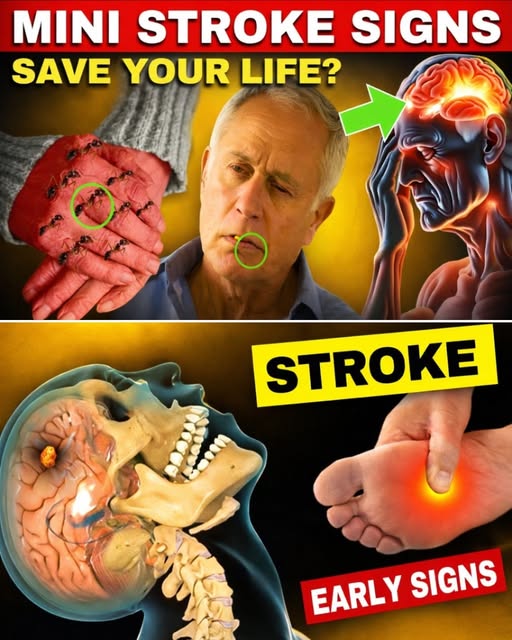
That headline is a mix of partial truths and exaggeration. Stroke prevention is real and important—but the idea of clear “8 warning signs one month before” is not medically reliable in that way.
Let’s separate fact from clickbait.
🧠 Stroke
A stroke usually happens suddenly, but some people experience warning events or risk signals beforehand—not a guaranteed “1-month warning list.”
⚠️ Possible early warning signs (can happen days or weeks before)
These are usually related to a mini-stroke (TIA) or worsening circulation risk:
1. Sudden numbness or weakness
- Face, arm, or leg (especially one side)
2. Temporary speech difficulty
- Slurred speech or trouble finding words
3. Short episodes of vision problems
- Blurry vision or partial vision loss
4. Unexplained dizziness or imbalance
- Feeling unsteady while walking
5. Severe or unusual headaches
- Especially sudden and different from usual
6. Brief confusion or memory issues
- Difficulty focusing or thinking clearly
7. Tingling or “pins and needles”
- Especially on one side of the body
8. Episodes that come and go
- Symptoms disappear within minutes to hours (important sign of TIA)
🚨 Important truth doctors emphasize
- These are not guaranteed one-month warnings
- They can happen suddenly or repeatedly
- A true stroke often occurs without long warning symptoms
- Many people have no symptoms before a stroke
👉 The closest real “warning” is a Transient Ischemic Attack (TIA), which is a medical emergency signal.
🛡️ 9 proven ways to reduce stroke risk
These are evidence-based prevention steps:
1. Control blood pressure (most important)
- High BP is the #1 risk factor
2. Manage blood sugar
- Especially for diabetics
3. Lower cholesterol
- Prevents artery blockage
4. Quit smoking
- Major risk reduction within months
5. Exercise regularly
- 30 minutes walking most days
6. Healthy diet
- Less salt, sugar, fried food
- More fruits, vegetables, whole grains
7. Maintain healthy weight
8. Limit alcohol intake
9. Treat heart conditions
- Especially irregular heartbeat (atrial fibrillation)
🧭 FAST stroke recognition (most important real tool)
If stroke happens, act immediately:
- F – Face drooping
- A – Arm weakness
- S – Speech difficulty
- T – Time to call emergency help
⚠️ Bottom line
- There is no reliable “8 signs one month before stroke” system
- Some early symptoms can occur, but strokes are often sudden
- Prevention depends on controlling risk factors, not predicting timing
- Any sudden neurological symptom should be treated as urgent
If you want, I can also explain:
- mini-stroke (TIA) vs stroke difference
- early BP warning signs people ignore
- or daily habits that quietly increase stroke risk 👍