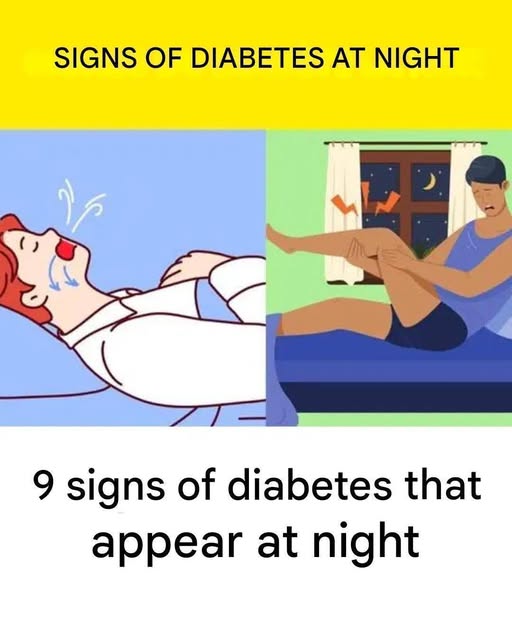
Diabetes doesn’t have a specific set of symptoms that only occur at night, but some signs are more noticeable during the night because of changes in blood sugar or increased urination. If you notice several of these symptoms, it’s worth discussing them with a healthcare professional and getting your blood sugar checked.
Here are nine nighttime signs that can be associated with diabetes:
- Frequent nighttime urination (nocturia) – High blood sugar causes the kidneys to remove excess glucose through urine, leading to more trips to the bathroom.
- Excessive thirst – Losing fluid through frequent urination can make you wake up feeling very thirsty.
- Night sweats – These may occur if blood sugar drops too low during sleep, particularly in people taking insulin or certain diabetes medications.
- Restless sleep – Blood sugar that is very high or very low can interfere with restful sleep.
- Leg cramps – Dehydration, nerve problems, or electrolyte imbalances associated with diabetes may contribute to nighttime cramps.
- Burning, tingling, or numbness in the feet – This can be a sign of diabetic nerve damage (peripheral neuropathy), which is often more noticeable when lying quietly in bed.
- Increased hunger, even at night – Cells may not be getting enough glucose for energy, leading to persistent hunger.
- Morning headaches or fatigue – Poor blood sugar control overnight or interrupted sleep from symptoms can leave you feeling unrefreshed.
- Dry mouth – Frequent urination and dehydration can cause you to wake up with a dry mouth.
These symptoms are not specific to diabetes and can also be caused by other conditions, such as urinary tract problems, sleep disorders, medication side effects, or dehydration.
If you have symptoms such as increased thirst, frequent urination, unexplained weight loss, blurred vision, or persistent fatigue, it’s a good idea to arrange an evaluation. Diabetes can often be detected with tests such as:
- A fasting blood glucose test
- A hemoglobin A1c (HbA1c) test
- An oral glucose tolerance test (in some situations)
If you have diabetes and experience repeated nighttime sweating, confusion, shakiness, or difficulty waking, especially if you take insulin or medications that can lower blood sugar, contact your healthcare professional promptly, as these may be signs of nighttime hypoglycemia.