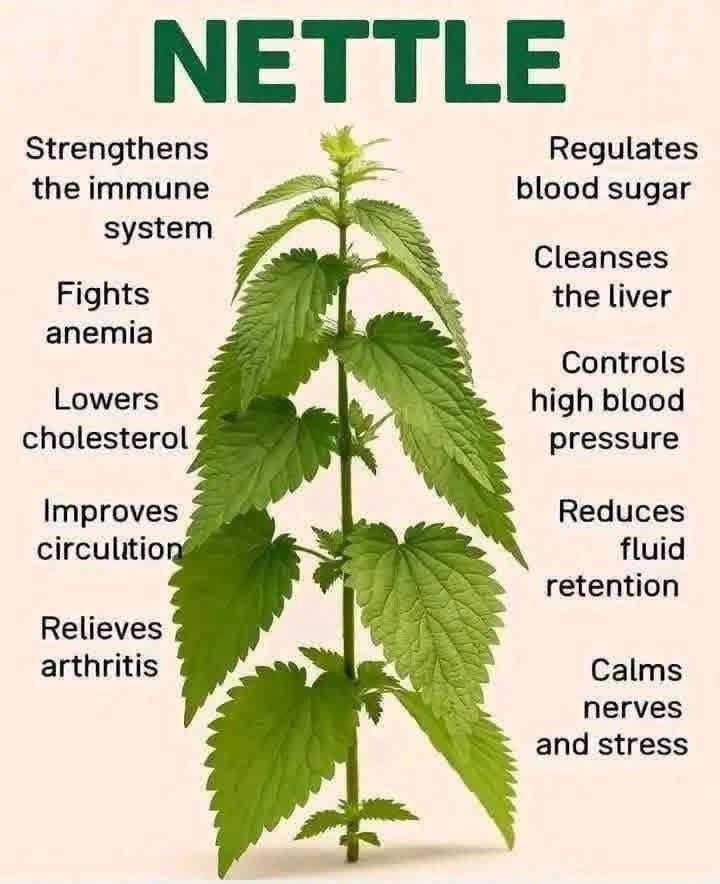
Nettle (commonly called stinging nettle) is a leafy green plant known for its tiny hairs that can sting the skin. Despite this, it has been used for centuries in cooking, herbal teas, and traditional medicine.
What does nettle contain?
Nettle is rich in:
- Vitamins A, C, and K
- Iron
- Calcium
- Magnesium
- Potassium
- Antioxidants and plant compounds
Potential health benefits
Research suggests nettle may:
- Help reduce inflammation
- Relieve symptoms of seasonal allergies in some people
- Support urinary tract and prostate health
- Provide nutrients that support healthy bones
- Help maintain normal blood sugar levels (evidence is still limited)
- Contribute to overall nutrition when eaten as a cooked vegetable
How is it used?
- Cooked leaves: Used in soups, stews, and similar to spinach.
- Herbal tea: Made from dried nettle leaves.
- Supplements: Available as capsules, extracts, or tinctures.
Can you eat it raw?
No. Fresh nettle leaves have stinging hairs that can irritate the skin and mouth. Cooking, drying, or blanching the leaves removes the sting.
Side effects and precautions
- Fresh plants can cause a painful skin rash when touched.
- Nettle may interact with medications such as blood thinners, blood pressure medicines, diabetes medications, or diuretics.
- Pregnant women should avoid medicinal amounts of nettle unless advised by a healthcare professional.
If you meant nettle in the context of a specific remedy, tea, recipe, or skin condition, let me know and I can provide more detailed information.