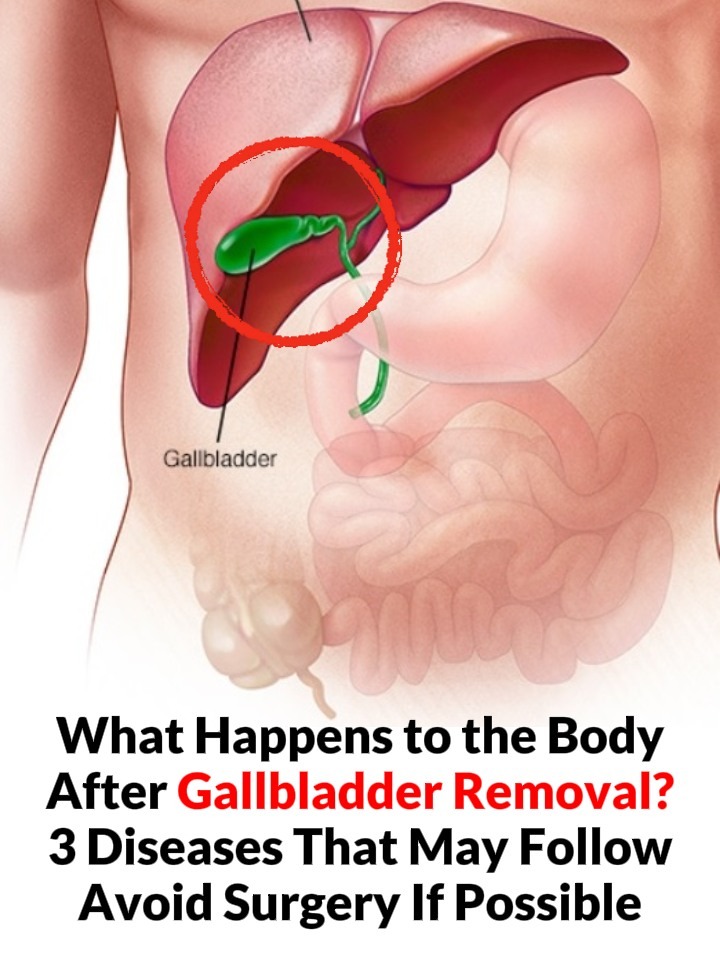
That title is misleading and fear-based, and it doesn’t reflect medical consensus.
Gallbladder removal (cholecystectomy) is one of the most common and well-studied surgeries. It is usually done to treat painful or dangerous conditions like gallstones or gallbladder inflammation.
Here’s a clear, accurate, and balanced explanation of what actually happens:
What Happens After Gallbladder Removal?
The gallbladder stores bile (a digestive fluid made by the liver). After removal:
- Bile still flows from the liver
- It goes directly into the small intestine
- Digestion continues normally, but bile release becomes less “controlled”
Most people live completely normal lives after recovery.
Common Temporary Effects (Not Diseases)
Some people experience short-term adjustments, such as:
- Loose stools or mild diarrhea
- Bloating or gas
- Difficulty digesting very fatty meals at first
These usually improve over weeks to months as the body adapts.
Possible Long-Term Changes (In a Minority of People)
Some individuals may develop:
1. Post-cholecystectomy diarrhea
- Occurs in a small percentage of patients
- Often manageable with diet changes or medication
2. Bile reflux gastritis (uncommon)
- Bile irritates the stomach lining
- Can cause burning or discomfort
3. Changes in fat digestion
- Usually mild
- Most people tolerate fats normally over time
These are not guaranteed outcomes, and many people never experience them.
Important Reality Check
The phrase “Avoid surgery if possible” can be misleading because:
- Gallbladder removal is usually recommended only when medically necessary
- Untreated gallstones or infection can lead to serious complications:
- Severe pain
- Infection (cholecystitis)
- Pancreatitis
- Blocked bile ducts
In many cases, surgery is the safest and most effective treatment, not something to avoid.
Bottom Line
After gallbladder removal, most people:
- Digest food normally
- Live without major restrictions
- Do not develop “new diseases” because of the surgery itself
A small number may have manageable digestive changes, especially early on.
If you want, I can also rewrite this into:
- a viral YouTube script
- a health blog article
- or a myth vs fact post for social media