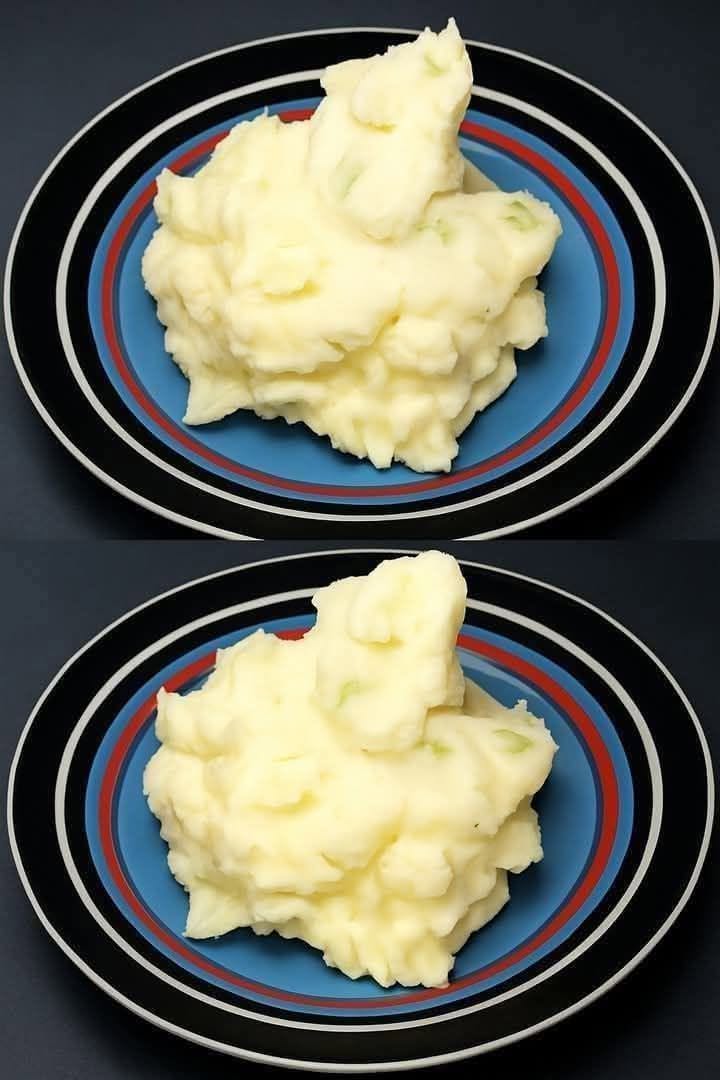
Your grandmother wasn’t wrong to laugh a little—but she wasn’t fully right either.
Boiling potatoes in water is actually the classic, standard method for making mashed potatoes. Most traditional recipes (including many professional kitchens) do it that way. The real issue isn’t boiling in water—it’s how it’s done.
🥔 What actually matters for good mashed potatoes
Using Potato, the texture depends on preventing waterlogging and starch breakdown.
✔️ When boiling works well
Boiling is fine if you:
- Start potatoes in cold salted water (not already boiling)
- Cut them into even chunks
- Simmer gently, not a violent boil
- Drain immediately when tender
- Let them steam-dry for 5–10 minutes after draining
This gives soft, fluffy mash.
❌ Why people “hate boiling in water”
Your grandmother is probably reacting to bad boiling technique, like:
- Dropping potatoes into already boiling water → uneven cooking
- Overboiling → watery, gluey texture
- Not drying them → diluted flavor
- Using waxy potatoes instead of starchy ones
That’s what leads to sad mashed potatoes, not the water itself.
🧈 What chefs often do instead (or additionally)
Many cooks improve texture by:
1. Steaming instead of boiling
Less water absorption → fluffier mash
2. Baking potatoes
Whole baked potatoes give the driest, fluffiest mash
3. Ricing instead of mashing
Using a ricer prevents gluey texture
🧠 The real secret (this is what your grandmother probably meant)
Great mashed potatoes aren’t about avoiding water—they’re about:
- Dry potato flesh
- Hot dairy (butter/milk/cream) added gradually
- No overmixing (overworking releases starch → glue)
🥔 Bottom line
Boiling potatoes in water is not wrong—it’s just easy to do badly. Your grandmother likely learned a more “feel-based” method that avoids common mistakes, not the water itself.