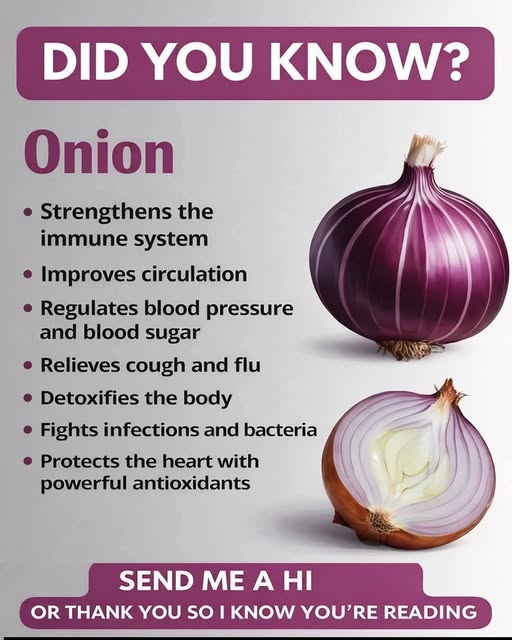
This image is making a bunch of broad health claims about onions that mix some truth, some exaggeration, and a couple of misleading ideas. Let’s go through them carefully.
The onion shown is Onion, which does contain beneficial plant compounds—but it’s not a cure-all “detox superfood.”
1. “Strengthens the immune system”
Partly true, but overstated.
Onions contain:
- Vitamin C (small amount)
- Quercetin (a plant flavonoid with antioxidant effects)
- Sulfur compounds
These may support immune function indirectly by reducing oxidative stress and inflammation.
But eating onions won’t “boost” immunity in a dramatic or immediate way. It’s more about long-term dietary support.
2. “Improves circulation”
Some evidence, but modest effect.
Onions (especially raw) contain compounds that may:
- Help blood vessel function
- Slightly reduce platelet aggregation (blood clotting tendency)
However:
- The effect is mild compared to medications or lifestyle factors like exercise, smoking cessation, or blood pressure control.
So yes, possible small benefit, not a major circulatory “fix.”
3. “Regulates blood pressure and blood sugar”
Partially supported, but not a treatment.
- Some studies suggest onion compounds may help slightly lower blood sugar in animals and small human trials.
- Fiber and antioxidants can support metabolic health.
But:
- It does NOT replace diabetes or blood pressure management
- Effects depend heavily on overall diet and quantity
Think of it as supportive food, not a regulator.
4. “Relieves cough and flu”
Mostly traditional belief, limited scientific backing.
- Raw onion is sometimes used in folk remedies (like onion syrup)
- It may have mild antimicrobial and anti-inflammatory compounds
But:
- No strong clinical evidence it treats flu or infections
- It may soothe symptoms slightly, but it does not fight viruses in a meaningful medical way
5. “Detoxifies the body”
Misleading.
Your body already detoxifies through:
- Liver
- Kidneys
- Lungs
- Skin
Onions do not “detox” you.
They may support liver health indirectly through antioxidants, but the word detox is mostly marketing language here.
6. “Fights infections and bacteria”
Partly true in lab settings, not as a medicine.
- Onion extracts can inhibit bacteria in laboratory studies
- But eating onions does not act like an antibiotic in the body
So:
- Interesting antimicrobial properties in vitro
- Not a treatment for infections in real life
7. “Protects the heart with antioxidants”
Most accurate claim on the list.
Onions contain:
- Quercetin (antioxidant flavonoid)
- Sulfur compounds
These may help:
- Reduce inflammation
- Support blood vessel health
- Possibly lower cardiovascular risk over time (as part of a healthy diet)
But again:
- It’s supportive, not protective in a guaranteed or dramatic sense
Big picture (what’s actually true)
Onions are healthy because they:
- Add antioxidants and fiber
- Support general cardiovascular and metabolic health
- Fit well in diets like Mediterranean-style eating
But they are NOT:
- A detox cure
- A flu treatment
- A blood pressure “regulator” on their own
- A substitute for medical care
Bottom line
This image is typical wellness exaggeration: it takes a nutritious food and stretches its benefits into medical claims.
Onions are good for you—but they work as part of a pattern, not as a standalone remedy.
If you want, I can compare onion vs garlic vs beetroot for circulation and heart health, since those three are often grouped together in these kinds of posts.