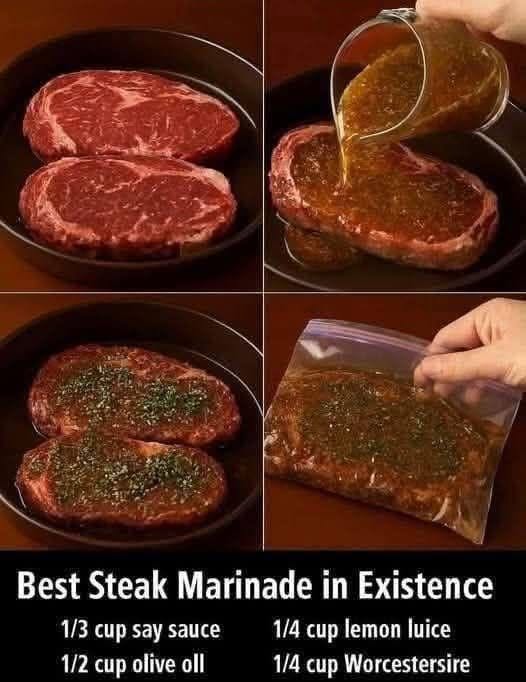
Best Steak Marinade in Existence (Detailed Version)
This marinade became popular because it combines all four components of an effective marinade:
- Salt (soy sauce, Worcestershire sauce) – seasons the meat and enhances flavor.
- Acid (lemon juice) – lightly tenderizes the surface and adds brightness.
- Fat (olive oil) – helps carry flavors and promotes browning.
- Aromatics and spices (garlic, herbs, pepper) – provide complexity and depth.
Unlike many marinades that rely heavily on sugar, this one focuses on savory, herbaceous flavors that complement beef rather than overpower it.
Ingredients
- ½ cup (120 ml) olive oil
- ⅓ cup (80 ml) soy sauce
- ⅓ cup (80 ml) freshly squeezed lemon juice
- ¼ cup (60 ml) Worcestershire sauce
- 3 tablespoons dried basil
- 1½ tablespoons garlic powder
- 1½ tablespoons dried parsley flakes
- 1 teaspoon ground white pepper
- 1 teaspoon minced fresh garlic (optional)
- ¼ teaspoon cayenne pepper (optional)
What Each Ingredient Does
Olive Oil
The oil helps distribute fat-soluble flavors across the surface of the steak. It also contributes to better browning during cooking.
Soy Sauce
Soy sauce provides salt and glutamates, which create a strong umami effect. It penetrates the surface better than dry seasonings alone and forms the backbone of the marinade.
Lemon Juice
The acidity helps break down some proteins on the exterior of the meat. This can improve tenderness on tougher cuts when used appropriately.
Worcestershire Sauce
Worcestershire contributes acidity, sweetness, umami, and complexity from ingredients such as anchovies, vinegar, tamarind, and molasses.
Basil and Parsley
These herbs add an aromatic, slightly sweet herbal note that balances the savory ingredients.
Garlic Powder and Fresh Garlic
Garlic powder disperses evenly throughout the marinade and provides a consistent flavor. Fresh garlic adds a sharper, more pungent note.
White Pepper
White pepper gives a subtle heat and earthy flavor without the stronger bite of black pepper.
Cayenne Pepper
Optional, but useful if you want a mild background heat.
How to Prepare the Marinade
- Combine all ingredients in a bowl.
- Whisk thoroughly until the oil is incorporated.
- Taste the marinade if desired. It should be salty, tangy, and strongly flavored. Marinades should generally taste more intense than the final result because they season only the surface of the meat.
For a smoother marinade, blend all ingredients for 20–30 seconds.
Choosing the Right Steak
This marinade works best on steaks that benefit from additional flavor and some tenderization:
Excellent choices:
- Flank steak
- Skirt steak
- Hanger steak
- Flat iron steak
- Sirloin
- Tri-tip
- Chuck-eye steak
Good choices:
- New York strip
- T-bone
- Porterhouse
Less necessary:
- Ribeye
- Filet mignon
Premium, highly marbled cuts already possess significant natural flavor and tenderness, so many cooks prefer simple salt and pepper on those cuts.
Marinating Times
Thin Cuts
- Skirt steak: 2–4 hours
- Flank steak: 4–8 hours
Medium-Thick Cuts
- Sirloin: 4–8 hours
- Strip steak: 2–6 hours
Thick Steaks (1½ inches or more)
- 6–12 hours
Maximum Time
Avoid marinating in this recipe for more than 24 hours. The lemon juice can eventually make the outer layer of the meat soft or mushy.
Proper Marinating Technique
- Place steak in a zip-top bag or shallow glass dish.
- Pour the marinade over the steak.
- Remove as much air as possible if using a bag.
- Refrigerate during marination.
- Turn occasionally for even exposure.
Do not marinate at room temperature.
Before Cooking
- Remove steak from the refrigerator 20–30 minutes before cooking.
- Take it out of the marinade.
- Pat the surface dry with paper towels.
This step is important. Excess liquid prevents proper browning and can lead to steaming rather than searing.
Grilling Instructions
Gas or Charcoal Grill
- Preheat to high heat (450–550°F / 230–290°C).
- Oil the grates lightly.
- Place steak directly over the hottest section.
Approximate cooking times for a 1-inch steak:
| Doneness | Internal Temp | Time Per Side |
|---|---|---|
| Rare | 120–125°F (49–52°C) | 3–4 min |
| Medium-Rare | 130–135°F (54–57°C) | 4–5 min |
| Medium | 140–145°F (60–63°C) | 5–6 min |
| Medium-Well | 150–155°F (66–68°C) | 6–7 min |
- Rest for 5–10 minutes before slicing.
Pan-Searing Method
- Heat a cast-iron skillet until extremely hot.
- Add a small amount of high-smoke-point oil.
- Sear steak for 3–5 minutes per side.
- Add butter, garlic, and thyme during the final minute if desired.
- Baste continuously.
- Rest before serving.
Advanced Improvements
For an even more flavorful version, add:
- 1 tablespoon Dijon mustard
- 1 tablespoon honey or brown sugar
- 1 teaspoon smoked paprika
- 1 teaspoon onion powder
- ½ teaspoon freshly ground black pepper
These additions improve caramelization and create a more pronounced crust.
Common Mistakes
Over-Marinating
More time is not always better. Acidic marinades can damage texture when left too long.
Not Drying the Steak
A wet steak will not develop a proper crust.
Cooking on Low Heat
Steak benefits from intense heat. High temperatures create the Maillard reaction responsible for the rich brown crust.
Reusing Marinade
Discard used marinade or boil it thoroughly before using it as a sauce.
Final Assessment
This recipe is popular because it delivers a balance of salt, acid, fat, and umami that works on nearly every beef cut. It is especially effective on flank, skirt, hanger, and sirloin steaks, where the marinade can significantly improve flavor and perceived tenderness. For premium cuts like ribeye or filet mignon, a simpler seasoning approach is often preferred, but this marinade still produces excellent results if used for a shorter period.