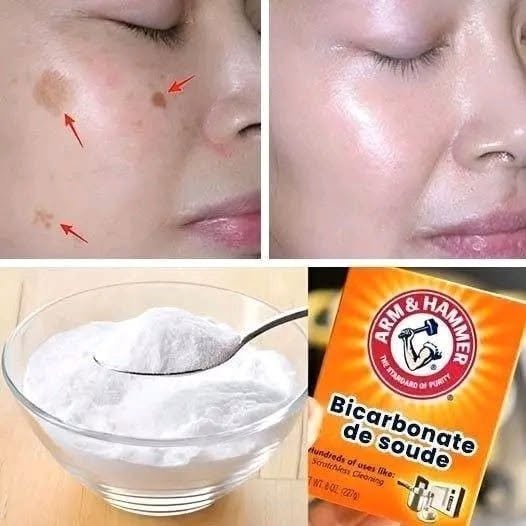
Learn how baking soda is commonly used in DIY skincare, its potential risks, and safer alternatives for reducing the appearance of dark spots, fine lines, and dark circles.
How to Use Baking Soda for Skincare: What You Should Know
Baking soda is a common household ingredient that many people use in DIY beauty routines. Some claim it can help exfoliate the skin and make it look brighter. However, there is no strong scientific evidence that baking soda removes dark spots, wrinkles, or dark circles, and using it on your face can sometimes do more harm than good.
Here’s what you should know before trying it.
Can Baking Soda Remove Dark Spots?
Baking soda acts as a physical exfoliant, helping remove dead skin cells from the surface. While exfoliation may temporarily make the skin appear brighter, it does not erase dark spots or hyperpigmentation.
Overusing baking soda may irritate the skin, which can actually worsen discoloration in some people.
Can It Reduce Wrinkles?
No research shows that baking soda reduces wrinkles. Fine lines are caused by aging, sun exposure, and loss of collagen. Baking soda cannot restore collagen or reverse these changes.
For wrinkle prevention, dermatologists recommend:
- Daily sunscreen (SPF 30 or higher)
- Retinoids or retinol products
- Moisturizers with hyaluronic acid
- Vitamin C serums
Can It Help Dark Circles?
Dark circles are often caused by genetics, lack of sleep, allergies, aging, or thinning skin. Baking soda has not been proven to improve them and may irritate the delicate skin around the eyes.
Instead, consider:
- Getting adequate sleep
- Staying hydrated
- Using eye creams with caffeine or vitamin C
- Applying cool compresses
If You Still Want to Try Baking Soda
If you choose to experiment with baking soda despite the risks, use caution.
Ingredients
- 1 teaspoon baking soda
- Enough water to form a thin paste
Directions
- Mix the baking soda with water.
- Apply gently to a small patch of skin only, avoiding the eye area.
- Leave it on for no more than 30 seconds to 1 minute.
- Rinse thoroughly with lukewarm water.
- Apply a fragrance-free moisturizer afterward.
Do not use this treatment more than once a week, and stop immediately if you notice redness, burning, or irritation.
Why Baking Soda Can Be Risky
Baking soda has a high pH, while healthy skin is naturally slightly acidic. Frequent use may:
- Damage the skin barrier
- Cause dryness and irritation
- Increase sensitivity
- Lead to breakouts in some people
- Make hyperpigmentation worse after irritation
People with sensitive skin, eczema, rosacea, or acne-prone skin should avoid using baking soda on their face.
Better Options for Brighter Skin
If your goal is healthier, more even-looking skin, consider ingredients supported by research:
- Vitamin C to brighten skin
- Niacinamide to improve uneven tone
- Retinol to reduce fine lines
- Azelaic acid for discoloration
- Broad-spectrum sunscreen every day to prevent new dark spots
Final Thoughts
Although baking soda is a popular DIY skincare ingredient, there is little evidence that it removes dark spots, wrinkles, or dark circles. Because it can irritate the skin and damage its protective barrier, it’s generally safer to choose skincare products formulated with ingredients that have been studied for these concerns.