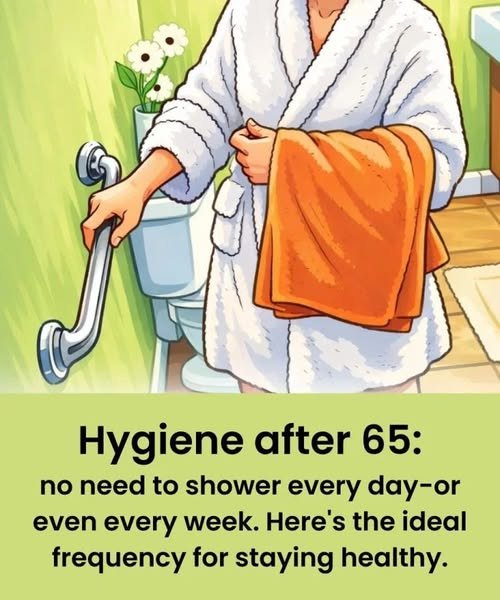
Daily bathing is often linked with cleanliness and good health. But after the age of 65, the body changes in ways that make daily full-body showers less necessary—and sometimes even counterproductive. The goal is not to reduce hygiene, but to adjust it in a way that supports aging skin and overall comfort.
Here’s a clear breakdown of why this shift matters.
🧴 1. Aging Skin Loses Natural Oils
As we age, skin becomes:
- Thinner
- More fragile
- Less oily
These natural oils act as a protective barrier that keeps moisture in and irritants out. Daily showers—especially with soap—can strip away what little oil remains.
This often leads to:
- Dry, tight skin
- Itching (especially at night)
- Flaky or cracked areas
- Increased sensitivity to products
For many older adults, this is the first noticeable downside of daily showering.
🚿 2. Hot Water Makes the Problem Worse
Hot showers feel relaxing, but they can be harsh on aging skin.
Hot water:
- Removes natural oils faster
- Weakens the skin barrier
- Increases dryness and irritation
Over time, repeated exposure can make skin more reactive, meaning even mild soaps or fabrics can cause discomfort.
🦠 3. Skin’s Natural Balance Gets Disrupted
Healthy skin has a protective layer of beneficial microorganisms (skin microbiome). This system helps defend against irritation and minor infections.
Frequent washing—especially with strong cleansers—can:
- Disturb this natural balance
- Reduce skin resilience
- Increase sensitivity and itching
This doesn’t mean hygiene is harmful. It means over-washing can remove helpful protection the skin naturally relies on.
🧍♂️ 4. Daily Showers Can Increase Physical Strain
For older adults, showering isn’t just about hygiene—it’s also a physical activity.
Daily showers may increase:
- Risk of slipping on wet bathroom floors
- Fatigue from standing too long
- Dizziness due to hot steam or temperature changes
- Fear of falling, which can reduce confidence
Even small improvements in routine frequency can reduce these risks significantly.
🧼 5. Full Body Cleaning Doesn’t Need to Be Daily
Good hygiene doesn’t always require a full shower every day. Many health professionals suggest a more balanced approach:
A practical routine can include:
- Daily: washing face, underarms, groin, and feet
- Full shower: 2–4 times per week (or as needed)
- Using mild, fragrance-free soap
- Applying moisturizer immediately after bathing
This keeps the body clean while protecting skin health.
🌿 6. Climate and Lifestyle Matter
There is no single rule for everyone. Shower needs depend on:
- Weather (hot vs cold climates)
- Activity level (sweating, exercise)
- Health conditions (skin issues, mobility)
- Personal comfort
In warm or humid climates, more frequent rinsing may still be needed—but not always full soap-based showers.
⚖️ The Key Idea
The issue isn’t cleanliness—it’s over-cleansing fragile skin.
After 65, the goal shifts from “daily washing” to:
👉 maintaining hygiene while preserving skin comfort and protection
💡 Bottom Line
For many older adults, daily full showers may:
- Dry the skin
- Increase irritation
- Add unnecessary physical strain
A slightly reduced, more mindful bathing routine often leads to healthier, more comfortable skin and safer daily habits.
If you want, I can rewrite this as a Facebook post, newspaper article, or SEO blog with keywords and meta description.