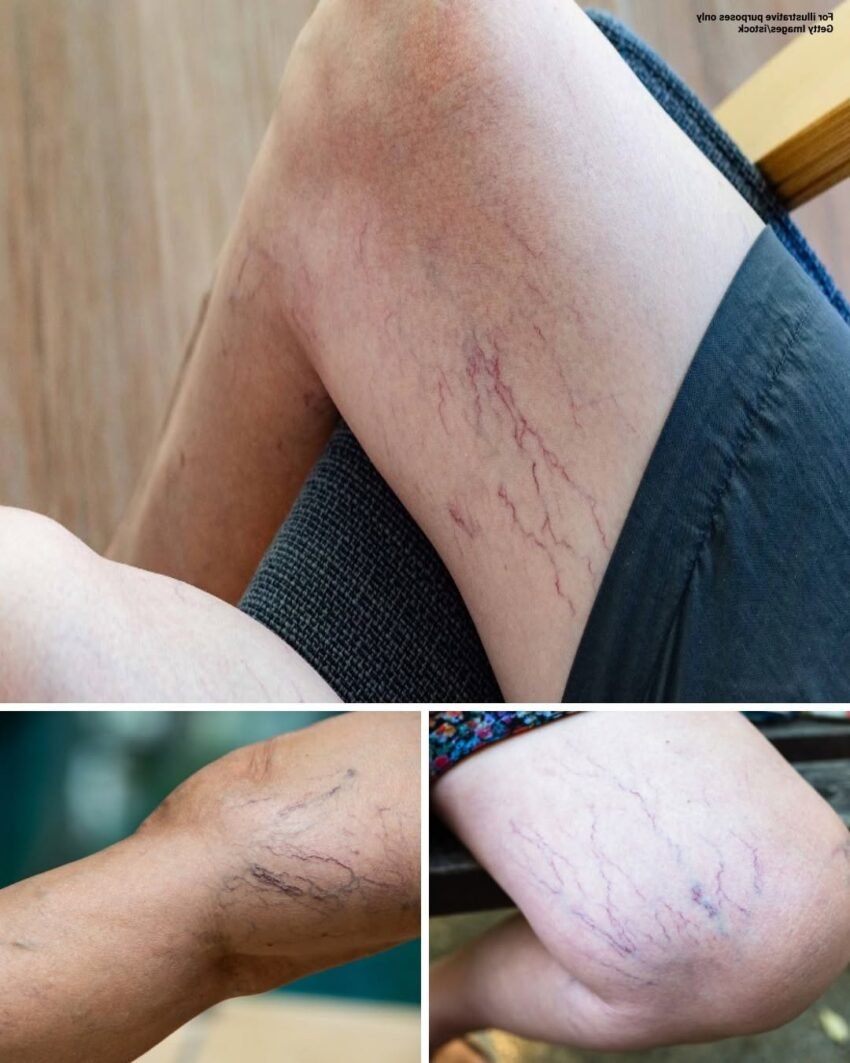
Purple or bluish veins on the legs are very common, and in many cases they are harmless. However, they can also sometimes be a sign of underlying circulation issues—especially if they are new, painful, or bulging.
If You Have Purple Veins on Your Legs — What It Means
Seeing purple, blue, or dark green veins on your legs can be surprising. Some people notice them through the skin, while others see raised, twisted veins that become more visible over time.
In most cases, these are related to how blood flows through your veins—not something immediately dangerous. But understanding the cause is important.
1. Normal Visible Veins (Often Harmless)
For many people, purple or blue veins are simply normal superficial veins showing through the skin.
This is more noticeable if you:
- Have fair or thin skin
- Are lean or athletic
- Spend a lot of time standing
- Have low body fat
These veins usually:
- Do not hurt
- Do not swell
- Stay stable over time
👉 In this case, they are mostly a cosmetic concern.
2. Varicose Veins (Most Common Cause of Concern)
One of the most common reasons for purple, bulging veins is Varicose Veins.
This happens when:
- Vein valves become weak
- Blood flows backward instead of upward
- Blood pools in the legs
Common signs include:
- Bulging, twisted veins
- Blue, purple, or dark color
- Heaviness in legs
- Aching or burning sensation
- Swelling in ankles or feet
- Symptoms worse after standing long
Risk factors:
- Aging
- Pregnancy
- Obesity
- Standing for long hours
- Family history
3. Chronic Venous Insufficiency
Sometimes purple veins are part of a broader circulation problem called Chronic Venous Insufficiency.
This means:
- Blood is not returning efficiently to the heart
- Pressure builds up in leg veins
Possible symptoms:
- Swelling
- Skin darkening near ankles
- Itching or irritation
- Slow-healing wounds in severe cases
4. Spider Veins (Smaller Visible Veins)
If the veins are very thin and web-like, they may be Spider Veins.
These are:
- Usually harmless
- Mostly cosmetic
- Common in women
They often appear:
- On thighs or calves
- In clusters or fine lines
5. Poor Circulation or Lifestyle Factors
Sometimes veins look more visible due to temporary or lifestyle-related factors:
- Long standing or sitting
- Hot weather (veins expand)
- Lack of movement
- Hormonal changes
These changes are usually reversible with movement and hydration.
When Purple Veins May Be a Warning Sign
You should see a doctor if you notice:
- Sudden swelling in one leg
- Painful, hard veins
- Skin turning dark or thick
- Open sores near ankles
- Warmth or redness in the leg
- Rapid worsening of symptoms
These may indicate more serious circulation problems.
How to Improve Vein Health
If your veins are related to mild circulation issues, these habits may help:
🏃 Movement
- Walking daily
- Avoid long sitting/standing
🦵 Elevation
- Raise legs above heart level when resting
🧦 Compression stockings
- Improve blood flow in legs
⚖️ Healthy weight
- Reduces pressure on veins
🚰 Hydration & diet
- Supports circulation and vessel health
Medical Treatments (If Needed)
For more severe varicose veins, doctors may recommend:
- Laser treatment
- Sclerotherapy (injecting veins to close them)
- Minor surgical procedures
Final Thoughts
Purple veins on the legs are often harmless and related to normal visible veins or mild circulation issues. However, in some cases they can indicate conditions like varicose veins or venous insufficiency.
The key is not to panic—but to observe:
- Are they painful?
- Are they bulging or growing?
- Are there swelling or skin changes?
If yes, it’s worth getting checked. If not, simple lifestyle habits can often help manage or reduce them.