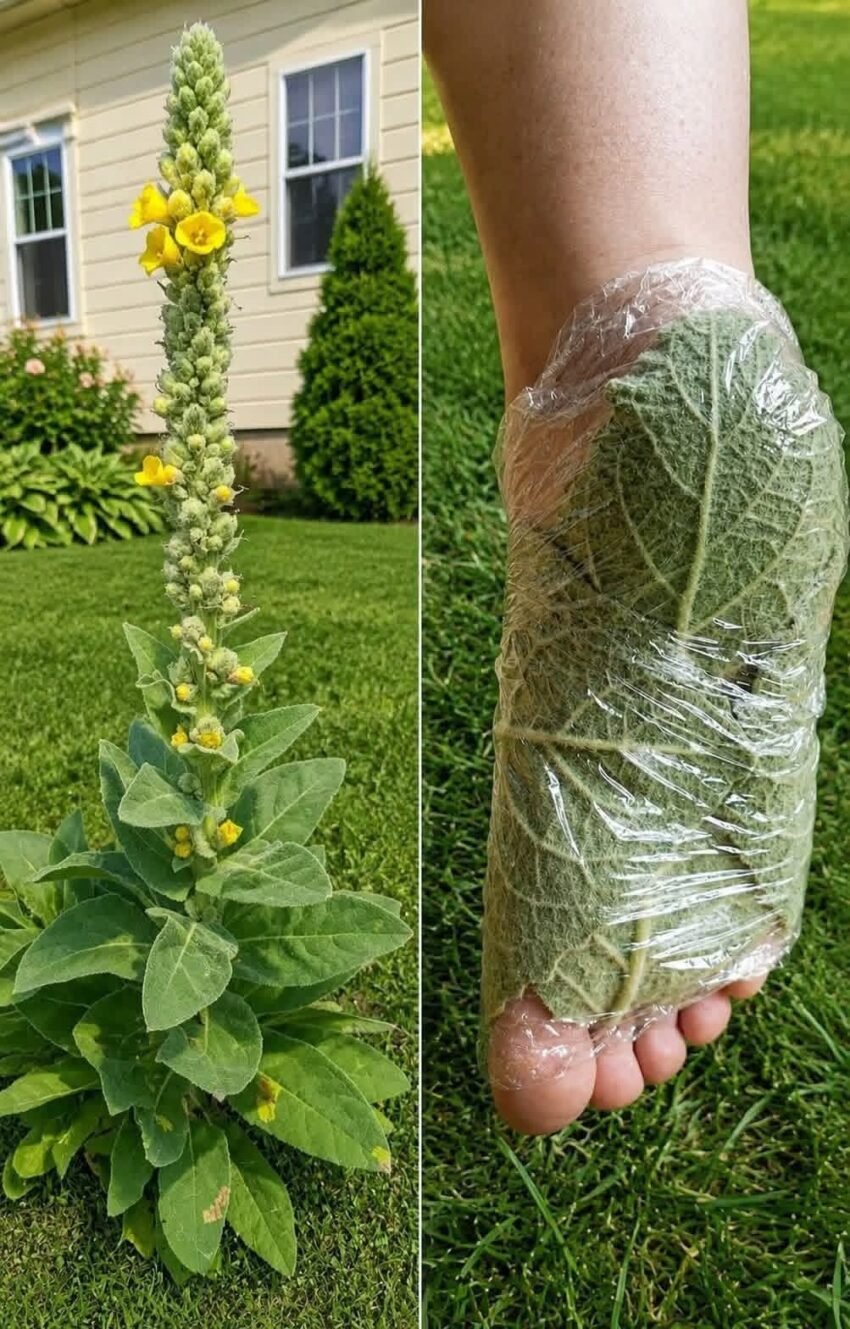
Discover the traditional uses, potential benefits, and growing tips for Verbascum densiflorum, also known as great mullein. Learn why this striking plant has been valued in herbal traditions for centuries and what science says about its uses.
Everyone Has This Plant, But Most People Don’t Know Its Secret Power: Verbascum densiflorum
You may have seen this tall, fuzzy-leaved plant growing along roadsides, in gardens, fields, or even in neglected corners of your yard without realizing it has a long history in traditional herbal medicine. Verbascum densiflorum, commonly known as great mullein, has been used for centuries in Europe and parts of Asia as a traditional herbal remedy.
Its bright yellow flower spikes and soft, velvety leaves make it easy to recognize. Although many people consider it a common wild plant, herbalists have valued it for generations. Modern scientific research has investigated some of its properties, but more high-quality studies are needed to confirm many of its traditional uses.
Let’s explore why this fascinating plant has earned such a respected place in herbal traditions.
What Is Verbascum densiflorum?
Verbascum densiflorum is a flowering plant belonging to the figwort family (Scrophulariaceae). It is closely related to other mullein species and is a biennial plant, meaning it usually completes its life cycle over two years.
During its first year, it produces a rosette of large, soft leaves. In the second year, it sends up a tall flowering stalk that can reach over 6 feet (1.8 meters) in height, covered with clusters of bright yellow flowers.
How to Identify Great Mullein
Key features include:
- Large, soft, velvety gray-green leaves
- Tall flowering spike
- Bright yellow five-petaled flowers
- Thick, sturdy stem
- Fine hairs covering much of the plant
The fuzzy leaves are one of its most recognizable characteristics.
Traditional Uses
For centuries, different parts of the plant have been used in traditional herbal practices.
The flowers and leaves have commonly been prepared as:
- Herbal teas
- Infusions
- Oils
- Compresses
- Tinctures
Historically, great mullein has been used in traditional medicine for respiratory comfort, soothing the throat, and as a topical preparation for minor skin irritation. These are traditional uses and are not the same as proven medical treatments.
Potential Plant Compounds
Researchers have identified several naturally occurring compounds in Verbascum densiflorum, including:
- Flavonoids
- Saponins
- Mucilage
- Phenolic compounds
- Iridoid glycosides
These compounds have been studied in laboratory settings for various biological activities. However, laboratory findings do not necessarily translate into proven health benefits in people.
What Does Current Research Suggest?
Some laboratory and early research suggests that compounds found in mullein species may have:
- Antioxidant properties
- Mild anti-inflammatory activity
- Antimicrobial activity against certain microorganisms under laboratory conditions
However, there is not enough high-quality clinical evidence to conclude that Verbascum densiflorum effectively treats or prevents specific diseases in humans. More research is needed.
Traditional Herbal Tea
The dried flowers or leaves are sometimes brewed into a tea.
Basic Preparation
Ingredients
- 1–2 teaspoons dried mullein flowers or leaves
- 1 cup hot water
Directions
- Place the dried herb in a cup.
- Pour hot water over it.
- Steep for 10–15 minutes.
- Strain carefully through a fine mesh strainer or coffee filter to remove the tiny leaf hairs, which may irritate the mouth or throat.
- Drink while warm if desired.
Always use properly identified, clean, and appropriately prepared plant material.
Growing Great Mullein
This hardy plant is easy to grow.
It prefers:
- Full sun
- Well-drained soil
- Moderate watering
- Open spaces
Once established, it tolerates drought well and attracts pollinators such as bees.
Safety Considerations
Although generally well tolerated when used appropriately, Verbascum densiflorum is not suitable for everyone.
Keep these points in mind:
- Some people may develop allergic reactions or skin irritation.
- The tiny hairs on the leaves can be irritating if not filtered from tea.
- The safety of medicinal use during pregnancy or breastfeeding has not been established.
- Herbal products can interact with certain medications.
Consult a qualified healthcare professional before using herbal remedies, especially if you have a chronic medical condition or take prescription medications.
Frequently Asked Questions
Is Verbascum densiflorum the same as common mullein?
It is one of several closely related mullein species. They share many characteristics, but they are different species within the Verbascum genus.
Can I collect it from the wild?
Wild plants can be contaminated by pesticides, pollution, or misidentified. Only harvest plants if you are confident in their identification and the area is free from contaminants.
Is mullein scientifically proven to cure diseases?
No. While some laboratory studies have shown interesting biological properties, there is currently insufficient high-quality clinical evidence to support claims that mullein cures diseases.
Can I grow it at home?
Yes. Great mullein grows readily in sunny locations with well-drained soil and often reseeds itself.
Final Thoughts
Verbascum densiflorum, or great mullein, is an eye-catching plant with a rich history in traditional herbal medicine. Its soft leaves and bright yellow flowers have been used for generations in teas, oils, and other preparations. While early scientific research has identified interesting plant compounds, many traditional claims have not yet been confirmed in rigorous human studies. If you’re interested in using this herb, choose reliable sources, prepare it carefully, and discuss its use with a healthcare professional if you have any medical conditions or take medications.