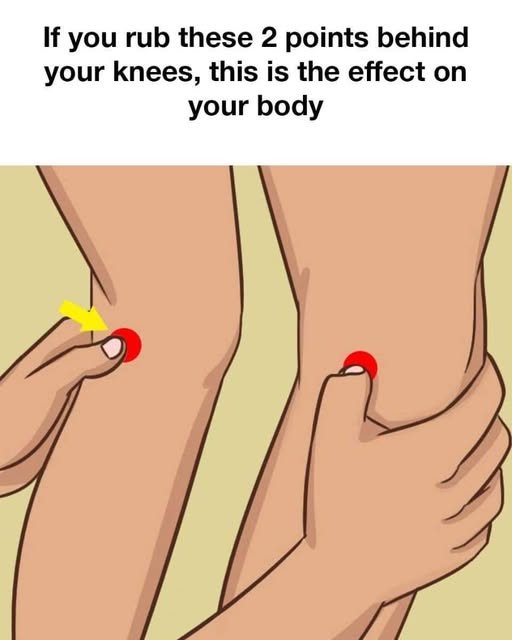
Have you ever heard that gently massaging the area behind your knees can improve your health? Social media is full of claims that rubbing two specific points behind the knees can detox your body, relieve pain, boost circulation, and even improve your energy.
But how much of this is actually true?
Let’s explore what these points are, what traditional practices say about them, and what modern science tells us.
Why the Area Behind the Knees Matters
The back of the knee, known medically as the popliteal region, contains important muscles, tendons, nerves, blood vessels, and lymphatic vessels. Because of this, gentle massage in this area may help some people feel more relaxed and relieve muscle tension.
In traditional Chinese medicine and acupressure, two well-known pressure points are located near the back of the knee:
- BL40 (Weizhong) – Found in the center of the crease behind the knee.
- GB34 (Yanglingquan) – Located slightly below and to the outside of the knee.
These points have been used for centuries as part of traditional healing practices.
Claimed Benefits of Massaging These Points
People who practice acupressure believe stimulating these areas may help with:
1. Relieving Lower Back Pain
BL40 is commonly associated with easing tension in the lower back. Some people report temporary relief after gentle pressure or massage.
2. Reducing Leg Fatigue
If you’ve spent hours standing or walking, a gentle massage behind the knees may help relax tight muscles and reduce feelings of heaviness in the legs.
3. Promoting Relaxation
Like many forms of massage, stimulating pressure points can encourage relaxation and reduce stress, helping your body unwind after a busy day.
4. Supporting Circulation
Gentle massage may temporarily increase local blood flow, which can leave the area feeling warmer and more relaxed. However, it should not be considered a treatment for circulation disorders.
5. Easing Muscle Stiffness
Massage around the knees may help loosen surrounding muscles, especially after exercise or long periods of sitting.
What Does Science Say?
Research on acupressure has shown that some people experience short-term relief from pain and stress. However, there is limited scientific evidence proving that rubbing these points alone can detox the body, cure diseases, or dramatically improve circulation.
Most experts agree that any benefits are likely related to relaxation, improved comfort, and temporary pain relief rather than major medical effects.
How to Massage These Points Safely
If you’d like to try it:
- Sit comfortably with your knees slightly bent.
- Locate the soft crease behind your knee.
- Use your thumb or fingertips to apply gentle pressure.
- Massage each point using small circular motions for 30–60 seconds.
- Repeat on the other leg.
The massage should feel comfortable—not painful.
When You Should Avoid It
Avoid massaging behind the knees if you have:
- A recent knee injury
- Swelling, redness, or signs of infection
- Deep vein thrombosis (DVT) or suspected blood clots
- Severe varicose veins in the area
- Open wounds or skin infections
If you have ongoing pain, numbness, or circulation problems, consult a healthcare professional rather than relying on pressure-point massage.
The Bottom Line
Massaging the points behind your knees may help you relax, ease muscle tension, and provide temporary relief from minor aches. While traditional medicine attributes many additional health benefits to these pressure points, scientific evidence does not support claims that they can detox the body or treat serious medical conditions.
Think of this technique as a gentle self-care practice—not a replacement for medical treatment. Combined with regular exercise, stretching, proper hydration, and a healthy lifestyle, it can be a pleasant addition to your daily wellness routine.