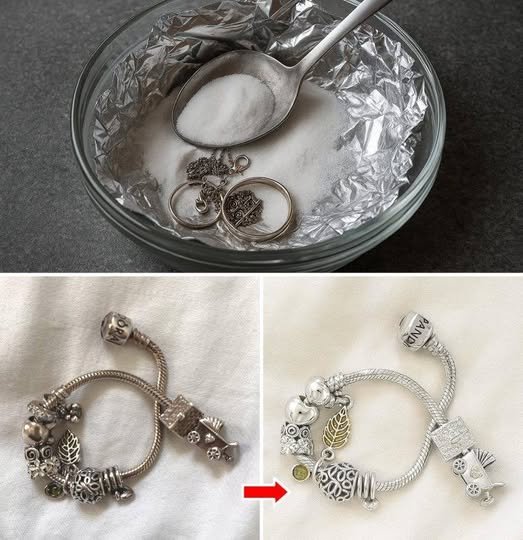
Silver jewelry, cutlery, and decorative pieces can lose their beautiful shine over time, developing a dull gray or black coating known as tarnish. The good news is that tarnish is usually easy to remove with the right cleaning methods, allowing your silver to sparkle once again.
Whether it’s a treasured family heirloom or your favorite necklace, these safe and effective techniques can help restore its brilliance.
Why Does Silver Turn Black?
Silver doesn’t rust like iron, but it does react with sulfur compounds in the air. This reaction forms a dark layer called silver sulfide, which appears as black or gray tarnish.
Several factors can speed up tarnishing, including:
- High humidity
- Air pollution
- Perfumes and lotions
- Sweat and body oils
- Household cleaning chemicals
- Storing silver in damp or open air
Fortunately, tarnish is usually only on the surface and can often be removed without damaging the silver.
Method 1: Baking Soda and Aluminum Foil
One of the most popular home methods uses a simple chemical reaction to lift tarnish from silver.
You’ll Need
- 1 bowl
- Aluminum foil
- 1 tablespoon baking soda
- 1 tablespoon salt
- Hot (not boiling) water
- Soft microfiber cloth
Instructions
- Line the bowl with aluminum foil, shiny side facing up.
- Place the silver item on the foil.
- Sprinkle in the baking soda and salt.
- Pour enough hot water over the silver to cover it completely.
- Leave it for 5–10 minutes.
- Carefully remove the item and rinse with clean water.
- Dry thoroughly with a soft cloth and gently polish.
You may notice a sulfur-like smell during the reaction—that’s normal.
Method 2: Mild Dish Soap
For lightly tarnished or dirty silver:
- Fill a bowl with warm water.
- Add a few drops of mild dish soap.
- Soak the silver for a few minutes.
- Gently clean with a soft cloth or soft-bristled toothbrush.
- Rinse well and dry completely.
This method is gentle enough for regular maintenance.
Method 3: Silver Polishing Cloth
Special silver polishing cloths contain gentle cleaning agents designed specifically for silver.
Simply rub the surface according to the manufacturer’s instructions to restore shine and remove light tarnish.
What to Avoid
To protect your silver, avoid using:
- Steel wool
- Abrasive scrubbers
- Harsh scouring powders
- Bleach
- Ammonia-based cleaners (unless specifically recommended for your item)
- Toothpaste, which can scratch many silver finishes
Always use soft materials to prevent scratches.
Caring for Silver Jewelry
Some silver jewelry contains gemstones, pearls, enamel, or glued components. These pieces should not be soaked in hot water or treated with the baking soda and aluminum foil method unless you’re certain it’s safe for the materials.
When in doubt, follow the jeweler’s care instructions or have valuable items professionally cleaned.
How to Prevent Tarnish
Keeping silver shiny is easier than removing heavy tarnish.
Here are a few simple tips:
- Store silver in airtight bags or anti-tarnish cloth.
- Keep it in a cool, dry place.
- Avoid prolonged exposure to moisture.
- Remove jewelry before swimming or using household cleaners.
- Wipe silver with a soft cloth after wearing it to remove oils and sweat.
- Polish occasionally to maintain its shine.
When Professional Cleaning Is Best
If your silver has intricate details, antique value, delicate gemstones, or heavy tarnish that won’t come off, consider taking it to a professional jeweler. Professional cleaning can safely restore valuable pieces without risking damage.
Final Thoughts
Blackened silver doesn’t have to stay dull. In most cases, simple methods like baking soda with aluminum foil, mild dish soap, or a quality silver polishing cloth can safely remove tarnish and restore your silver’s natural shine.
With proper cleaning and storage, your favorite silver jewelry and household items can remain bright and beautiful for many years to come.