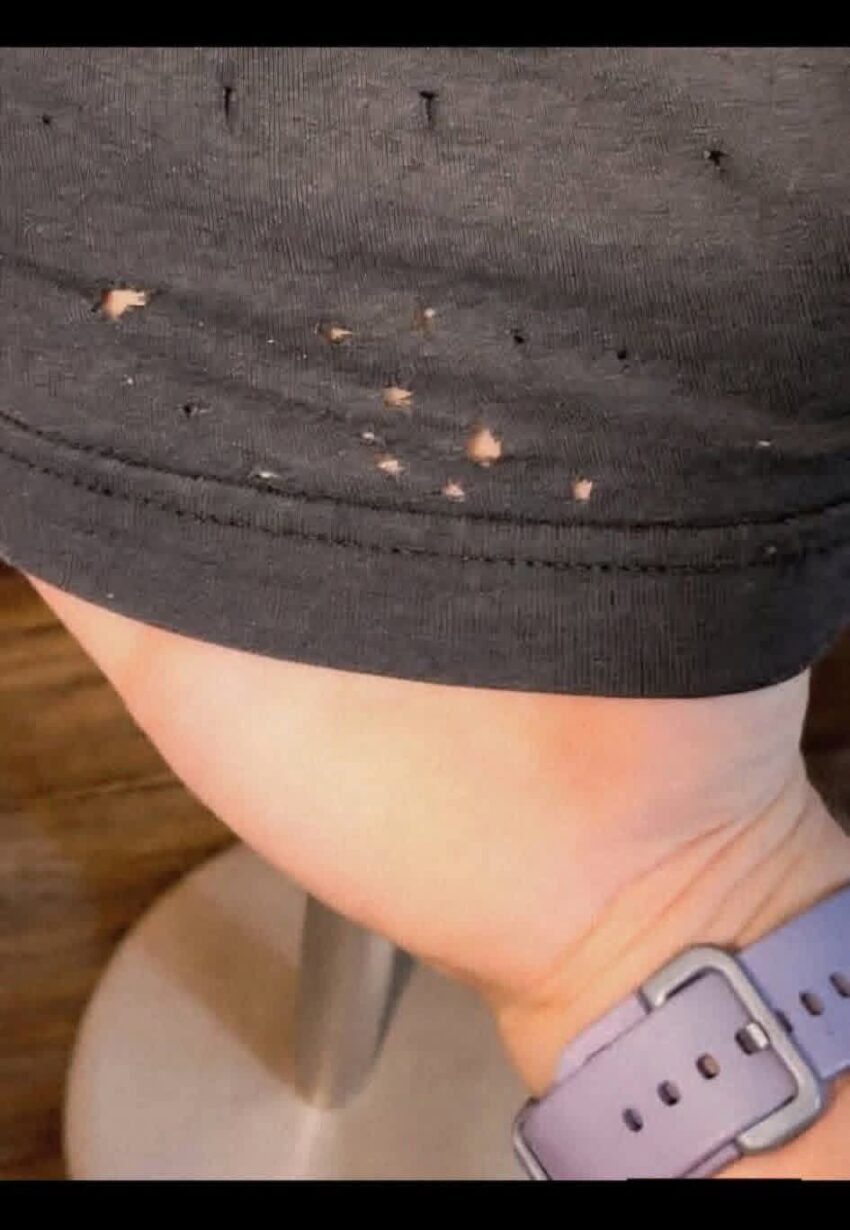
Have you ever folded laundry and noticed tiny holes appearing near the bottom front of your husband’s favorite T-shirts? At first, you might suspect moths, poor-quality fabric, or even the washing machine. But if the holes keep showing up in the same area, the real cause may be something you never considered.
This is one of the most common clothing mysteries people experience, and in many cases, it’s not caused by a single factor. Instead, it’s usually the result of everyday wear and repeated friction.
Why Do the Holes Always Appear in the Same Spot?
Many people notice that the holes appear just above the hemline, around the stomach area. This location is no coincidence.
The fabric in this area is constantly pressed between the body and hard surfaces such as:
- Belt buckles
- Jeans buttons or rivets
- Kitchen countertops
- Office desks
- Workbenches
- Seat belts while driving
Every time someone leans against a counter or desk, the shirt rubs against these surfaces. Over weeks and months, the repeated friction weakens the fibers until tiny holes begin to form.
Belt Buckles Are a Major Culprit
Large or rough belt buckles are one of the biggest causes of mysterious T-shirt holes.
As you move, sit, bend, or lean forward, the buckle repeatedly rubs against the shirt. Cotton fibers slowly wear down until they finally tear.
If your husband wears a belt every day and the holes always appear around waist level, the buckle is a likely suspect.
Jeans Buttons and Metal Rivets
Even without a belt, the metal button on jeans can create constant friction.
When paired with leaning against counters or tables, the shirt becomes trapped between the hard button and another surface. Over time, this pressure gradually damages the fabric.
Kitchen Countertops
People who cook regularly often lean against kitchen counters without realizing it.
Preparing meals, washing dishes, or chopping vegetables can keep the shirt pressed against the countertop edge for extended periods. This repeated rubbing slowly wears away delicate cotton fibers.
Work Desks and Office Jobs
Office workers aren’t immune.
If your husband spends hours leaning toward a computer keyboard, the edge of the desk may repeatedly rub the same section of his shirt. Small amounts of friction each day eventually become enough to create holes.
Seat Belts
Seat belts can also contribute.
During daily driving, the belt moves slightly with every turn, stop, and shift in posture. Combined with jeans buttons or belt buckles, this creates additional stress on the fabric.
Washing Machine Damage
Sometimes the washing machine plays a role.
Shirts can snag on:
- Zippers
- Bra hooks
- Metal fasteners
- Sharp objects left in pockets
Older washing machines with rough drum surfaces may also cause fabric wear over time.
Using mesh laundry bags and zipping garments before washing can help reduce this risk.
Poor Fabric Quality
Not all cotton T-shirts are created equal.
Modern lightweight fabrics are often thinner than older garments. While they’re comfortable, they can wear out more quickly—especially when exposed to constant rubbing.
Higher-quality cotton or thicker fabric blends generally last longer.
Moths: Less Common Than You Think
Many people immediately blame moths.
While moth larvae can damage natural fibers like wool, they are a much less common cause of tiny holes in cotton T-shirts. If the damage appears only on shirts and always in the same location, friction is a far more likely explanation.
Chemical Damage
Some household products can weaken fabric fibers, including:
- Bleach
- Strong stain removers
- Harsh detergents
- Certain cleaning chemicals
Repeated exposure may make shirts more vulnerable to tearing during normal wear.
Pets Can Play a Role
Cats and dogs sometimes contribute without meaning to.
Tiny claws while jumping up for attention or rough play can create small punctures that grow larger after repeated washing.
How to Prevent Tiny Holes in T-Shirts
You may not be able to eliminate every cause, but these simple habits can significantly extend the life of your clothing:
- Choose thicker, higher-quality T-shirts.
- Smooth rough belt buckles or consider buckle covers.
- Avoid leaning against rough countertops whenever possible.
- Zip jeans and jackets before washing.
- Wash delicate shirts inside out.
- Use mesh laundry bags for favorite garments.
- Avoid overloading the washing machine.
- Replace worn washing machine parts if they snag clothing.
- Check for sharp edges on desks, counters, or furniture.
The Bottom Line
Those mysterious little holes aren’t usually the result of a single problem. In most cases, they’re caused by repeated friction from everyday activities combined with normal fabric wear. Belt buckles, jeans buttons, countertops, desks, washing machines, and thinner fabrics can all contribute to the damage.
If you’ve been wondering why your husband’s shirts keep developing holes in exactly the same place, paying attention to these everyday habits may solve the mystery—and help his favorite T-shirts last much longer.