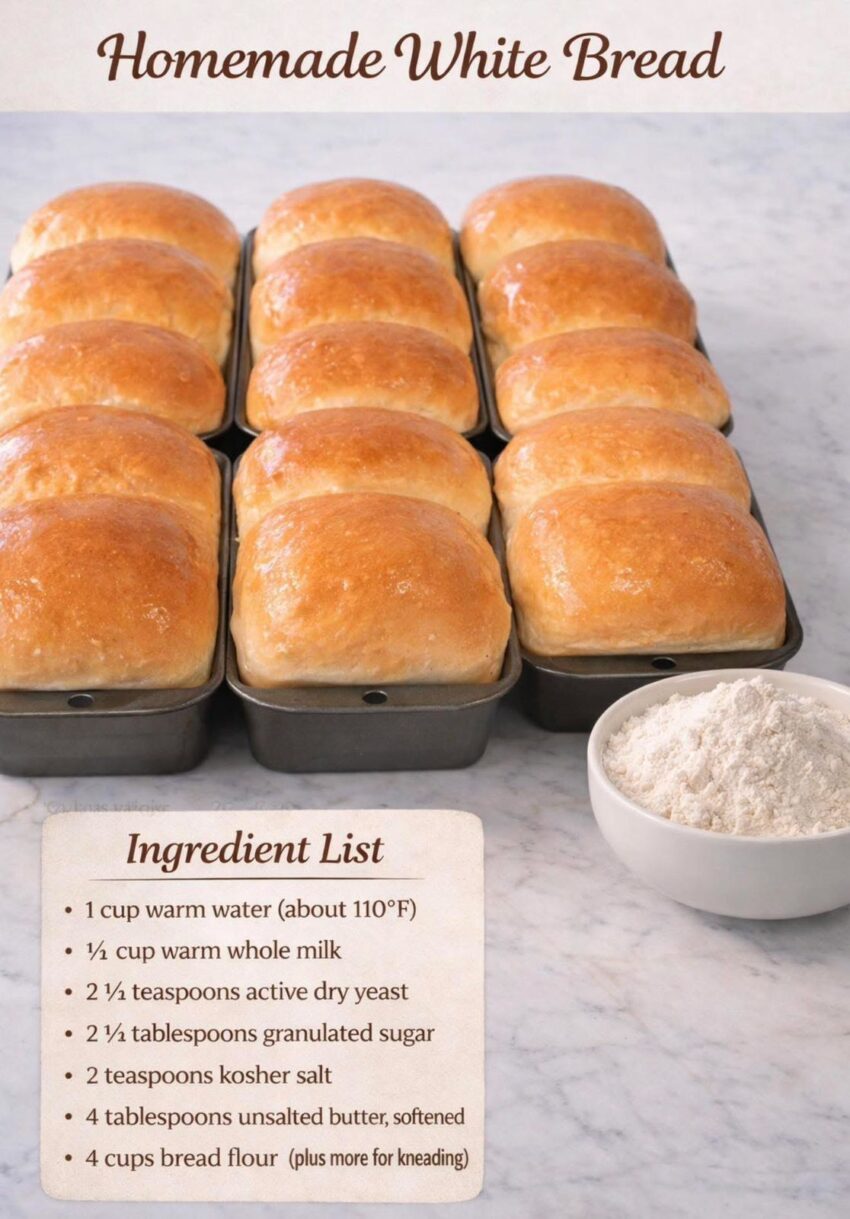
Learn how to make soft, fluffy Homemade White Bread from scratch with simple pantry ingredients. This classic bread recipe creates a golden crust and tender crumb, perfect for sandwiches, toast, or serving warm with butter.
Homemade White Bread
There’s nothing quite like the aroma of freshly baked homemade bread filling your kitchen. This classic Homemade White Bread recipe produces a soft, fluffy loaf with a tender crumb and beautifully golden crust. Whether you’re making sandwiches, French toast, or simply enjoying a warm slice with butter, this bread is a timeless favorite that’s surprisingly easy to make.
With just a handful of basic ingredients and a little patience, you’ll have bakery-quality bread right from your own oven.
Why You’ll Love This Recipe
- Soft and fluffy texture
- Simple pantry ingredients
- Perfect for sandwiches and toast
- Freezes beautifully
- No special equipment required
- Better than store-bought bread
Recipe Information
- Prep Time: 20 minutes
- Rise Time: 1½–2 hours
- Bake Time: 30–35 minutes
- Total Time: About 3 hours
- Yield: 2 loaves
- Servings: 20 slices
Ingredients
For the Bread
- 2¼ cups warm water (110°F/43°C)
- 2 tablespoons granulated sugar
- 2¼ teaspoons active dry yeast (1 packet)
- 2 tablespoons unsalted butter, melted
- 1 tablespoon salt
- 6 to 6½ cups bread flour or all-purpose flour
For Brushing (Optional)
- 1 tablespoon melted butter
Equipment Needed
- Large mixing bowl
- Wooden spoon
- Measuring cups and spoons
- Two 9×5-inch loaf pans
- Clean kitchen towel
- Cooling rack
Step-by-Step Instructions
Step 1: Activate the Yeast
In a large mixing bowl, combine:
- Warm water
- Sugar
- Yeast
Stir gently and let sit for 5–10 minutes.
The mixture should become foamy. If it doesn’t, the yeast may be inactive and should be replaced.
Step 2: Add Remaining Ingredients
Mix in:
- Melted butter
- Salt
Gradually add 5 cups of flour, one cup at a time, stirring after each addition.
Continue adding flour until a soft dough forms.
Step 3: Knead the Dough
Turn the dough onto a lightly floured surface.
Knead for 8–10 minutes until the dough becomes smooth, elastic, and slightly tacky.
Add small amounts of flour if the dough is excessively sticky.
Step 4: First Rise
Place the dough into a lightly greased bowl.
Turn once to coat the surface.
Cover with a clean towel or plastic wrap.
Let rise in a warm place for 60–90 minutes, or until doubled in size.
Step 5: Shape the Loaves
Punch down the risen dough.
Divide into two equal portions.
Shape each portion into a loaf by rolling it into a rectangle, then tightly rolling it into a log.
Pinch the seams closed.
Place each loaf into a greased 9×5-inch loaf pan.
Step 6: Second Rise
Cover the loaf pans loosely.
Allow the dough to rise for 30–45 minutes, or until it has risen about 1 inch above the rim of the pans.
Step 7: Bake
Preheat the oven to 375°F (190°C).
Bake the loaves for 30–35 minutes, or until the tops are golden brown and the bread sounds hollow when tapped.
For accuracy, the internal temperature should reach about 190°F (88°C).
Step 8: Brush with Butter
Remove the loaves from the oven.
Immediately brush the tops with melted butter for a softer crust and richer flavor.
Step 9: Cool
Allow the bread to cool in the pans for 10 minutes.
Remove from pans and transfer to a wire rack.
Cool completely before slicing.
Tips for Success
Measure Flour Carefully
Too much flour can make bread dense. Add only enough to create a soft, workable dough.
Use Warm Water
Water that is too hot can kill the yeast, while water that is too cool may slow activation.
Don’t Rush the Rise
Allow the dough to fully double for the best texture and flavor.
Knead Thoroughly
Proper kneading develops gluten, creating a light and airy loaf.
Variations
Honey White Bread
Replace the sugar with 3 tablespoons honey.
Milk Bread
Replace half the water with warm milk for a softer loaf.
Herb Bread
Add 1 tablespoon dried Italian herbs to the dough.
Garlic Butter Bread
Brush the baked loaves with garlic butter instead of plain butter.
Storage Instructions
Room Temperature
Store in an airtight container or bread bag for up to 4 days.
Refrigerator
Not recommended, as refrigeration can dry out the bread.
Freezer
Wrap tightly in plastic wrap and foil.
Freeze for up to 3 months.
Thaw at room temperature before serving.
Frequently Asked Questions
Can I use all-purpose flour?
Yes. Bread flour provides a slightly chewier texture, but all-purpose flour works very well.
Why didn’t my bread rise?
Common causes include expired yeast, water that was too hot, or a room that was too cold.
Can I make this by hand?
Absolutely. No stand mixer is required.
How do I know when it’s done?
The loaf should be golden brown and sound hollow when tapped. An internal temperature of 190°F (88°C) confirms doneness.
Final Thoughts
Homemade White Bread is one of the most rewarding recipes you can make from scratch. With its soft texture, golden crust, and incredible fresh-baked flavor, it’s perfect for everything from sandwiches to morning toast. Once you experience the taste and aroma of homemade bread, you’ll find yourself returning to this recipe again and again.