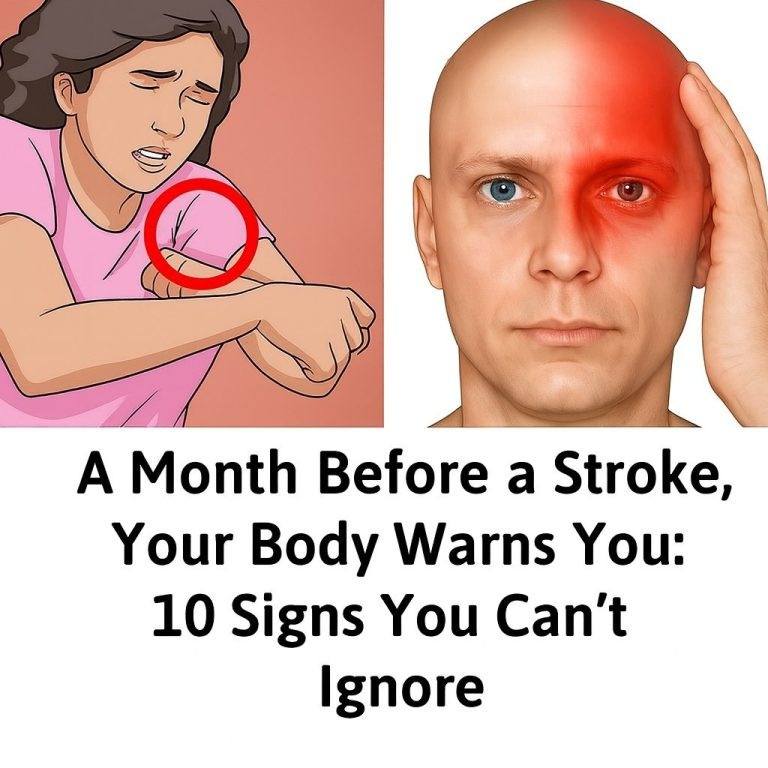
It’s important to be cautious with claims like “your body warns you a month before a stroke.” A stroke often occurs suddenly, and many people have no warning symptoms weeks in advance. However, some people experience warning signs—especially a transient ischemic attack (TIA), sometimes called a “mini-stroke”—in the days or weeks before a stroke.
10 Warning Signs That Should Never Be Ignored
1. Sudden Weakness or Numbness
Especially on one side of the body:
- Face
- Arm
- Leg
This is one of the most common stroke warning signs.
2. Temporary Vision Problems
- Blurred vision
- Double vision
- Sudden loss of vision in one eye
These symptoms may come and go but can signal reduced blood flow to the brain.
3. Difficulty Speaking
- Slurred speech
- Trouble finding words
- Difficulty understanding others
Even if it lasts only a few minutes, seek medical attention immediately.
4. Facial Drooping
One side of the face may sag or feel numb. A simple test is to smile and see whether both sides move equally.
5. Sudden Dizziness or Loss of Balance
- Unsteadiness
- Trouble walking
- Poor coordination
Particularly concerning if it occurs abruptly.
6. Severe Headache
A sudden, intense headache unlike your usual headaches can be a warning sign, especially if accompanied by neurological symptoms.
7. Brief Episodes of Confusion
- Difficulty concentrating
- Disorientation
- Sudden mental fog
These symptoms can occur during a TIA.
8. Unexplained Fatigue
Some people report unusual tiredness before a stroke, although fatigue alone is common and not specific to stroke.
9. Difficulty Swallowing
Sudden swallowing problems can occur when nerves controlling the throat are affected.
10. Transient Ischemic Attack (TIA)
A TIA causes stroke-like symptoms that resolve within minutes or hours. It is a medical emergency because it significantly increases the risk of a future stroke.
Remember FAST
The easiest way to recognize a possible stroke is FAST:
- Face drooping
- Arm weakness
- Speech difficulty
- Time to call emergency services immediately
Major Risk Factors
The biggest contributors to stroke risk include:
- High Blood Pressure
- Type 2 Diabetes
- Smoking
- High cholesterol
- Obesity
- Physical inactivity
- Atrial Fibrillation
- Previous TIA or stroke
Seek Emergency Care Immediately If
You or someone else experiences:
- Sudden weakness on one side
- Facial drooping
- Speech difficulty
- Sudden vision loss
- Severe unexplained headache
- Loss of coordination
Do not wait to see if symptoms improve. Rapid treatment can dramatically reduce brain damage and improve outcomes.