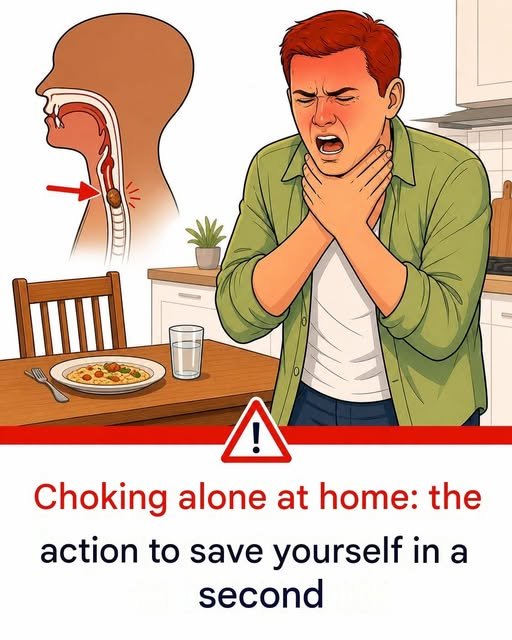
What should you do if food gets stuck in your throat and nobody is around? Learn the emergency steps for choking when you’re alone, what to avoid, and when to seek medical care.
A piece of food suddenly getting stuck in your throat can be terrifying—especially when you realize there is no one nearby to help. Choking can become a medical emergency very quickly when an object completely blocks the airway.
Knowing what to do before such an emergency happens can make a critical difference.
First: Know the Difference Between Gagging and Choking
Not every episode of food getting “stuck” means the airway is completely blocked.
If you can:
- Breathe normally
- Speak
- Make sounds
- Cough forcefully
then your airway may still be partially open. Keep coughing forcefully and try to expel the obstruction naturally.
However, a person with a severe airway blockage may be unable to speak, breathe, or produce an effective cough. They may clutch their throat, become increasingly distressed, or develop a bluish color around the lips.
A complete inability to breathe is an emergency.
What If You’re Completely Alone?
If you are conscious but cannot breathe, speak, or cough effectively, call your local emergency service immediately if you are able to do so. Put the phone on speaker or use your phone’s emergency/SOS function if available.
Then begin self-rescue.
1. Make an abdominal thrust
Make a fist with one hand.
Place the thumb side of your fist against your abdomen just above your belly button and below your breastbone.
Grasp the fist with your other hand.
Then deliver a quick, forceful thrust inward and upward.
Repeat as necessary until the obstruction comes out or help arrives.
2. Use a firm surface if you cannot perform the thrust effectively
If you are unable to use your hands effectively, another self-rescue option is to position the upper abdomen against the edge of a firm, non-sharp surface, such as a sturdy countertop or the back of a heavy chair.
Apply forceful upward/inward pressure against the surface to create the thrust needed to dislodge the object.
Avoid surfaces with sharp edges that could cause serious injury.
Don’t Try to Push the Food Down
One of the biggest mistakes people make during choking is trying to force the food down with:
- Water
- More food
- Large bites of bread
- Fingers
If the airway is blocked, drinking water won’t remove the obstruction and may make the situation more difficult.
Don’t blindly put your fingers into your mouth or throat. You could push the object deeper. Only remove an object if you can clearly see it and safely take it out.
What If You Start Feeling Better?
Even if the food eventually comes out and you can breathe again, pay attention to your symptoms.
Seek medical attention if you experience:
- Persistent coughing
- Difficulty breathing
- Wheezing
- Chest pain
- Difficulty swallowing
- Pain when swallowing
- A sensation that something is still stuck
- Blood in saliva
- Continuing throat pain
A significant choking episode can sometimes cause injury to the throat or airway, and medical professionals can determine whether further evaluation is necessary.
What Pregnant People or People With Significant Abdominal Size Should Know
Standard abdominal thrusts may not be appropriate for everyone. For people who are pregnant or cannot safely receive abdominal thrusts because of their body size or another physical limitation, chest thrusts may be recommended instead.
If this applies to you, learning the appropriate technique from a qualified first-aid professional is much safer than trying to improvise during an emergency.
What You Should Remember
The most important points are simple:
If you can cough effectively, keep coughing.
If you cannot breathe, speak, or cough effectively, treat it as a life-threatening emergency.
Get emergency help and begin appropriate self-rescue immediately if you are alone.
A few seconds of preparation can be incredibly valuable. Consider learning choking first aid from a recognized first-aid or CPR course so you know exactly what to do under pressure.
Final Reminder
This information is for emergency awareness and does not replace professional first-aid training or medical advice. If someone is choking and cannot breathe, contact emergency medical services immediately and follow the instructions of the emergency dispatcher.