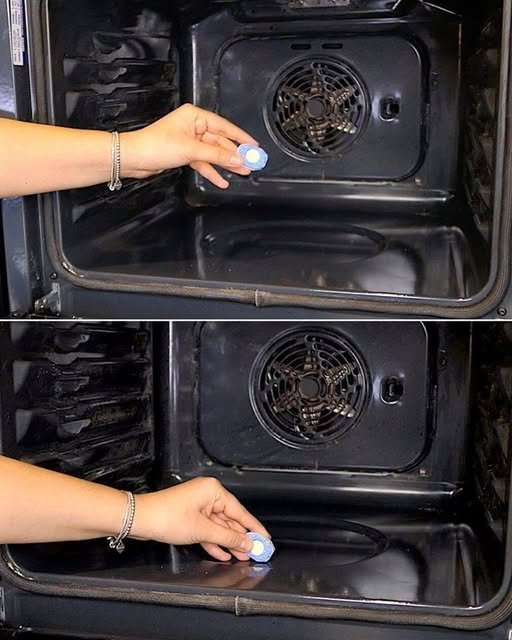
If you’ve ever opened your oven only to find baked-on grease, burnt food, and stubborn stains, you’re not alone. Oven cleaning is one of the most dreaded household chores, and many commercial oven cleaners contain strong chemicals with overpowering fumes.
A popular cleaning hack suggests using a dishwasher tablet to help loosen stubborn grease and grime. While it won’t magically restore every oven to brand-new condition, it can be an effective option for cleaning certain oven surfaces when used carefully.
Here’s how to use this method safely and effectively.
Why Dishwasher Tablets Can Help
Dishwasher tablets are formulated to break down grease and food residue on dishes. They contain cleaning agents that can also help soften baked-on grease on some oven surfaces, making it easier to wipe away.
However, they’re designed for dishwashers—not ovens—so use them with care and avoid scrubbing delicate surfaces.
What You’ll Need
- 1 dishwasher tablet (standard, non-gel)
- Warm water
- A bowl
- Rubber gloves
- A soft sponge or microfiber cloth
- Paper towels
- Plastic scraper (optional for stubborn residue)
Step 1: Make Sure the Oven Is Cool
Before cleaning, turn the oven off and allow it to cool completely.
Never use this method on a hot oven, as it may increase the risk of burns or cause cleaning products to dry too quickly.
Step 2: Dampen the Dishwasher Tablet
Lightly wet the dishwasher tablet with warm water.
The goal is to soften the surface of the tablet—not dissolve it completely.
Step 3: Gently Rub Greasy Areas
Using light pressure, rub the damp tablet over greasy spots on the oven door glass or enamel-coated interior.
As the tablet wears down, it forms a mild cleaning paste that can help lift grease and baked-on residue.
Avoid excessive scrubbing, especially on glass or coated surfaces, as some dishwasher tablets contain mild abrasives that could scratch certain finishes.
Step 4: Let It Sit
For stubborn grime, allow the residue to sit for 10–15 minutes.
This gives the cleaning agents time to help loosen grease.
Step 5: Wipe Clean
Use a damp microfiber cloth or sponge to wipe away the loosened grease and any remaining cleaner.
Rinse the cloth several times to remove residue.
Finish by drying the surface with a clean cloth for a streak-free shine.
For Tough Burnt-On Food
If some residue remains:
- Repeat the process rather than scrubbing harder.
- Use a plastic scraper designed for household cleaning if needed.
- Be patient—heavily soiled ovens often require more than one cleaning session.
What You Should Not Clean with a Dishwasher Tablet
Avoid using this method on:
- Self-cleaning oven coatings
- Aluminum surfaces
- Heating elements
- Rubber door seals (gaskets)
- Control panels or electronic displays
- Painted or delicate finishes
Always check your oven manufacturer’s cleaning instructions before trying any cleaning method.
Other Safe Cleaning Alternatives
If you prefer a gentler approach, consider:
- Warm water and dish soap for light grease
- A paste of baking soda and water for baked-on residue
- White vinegar to help remove streaks after cleaning
- A commercial oven cleaner specifically approved for your oven model
Tips to Keep Your Oven Cleaner Longer
- Wipe up spills after the oven has cooled.
- Place a baking tray beneath dishes that may overflow.
- Clean small spills before they become burnt-on stains.
- Deep-clean the oven every few months, depending on how often you cook.
Final Thoughts
A dishwasher tablet can help loosen grease and burnt-on residue, making oven cleaning easier in some cases. However, it isn’t a miracle solution and should be used with care, as some tablets contain ingredients that may scratch or damage certain oven surfaces if used aggressively.
For the best results, clean gently, follow your oven manufacturer’s care recommendations, and always test any cleaning method on a small, inconspicuous area first. With regular maintenance, your oven can stay cleaner, safer, and ready for your next home-cooked meal.