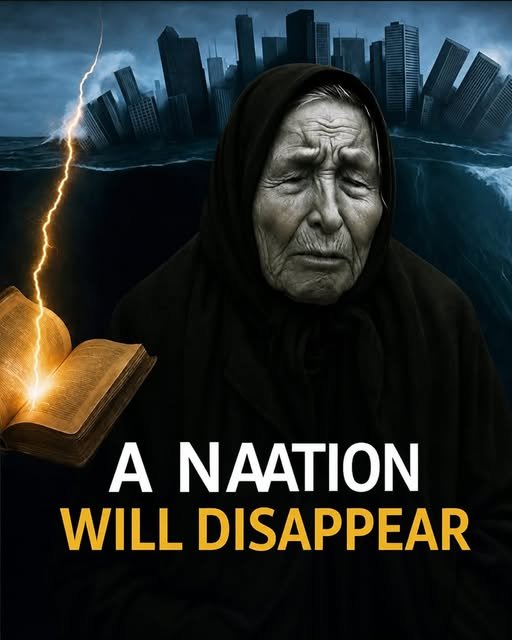
Every year, especially during times of global uncertainty, social media fills with dramatic headlines such as:
“Baba Vanga predicted this years ago…”
“Baba Vanga’s prophecy has finally come true…”
“The world ignored her warning, but now it makes sense…”
These stories often attract millions of views because they combine mystery, fear, and curiosity. But when examined closely, many of the famous predictions attributed to Baba Vanga are difficult—or impossible—to verify. (Daily Jang)
Who Was Baba Vanga?
Baba Vanga was a Bulgarian woman who became famous as a spiritual healer and alleged clairvoyant.
Born in 1911, she reportedly lost her eyesight as a child and later became known for giving advice and making predictions to visitors. She became a cultural figure in Bulgaria and beyond, with many people believing she had unusual abilities.
She died in 1996, but stories about her supposed visions continue to spread worldwide. (The Guardian)
Why Do People Say “Her Prophecy Makes Sense Now”?
The phrase usually appears after a major event happens. A prediction that was vague or unknown before the event is then connected to it afterward.
For example:
- A natural disaster occurs → people search for old predictions about earthquakes or destruction.
- A political conflict begins → people revisit claims about war.
- A new technology appears → people connect it to predictions about the future.
This process is called retrospective interpretation—looking backward and finding a possible match after something has already happened.
The Famous Predictions Attributed to Baba Vanga
Many claims online say she predicted events such as:
1. The 9/11 Attacks
A popular internet claim says Baba Vanga predicted the September 11 attacks with a statement about “steel birds” attacking America.
However, there is no verified original document, recording, or reliable transcript proving she made this prediction before the event. Many such statements appeared years later through secondary sources. (The Guardian)
2. The COVID-19 Pandemic
Another viral claim suggests she predicted a worldwide disease outbreak.
Again, the evidence is weak. Researchers have pointed out that many supposed prophecies attributed to her lack a documented source from her lifetime. (News.com.au)
3. World War III Predictions
A recurring internet story claims Baba Vanga predicted a major global war in the mid-2020s.
These claims have circulated widely, but there is no confirmed record showing that she made such a specific prediction. (Daily Jang)
4. Alien Contact
Some viral posts claim she predicted humans would encounter extraterrestrial life during a major global event.
These statements are among the more sensational claims and have not been supported by verified historical evidence. (hallucination.news)
Why Are These Stories So Believable?
There are several reasons these predictions continue to attract attention.
1. Vague Language Can Fit Many Events
A statement like:
“A great change will come to the world”
could be connected to almost anything:
- a war,
- a pandemic,
- an economic crisis,
- a technological breakthrough.
Because the wording is broad, people can interpret it in many ways.
2. The Human Brain Looks for Patterns
People naturally try to connect events and find meaning, especially during uncertain times.
When something shocking happens, it is normal to wonder:
“Was there a warning?”
3. Social Media Rewards Dramatic Stories
A headline like:
“Ancient prophecy predicted today’s disaster”
is more likely to be shared than:
“Unverified quote is being reinterpreted after an event.”
Viral posts often remove context and present speculation as fact.
Did Baba Vanga Actually Write Her Predictions Down?
This is one of the biggest problems when examining her alleged prophecies.
Unlike authors who left books, journals, or published predictions, many statements attributed to Baba Vanga come from later recollections by visitors, followers, or media reports. Because there is limited original documentation, historians and researchers cannot easily confirm what she actually said. (Daily Jang)
Why Do People Still Find Her Fascinating?
Even without proof of supernatural abilities, Baba Vanga remains an interesting cultural figure because her story combines:
- mystery,
- spirituality,
- human curiosity about the future,
- fear of global change.
Prophecies have existed throughout history because people have always wanted answers about what comes next.
The Difference Between Prediction and Evidence
A genuine prediction would require:
- A clear statement made before an event.
- A reliable record of the statement.
- A specific match between the prediction and the event.
- No changing of the meaning afterward.
Many Baba Vanga claims do not meet these standards because the original sources are unclear or missing. (The Guardian)
Final Thoughts
The phrase “Baba Vanga’s prophecy now makes sense” is often more about storytelling than proof. Her name has become attached to many dramatic predictions, but most cannot be independently verified.
Her legacy is less about confirmed forecasts and more about how humans respond to uncertainty. When the world feels unpredictable, old prophecies often return—not necessarily because they were accurate, but because people search for meaning in difficult times. (Daily Jang)
So before believing that a prophecy has “come true,” it is worth asking one simple question:
Was the prediction clearly recorded before the event happened—or was it only discovered afterward?