Have you ever pulled freshly washed clothes out of the washing machine only to notice they don’t smell as fresh as you expected? Or perhaps your washing machine has developed a musty odor despite regular use. If this sounds familiar, you’re not alone.
Many people turn to baking soda as a natural laundry solution, but surprisingly, most don’t use it correctly. While baking soda is one of the most effective and affordable household cleaners, simply sprinkling it into every load won’t always deliver the results you’re hoping for.
Understanding how baking soda works—and when to use it—can transform your laundry routine, eliminate stubborn odors, protect your fabrics, and even extend the life of your washing machine.
Let’s explore why baking soda is so effective and how to use it the right way.
What Makes Baking Soda So Effective?
Baking soda, also known as sodium bicarbonate, is a naturally occurring mineral compound with mild alkaline properties. It has been used for generations in cleaning, cooking, and personal care because it’s non-toxic, biodegradable, and environmentally friendly.
Unlike heavily fragranced detergents that simply mask unpleasant smells, baking soda actually neutralizes odor-causing acids and balances pH levels. This means it removes the source of many unpleasant odors instead of covering them up.
Its gentle abrasive texture also helps loosen dirt and detergent buildup without damaging most fabrics or washing machine components.
Why Clothes Still Smell After Washing
Many people assume that bad-smelling laundry means the detergent isn’t strong enough. In reality, lingering odors often come from several hidden causes:
- Sweat and body oils trapped deep inside fabric fibres
- Detergent residue that accumulates over time
- Hard water minerals preventing proper cleaning
- Mold and mildew growing inside the washing machine
- Overloading the washer
- Leaving wet clothes sitting too long after the cycle finishes
Adding more detergent usually makes the problem worse because excess soap creates even more residue for bacteria to feed on.
This is where baking soda shines.
The Biggest Mistake People Make
The most common mistake is using baking soda as a replacement for laundry detergent.
Baking soda is an excellent cleaning booster, but it isn’t designed to replace detergent completely.
Detergent contains surfactants that lift grease, oils, and stains from fabric. Baking soda enhances this process by softening water, balancing pH, and reducing odors.
Using baking soda alone often leaves clothing looking clean but not thoroughly washed.
Instead, think of baking soda as a powerful partner to your detergent rather than a substitute.
How to Use Baking Soda Correctly in Laundry
1. Add It With Your Detergent
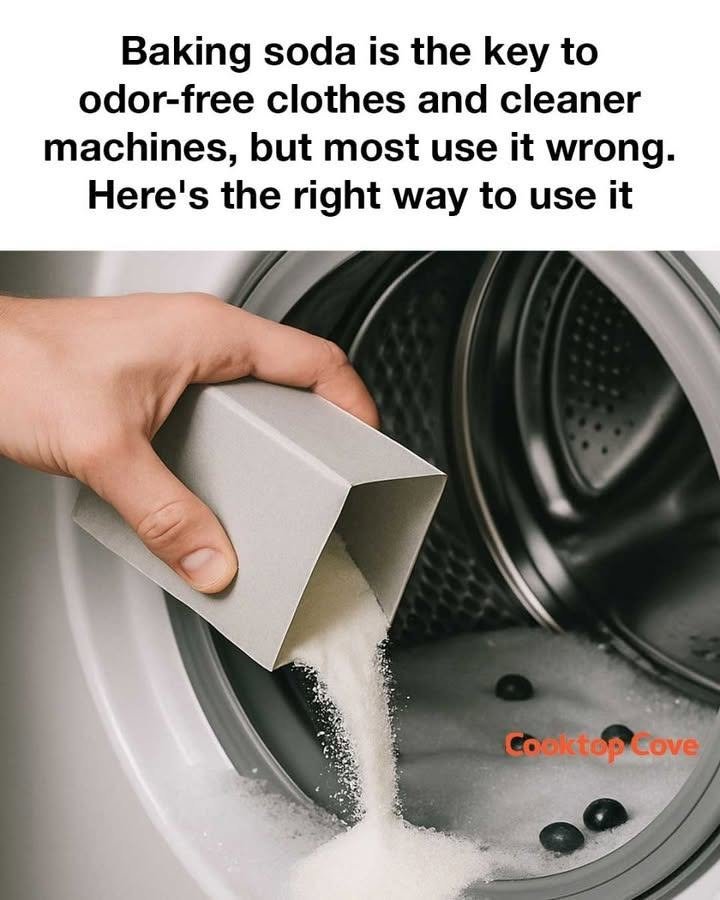
For regular laundry, add approximately half a cup of baking soda directly into the washing drum before loading your clothes.
Then add your normal amount of detergent.
This combination:
- Boosts cleaning power
- Removes odors more effectively
- Softens fabrics naturally
- Helps detergent dissolve better
- Reduces soap residue
2. Pre-Soak Smelly Clothes
Gym clothes, towels, socks, pet bedding, and work uniforms often trap bacteria that ordinary washing struggles to remove.
Fill a bucket or sink with warm water and dissolve one cup of baking soda.
Allow clothes to soak for several hours or overnight before washing normally.
This helps break down odor-causing compounds before the wash cycle even begins.
3. Treat Tough Odors Naturally
If clothing smells strongly of smoke, cooking grease, mildew, or sweat, sprinkle baking soda directly over damp fabric and leave it for about 30 minutes before washing.
This gives the baking soda time to absorb and neutralize unpleasant odors.
Cleaning Your Washing Machine with Baking Soda
A surprising number of laundry odors actually come from the washing machine itself.
Soap residue, fabric softener, moisture, and bacteria gradually build up inside the drum, rubber seals, detergent drawer, and drainage system.
Cleaning the machine every month helps prevent these issues.
For Front-Loading Machines
- Empty the machine completely.
- Add one cup of baking soda directly into the drum.
- Run the hottest wash cycle available.
- Wipe the rubber door seal thoroughly afterwards.
- Leave the door open so the drum dries completely.
For Top-Loading Machines
Fill the machine with hot water.
Add one cup of baking soda.
Allow it to agitate for a few minutes before pausing the cycle for an hour.
Resume the wash and allow the cycle to finish.
Baking Soda and White Vinegar: Should You Use Them Together?
One of the biggest myths online is mixing baking soda and vinegar together in the washing machine.
While this combination creates dramatic fizzing, the chemical reaction largely neutralizes both ingredients.
The bubbling may look impressive, but once the reaction finishes, much of the cleaning power has disappeared.
A better approach is to use them separately:
- Use baking soda during the wash cycle.
- Use white vinegar during the rinse cycle as a natural fabric softener.
This allows each ingredient to work at its maximum effectiveness.
Benefits Beyond Odor Removal
Using baking soda regularly offers several additional advantages.
Brighter Whites
Baking soda helps remove dull residue that makes white clothing appear grey or yellow over time.
Softer Towels
By reducing detergent buildup, towels regain their natural softness and absorbency.
Better Cleaning in Hard Water
Minerals in hard water reduce detergent performance.
Baking soda helps soften water naturally, allowing detergent to clean more effectively.
Reduced Detergent Usage
Because baking soda improves detergent efficiency, some households find they can slightly reduce the amount of detergent they use without sacrificing cleanliness.
When You Shouldn’t Use Baking Soda
Although baking soda is gentle, there are situations where caution is recommended.
Avoid frequent use on:
- Delicate silk
- Cashmere
- Wool garments
- Leather items
These materials often require specialised cleaning products.
Always check garment care labels before trying any homemade cleaning method.
Common Laundry Myths
Myth 1: More detergent equals cleaner clothes.
Truth: Excess detergent often traps dirt and bacteria inside fabric.
Myth 2: Strong fragrance means clothes are cleaner.
Truth: Fragrance only masks odors—it doesn’t remove their source.
Myth 3: Hot water kills every odor.
Truth: Many odors come from residue that requires proper cleaning, not simply heat.
Myth 4: Baking soda replaces detergent.
Truth: It enhances detergent but doesn’t replace its grease-removing ability.
Eco-Friendly and Budget-Friendly
One reason baking soda remains popular is its impressive value.
A single inexpensive box can be used for:
- Laundry
- Washing machine cleaning
- Refrigerator deodorising
- Kitchen cleaning
- Carpet freshening
- Bathroom cleaning
- Pet odor removal
Because it’s biodegradable and contains no synthetic fragrances or harsh chemicals, it’s also a more environmentally conscious alternative to many commercial odor removers.
Frequently Asked Questions
Can baking soda damage my washing machine?
No. Used in moderate amounts, baking soda is generally safe for modern washing machines and can even help reduce residue buildup.
How often should I use baking soda in laundry?
You can safely use it with regular laundry loads or whenever clothes have noticeable odors.
Does baking soda remove stains?
It helps loosen some stains and boosts detergent performance, but stubborn stains may require a dedicated stain remover.
Can I use baking soda with every detergent?
Yes. Baking soda works well with most standard liquid and powder laundry detergents.
Final Thoughts
Baking soda has earned its reputation as one of the most effective natural laundry helpers available. However, its real strength comes from using it correctly—not simply tossing it into every wash without understanding how it works.
By pairing baking soda with your regular detergent, pre-soaking heavily soiled items, and cleaning your washing machine regularly, you can enjoy fresher clothes, fewer lingering odors, brighter fabrics, and a cleaner appliance—all without relying on harsh chemicals.
Sometimes the simplest household ingredients deliver the biggest results. When used properly, baking soda proves that effective cleaning doesn’t have to be expensive, complicated, or filled with artificial fragrances.