Have you ever woken up in the middle of the night and noticed that your hand feels strange? Maybe it feels heavy, numb, weak, or filled with tiny “pins and needles.” Many people experience this sensation and often wonder, “Why does this keep happening?”
A hand that “falls asleep” is usually a sign that a nerve is being compressed or irritated. Sometimes it is harmless and happens because of your sleeping position. But when it occurs frequently, it may be worth understanding the possible causes behind it.
What Actually Happens When Your Hand Falls Asleep?
The nerves in your arms and hands act like communication wires between your brain and your fingers. They send signals that allow you to feel touch, temperature, and movement.
When a nerve is pressed for too long, the signals become temporarily disrupted. This can create sensations such as:
- Tingling or prickling feelings
- Numbness or reduced sensation
- A “heavy” or weak feeling in the hand
- Burning or uncomfortable sensations
Once the pressure is removed, the nerve usually starts working normally again, which is why the feeling often disappears after shaking or moving your hand.
Common Reasons Your Hands May Fall Asleep
1. Your Sleeping Position Could Be the Cause
One of the simplest explanations is the way you sleep. If you sleep with your arm bent under your head, body weight pressing on your hand, or your wrist in an awkward position, nerves can become compressed.
This type of numbness usually improves within a few minutes after changing position.
2. Carpal Tunnel Syndrome
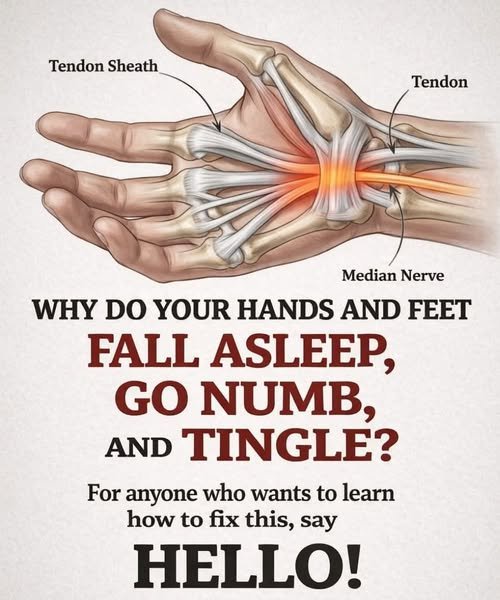
Carpal tunnel syndrome is a common condition that affects the median nerve in the wrist. It can cause:
- Tingling in the thumb, index, and middle fingers
- Numbness that is worse at night
- Hand discomfort after using a phone, keyboard, or doing repetitive tasks
People who frequently use their hands for repetitive movements may notice these symptoms more often.
3. Vitamin B12 and Nutrient Problems
Certain vitamins play an important role in maintaining healthy nerves. A deficiency of nutrients such as vitamin B12 may contribute to nerve-related symptoms, including tingling or numbness.
A balanced diet and proper medical guidance can help identify whether a deficiency is involved.
4. Poor Blood Flow
Reduced circulation can sometimes make your hands feel cold, numb, or tingly. Sitting in one position for a long time or keeping pressure on your arm may temporarily reduce blood flow.
Regular movement, stretching, and staying active can support healthy circulation.
5. Nerve Problems From Health Conditions
Sometimes frequent hand numbness can be connected to underlying health conditions, including diabetes or other nerve-related problems.
If the sensation happens often, affects daily activities, or appears without an obvious reason, it is important to discuss it with a healthcare professional.
Warning Signs You Should Not Ignore
Occasional tingling is common, but certain symptoms deserve attention. Seek medical advice if you notice:
- Sudden numbness on one side of your body
- Loss of strength in your hand or arm
- Trouble speaking, walking, or maintaining balance
- Persistent numbness that does not improve
- Severe pain or worsening symptoms
Simple Habits That May Help Protect Your Hands
Small daily changes can support better nerve health:
✅ Keep your wrists in a comfortable position while working
✅ Avoid putting pressure on your arms while sleeping
✅ Stretch your hands and wrists regularly
✅ Take breaks from repetitive movements
✅ Maintain a nutritious diet
✅ Stay physically active
Final Thoughts
Your hands falling asleep once in a while is often harmless, especially when caused by pressure or an uncomfortable position. However, repeated numbness or tingling may be your body’s way of asking for attention.
Understanding the possible causes can help you make better choices for your health and recognize when it may be time to seek professional advice.