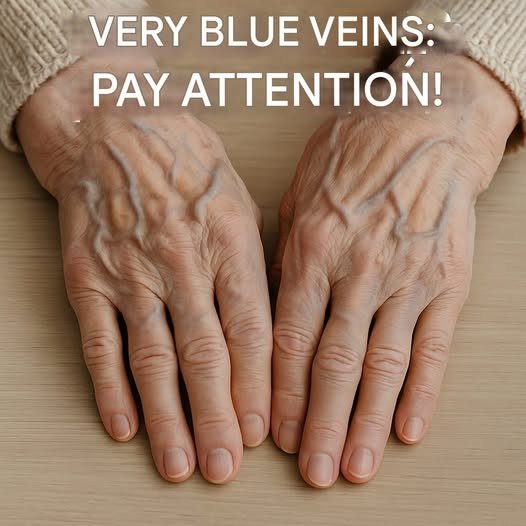
Have you ever looked down at your hands, legs, or chest and noticed blue veins becoming more visible than before? For many people, these veins can seem alarming, leading to concerns about circulation problems or hidden health conditions. In reality, visible blue veins are extremely common and are often completely harmless.
However, in some cases, they may indicate an underlying issue that deserves medical attention. Understanding why blue veins appear can help you distinguish between normal changes and symptoms that shouldn’t be ignored.
In this article, we’ll explore the science behind blue veins, the most common causes, warning signs to watch for, and ways to improve vein health naturally.
Why Do Veins Look Blue?
Interestingly, the blood inside your veins is not actually blue. Even blood returning to the heart after delivering oxygen is dark red, not blue.
Veins appear blue because of the way your skin absorbs and scatters light. Blue wavelengths are reflected back to our eyes more effectively than red wavelengths, creating the illusion that the veins are blue.
So, visible blue veins are largely an optical effect rather than a change in blood color.
Common Reasons Blue Veins Become More Visible
1. Thin or Fair Skin
One of the most common reasons is simply having thinner or lighter-colored skin.
People with fair complexions often have veins that are naturally easier to see because there is less pigment covering them.
As people age, the skin also becomes thinner, making veins more noticeable.
2. Low Body Fat
Fat beneath the skin acts as a cushion that hides veins.
People who are naturally lean or who have recently lost weight may notice veins becoming much more visible, especially on the:
- Hands
- Arms
- Feet
- Legs
- Chest
Athletes frequently have prominent veins due to their low body fat percentage.
3. Exercise
During exercise, muscles require more oxygen-rich blood.
Blood vessels temporarily enlarge to improve circulation, making veins bulge and become easier to see.
This effect is completely normal and usually disappears after the workout.
4. Aging
As we grow older:
- Skin becomes thinner
- Collagen decreases
- Vein walls weaken
- Fat beneath the skin decreases
These natural changes make veins appear larger and more noticeable.
5. Genetics
Some people simply inherit more visible veins.
If your parents or grandparents have prominent veins, you may develop them as well.
6. Warm Weather
Heat causes veins to expand because the body is trying to release excess heat.
That’s why many people notice more visible veins during summer or after a hot shower.
7. Pregnancy
Pregnancy increases blood volume by up to 50%.
Hormonal changes also relax blood vessel walls.
These changes often make veins much more noticeable, especially on the legs, abdomen, and breasts.
In most cases, they improve after delivery.
8. Varicose Veins
Sometimes blue veins are not simply cosmetic.
Varicose veins occur when vein valves weaken, allowing blood to pool inside the veins.
Common symptoms include:
- Twisted, enlarged veins
- Aching legs
- Heaviness
- Swelling
- Night cramps
- Itching around the veins
Varicose veins are more common in women, older adults, and people who stand for long periods.
Spider Veins vs Varicose Veins
Many people confuse these two conditions.
Spider Veins
Spider veins are:
- Very small
- Red, blue, or purple
- Close to the skin surface
- Usually painless
- Mostly cosmetic
Varicose Veins
Varicose veins are:
- Larger
- Bulging
- Rope-like
- Often painful
- Can interfere with circulation
Medical Conditions That Can Make Veins More Visible
Occasionally, prominent veins may be linked to:
- Chronic venous insufficiency
- Blood clots
- Vein inflammation
- Certain connective tissue disorders
- Increased pressure inside the veins
Although these conditions are less common, they should not be ignored if symptoms develop.
Warning Signs You Shouldn’t Ignore
Seek medical evaluation if visible veins are accompanied by:
- Sudden swelling in one leg
- Severe pain
- Warmth around the vein
- Redness
- Skin ulcers
- Bleeding from a vein
- Rapid enlargement
- Hard, painful veins
- Shortness of breath with leg swelling (this requires emergency care)
Can You Prevent Prominent Veins?
While genetics cannot be changed, healthy habits can support good circulation.
Stay Active
Walking, cycling, and swimming help pump blood back toward the heart.
Maintain a Healthy Weight
Reducing excess body weight decreases pressure on the veins.
Avoid Sitting or Standing Too Long
Take breaks every 30–60 minutes to stretch and move around.
Elevate Your Legs
Raising your legs above heart level for 15–20 minutes can reduce swelling after a long day.
Wear Compression Stockings
For people with varicose veins or prolonged standing jobs, compression stockings may improve circulation and reduce discomfort. Consult a healthcare professional before using them regularly.
Stay Hydrated
Adequate hydration supports healthy blood flow and overall vascular function.
Natural Ways to Support Vein Health
Although no home remedy can completely remove varicose veins, these habits may help reduce discomfort and support circulation:
- Eat plenty of fruits and vegetables rich in vitamin C.
- Include high-fiber foods to reduce constipation, which can increase pressure on veins.
- Exercise regularly.
- Avoid smoking.
- Limit excessive salt intake if swelling is a problem.
- Wear comfortable shoes and avoid overly tight clothing around the waist or legs.
Are Blue Veins Ever Dangerous?
Most visible blue veins are harmless and reflect normal anatomy, skin type, aging, or lifestyle factors.
However, veins that become painful, swollen, enlarged, or are associated with skin changes should be assessed by a healthcare professional. Early evaluation can help prevent complications and identify conditions such as chronic venous disease or, more rarely, a blood clot.
Final Thoughts
Visible blue veins are a normal feature for many people and often become more noticeable with age, exercise, weight loss, pregnancy, or warm weather. While they are usually nothing to worry about, it’s important to pay attention to accompanying symptoms such as pain, swelling, redness, or skin changes.
Taking care of your circulation through regular movement, maintaining a healthy weight, staying hydrated, and avoiding prolonged sitting or standing can help support healthy veins over time. If you notice sudden or concerning changes, seeking medical advice is the safest course of action.