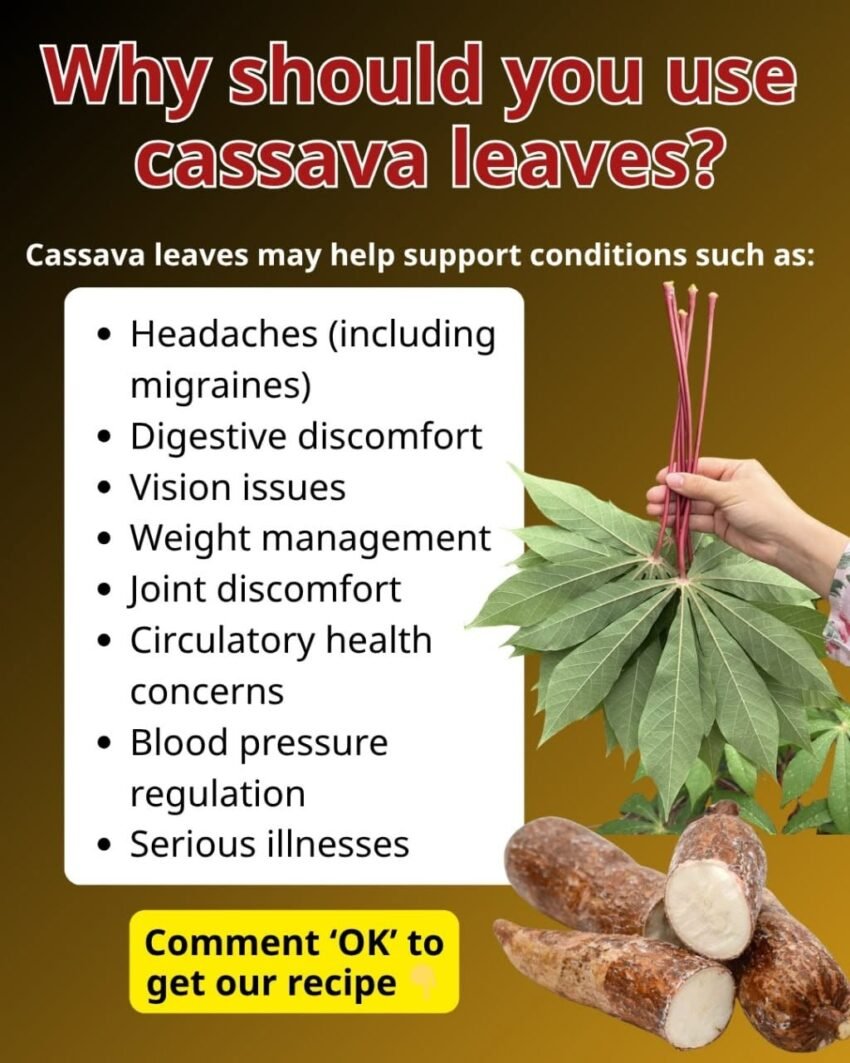
Cassava leaves are one of those ingredients that are wildly underrated outside parts of Africa, Southeast Asia, and South America—yet they’re deeply flavorful, nutrient-rich, and central to many traditional dishes. If you’ve only ever heard of cassava for its starchy root, the leaves are a whole different story: earthy, slightly nutty, and packed with character.
But here’s the key thing upfront: cassava leaves must always be properly prepared before eating. Raw or undercooked leaves contain natural compounds that can be toxic, so traditional cooking methods are not just cultural—they’re essential for safety.
Let’s walk through how people actually use them, step by step, blog-style.
What cassava leaves are like
Cassava leaves come from the cassava plant (also known as manioc or yuca). While the root is used for flour and tapioca, the leaves are treated like a leafy green vegetable in many cuisines.
When cooked properly, they become:
- Deep green and tender
- Slightly earthy, similar to spinach but stronger
- Rich and hearty in texture
- Able to absorb spices and coconut milk beautifully
Think of them as a “bold greens” ingredient rather than a mild salad leaf.
The golden rule: preparation first
Before cassava leaves ever hit a pan, they usually go through a long preparation process:
- Pounding or blending
Traditionally, fresh leaves are pounded in a mortar or blended into a thick paste. - Long boiling
They are then boiled for an extended time to reduce natural toxins and soften the fibers. - Discarding bitterness
The water is often changed during cooking in some traditions.
This step is non-negotiable. Proper cooking transforms cassava leaves from inedible to delicious.
The most popular way to cook cassava leaves
Across many cultures, the most iconic preparation is a slow-cooked stew.
Cassava leaf stew (West African style inspiration)
Once the leaves are pre-cooked, they are usually simmered with:
- Palm oil or vegetable oil
- Onions and garlic
- Chili or pepper for heat
- Ground peanuts or peanut butter (in some regions)
- Meat or fish (optional but common)
- Stock or coconut milk for richness
The result is a thick, savory stew that clings to rice, fufu, or boiled yams.
The texture is important here—it’s not a soup, but not dry either. Think “creamy, leafy sauce.”
Coconut cassava leaves (Southeast Asian style)
In parts of Southeast Asia, cassava leaves are often cooked with coconut milk.
Typical ingredients include:
- Coconut milk
- Lemongrass
- Garlic and shallots
- Chili
- Shrimp or dried fish
This version is milder, creamier, and slightly sweet, balancing the earthy bitterness of the leaves beautifully.
Simple home-style stir version (after pre-boiling)
If you already have pre-boiled cassava leaves, you can quickly turn them into a side dish:
- Heat oil in a pan
- Sauté garlic, onion, and chili
- Add the leaves
- Season with salt and a squeeze of lemon or lime
- Stir until well combined and slightly dry
This makes a strong, spinach-like side dish that pairs well with rice or flatbreads.
What cassava leaves go well with
Cassava leaves are not usually eaten alone. They shine when paired with:
- Rice (especially plain steamed rice)
- Fufu or ugali-style staples
- Grilled or stewed meat
- Fish dishes
- Coconut-based curries
They’re designed to be part of a bigger plate, not the main standalone item.
Nutrition benefits (why people cook them regularly)
When properly prepared, cassava leaves are valued for:
- High protein content for a leafy vegetable
- Iron and calcium
- Vitamin A and C
- Fiber for digestion
This is one reason they’re so important in regions where meat may be limited—they help round out nutrition naturally.
Final thought
Cassava leaves are a great example of how traditional cooking methods turn a potentially toxic plant into a nourishing, flavorful staple. The key is respect for the process: long cooking, proper preparation, and pairing them with bold ingredients.
If you ever try them, don’t treat them like a quick salad green. Treat them like a slow-cooked ingredient that rewards patience.
If you want, I can also share a step-by-step recipe for a specific version (West African, Indonesian, or a simplified home version).