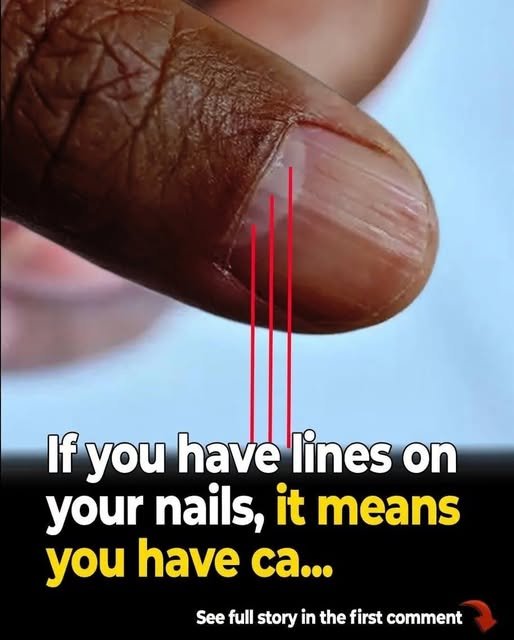
Nails grow slowly and continuously, so they can sometimes act like a “record” of what has happened in your body over the past several months. However, nail changes are not a reliable way to diagnose a medical condition on their own. They should always be interpreted along with your symptoms, medical history, and, if needed, laboratory tests.
1. Vertical Ridges (Longitudinal Ridges)
Appearance: Raised lines running from the cuticle to the tip of the nail.
Common causes:
- Normal aging (most common)
- Genetics
- Dry nails
- Minor trauma
Less common causes:
- Iron deficiency
- Vitamin B12 deficiency
- Inflammatory conditions such as eczema or rheumatoid arthritis
When to seek medical advice:
- The ridges appear suddenly.
- They are accompanied by nail splitting, discoloration, or pain.
- Only one nail is affected with significant distortion.
2. Horizontal Ridges (Beau’s Lines)
Appearance: Deep grooves running across the width of the nail.
These occur when nail growth temporarily stops or slows.
Possible causes:
- High fever
- Severe infections
- COVID-19 or influenza
- Major surgery
- Physical trauma
- Uncontrolled diabetes
- Zinc deficiency (in some cases)
- Certain chemotherapy drugs
Because fingernails grow about 3 mm (0.1 inch) per month, the distance of the groove from the cuticle can sometimes estimate when the event occurred.
3. White Spots (Leukonychia)
Appearance: Small white dots or streaks.
Most common cause:
- Minor injury to the nail matrix (often unnoticed)
Less common causes:
- Fungal infection
- Allergic reactions to nail products
- Rare inherited conditions
Contrary to a common myth, white spots are usually not caused by calcium deficiency.
4. White Horizontal Lines
These differ from white spots.
They may be associated with:
- Kidney disease
- Liver disease
- Low blood protein
- Certain medications
- Heavy metal poisoning (rare)
Persistent white lines affecting multiple nails should be medically evaluated.
5. Spoon Nails (Koilonychia)
Appearance: Thin nails that curve upward like a spoon.
Possible causes:
- Iron deficiency anemia
- Heart disease
- Thyroid disease
- Autoimmune disorders
- Long-term exposure to petroleum-based chemicals
Iron deficiency is the most common cause.
6. Clubbing
Appearance:
- Fingertips enlarge.
- Nails become rounded and curve downward.
- The angle between the nail and skin increases.
Possible causes:
- Chronic lung disease
- Lung cancer
- Congenital heart disease
- Inflammatory bowel disease
- Liver disease
Clubbing should always be assessed by a healthcare professional because it can be associated with serious underlying conditions.
7. Pitting
Appearance: Tiny dents in the nail surface.
Common causes:
- Psoriasis
- Eczema
- Alopecia areata
- Reactive arthritis
People with nail psoriasis may also notice thickening, discoloration, or the nail lifting from the nail bed.
8. Yellow Nails
Common causes:
- Fungal infection
- Aging
- Nail polish staining
- Smoking
Rare causes:
- Yellow Nail Syndrome, a condition associated with swelling (lymphedema) and chronic respiratory disease.
9. Blue Nails
Blue or bluish-gray nails may indicate reduced oxygen in the blood.
Possible causes include:
- Heart disease
- Lung disease
- Poor circulation
- Exposure to cold temperatures
- Certain medications
Sudden blue discoloration, especially with shortness of breath or chest pain, requires urgent medical attention.
10. Pale Nails
Very pale nails may be associated with:
- Iron deficiency anemia
- Chronic kidney disease
- Heart failure
- Malnutrition
11. Dark Lines (Longitudinal Melanonychia)
Appearance: Brown or black line running from the cuticle to the tip.
Possible causes:
- Normal pigmentation (especially in people with darker skin)
- Injury
- Certain medications
- Rarely, melanoma (a type of skin cancer)
A new dark streak—particularly if it widens, has irregular borders, or extends onto the surrounding skin—should be evaluated promptly.
12. Brittle Nails
Common causes:
- Frequent hand washing
- Aging
- Dry climate
- Repeated exposure to detergents
Possible medical causes:
- Iron deficiency
- Thyroid disorders
- Psoriasis
- Fungal infection
13. Thick Nails
Possible causes:
- Fungal infection (most common)
- Aging
- Psoriasis
- Repeated trauma
- Peripheral vascular disease
14. Nail Separation (Onycholysis)
The nail lifts away from the nail bed.
Possible causes:
- Trauma
- Fungal infection
- Psoriasis
- Hyperthyroidism
- Allergic reactions to nail products
15. Red or Brown Lines Under the Nail (Splinter Hemorrhages)
These look like tiny splinters beneath the nail.
Possible causes:
- Minor trauma (most common)
- Psoriasis
- Infections affecting the heart valves (rare)
- Autoimmune diseases
When should you see a healthcare professional?
Arrange a medical evaluation if you notice:
- A new black or brown streak in a nail without a known injury.
- Clubbing of the fingers.
- Sudden changes affecting many nails.
- Nails becoming painful, swollen, or bleeding.
- Nails separating from the nail bed without an obvious cause.
- Persistent thickening or discoloration that doesn’t improve.
- Nail changes accompanied by symptoms such as fatigue, unexplained weight loss, persistent fever, shortness of breath, or swelling.
Can diet affect your nails?
Yes. Nail health can be influenced by nutrition, although deficiencies are only one possible cause of nail changes. Nutrients that support healthy nail growth include:
- Protein: Nails are made primarily of keratin, a protein.
- Iron: Low levels can contribute to spoon-shaped or brittle nails.
- Vitamin B12: Deficiency may affect nail pigmentation or shape.
- Zinc: Important for normal nail growth.
- Biotin (Vitamin B7): May help some people with brittle nails, though evidence is mixed.
- Vitamin C: Supports collagen formation around the nail.
- Omega-3 fatty acids: May help reduce nail dryness in some individuals.
Key point
Most nail changes are not signs of serious disease and often result from aging, minor injuries, or environmental factors. However, certain changes—especially clubbing, new dark streaks, or sudden changes affecting several nails—can sometimes signal underlying health conditions and deserve medical evaluation. If you notice a persistent or concerning nail change, a healthcare professional can determine whether further examination or testing is needed.