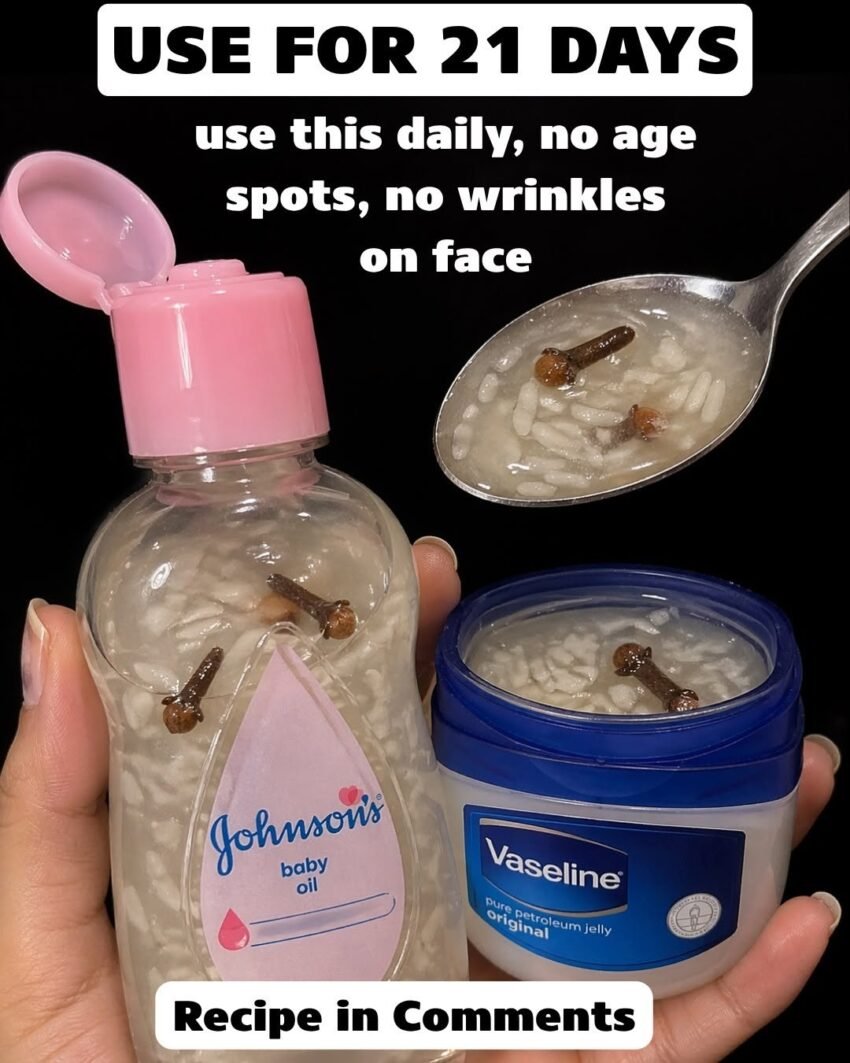
Social media is filled with homemade skincare recipes claiming to erase wrinkles, boost collagen, and give you glowing, youthful skin. One of the latest trends is a DIY cream made with cloves, baby oil, and rice—often called a “collagen cream.”
But can these kitchen ingredients really increase collagen production? Let’s take a closer look at the facts.
Why Are These Ingredients So Popular?
Each ingredient has properties that may benefit the skin in different ways.
Cloves
Cloves contain eugenol, a natural compound with antioxidant and antimicrobial properties. Antioxidants help protect the skin from damage caused by free radicals, which contribute to premature aging. However, cloves can also be irritating, especially for sensitive skin, so they should be used with caution and never applied as undiluted essential oil.
Baby Oil
Baby oil is primarily mineral oil, which acts as an occlusive moisturizer. Instead of adding moisture to the skin, it forms a protective barrier that helps reduce water loss, leaving the skin feeling softer and smoother. It does not stimulate collagen production or reverse wrinkles.
Rice
Rice and rice water contain starches, amino acids, and antioxidants that may help improve the skin’s appearance and support hydration. Some laboratory research suggests rice-derived compounds may support skin barrier function, but there is no strong clinical evidence that rice can significantly increase collagen production or erase wrinkles.
Does This DIY Cream Really Boost Collagen?
The short answer is no—not in the way many social media posts claim.
Your skin’s collagen is produced by specialized cells within the deeper layers of the skin. While antioxidants and moisturizers can help keep the skin healthy and reduce the appearance of fine lines caused by dryness, there is no scientific evidence that a homemade mixture of cloves, baby oil, and rice can dramatically increase collagen levels or reverse skin aging.
What Benefits Can You Expect?
If the ingredients suit your skin, this type of DIY cream may:
- Help lock in moisture.
- Leave the skin feeling softer.
- Give a temporary healthy glow.
- Protect the skin from dryness.
- Provide antioxidant support from cloves.
These effects are mainly cosmetic and temporary rather than true anti-aging changes.
Safety Tips
Before trying any homemade skincare recipe:
- Perform a patch test on a small area of skin for 24 hours.
- Avoid using clove essential oil directly on the face, as it can cause irritation or burns.
- Don’t use the mixture on broken or inflamed skin.
- If redness, itching, or burning occurs, wash it off immediately and discontinue use.
Better Ways to Support Healthy Collagen
If your goal is firmer, healthier-looking skin, dermatologists generally recommend:
- Wearing sunscreen every day.
- Using a moisturizer suited to your skin type.
- Applying retinoids or retinol, which have strong evidence for stimulating collagen over time.
- Using vitamin C serum in the morning.
- Eating a balanced diet rich in protein, fruits, and vegetables.
- Avoiding smoking and excessive sun exposure.
Final Thoughts
Clove, baby oil, and rice can make a moisturizing DIY skincare treatment that may leave your skin feeling soft and looking more radiant. However, it’s important to have realistic expectations. Despite being widely promoted as a “collagen cream,” there is no reliable scientific evidence that this homemade mixture can increase collagen production or eliminate wrinkles.
Think of it as a simple moisturizing treatment rather than a substitute for evidence-based skincare. If you’re looking for long-term improvements in skin firmness and texture, proven ingredients like sunscreen, retinoids, and vitamin C remain the most effective options.