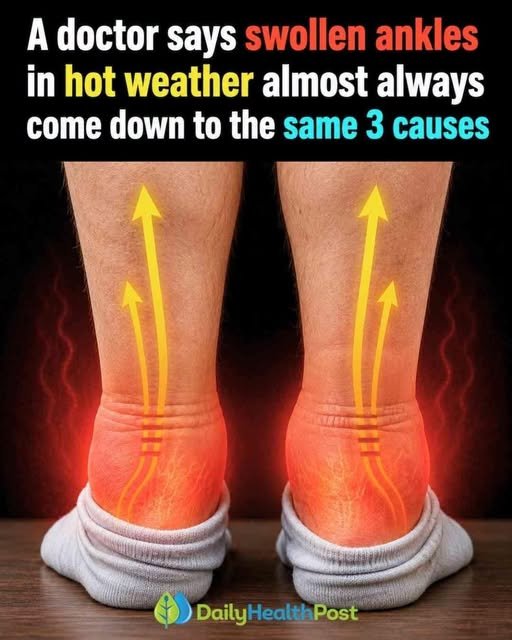
Have you noticed your ankles looking puffier than usual during the warmer months? It can be unsettling, and many people immediately worry about serious problems involving the heart or kidneys. While those conditions can certainly cause swelling and should never be ignored, they’re not the only explanation.
For many otherwise healthy adults, especially after long hours of sitting at a desk, driving, or relaxing on the couch, swollen ankles can simply be the result of fluid pooling in the lower legs. Hot weather can make this even more noticeable because heat causes blood vessels to widen, allowing more fluid to collect in surrounding tissues.
Why Sitting for Too Long Can Make Ankles Swell
Your calf muscles are often called the body’s “second heart.” Every time you walk or flex your feet, these muscles squeeze the veins in your legs, helping push blood back toward your heart against gravity.
When you spend hours sitting without moving much, that natural pumping action slows down. Blood and fluid can temporarily collect in your lower legs and ankles, leading to mild swelling that often improves after movement or elevating your legs.
Simple Ways to Encourage Better Circulation
If your swelling is mild and related to prolonged sitting, these habits may help:
- Stand up and walk for a few minutes every hour.
- Flex and point your feet several times while sitting.
- Rotate your ankles in slow circles.
- Raise your legs on a pillow when resting.
- Stay well hydrated, especially during hot weather.
- Take short walks whenever possible.
- Wear properly fitted compression socks if your healthcare provider recommends them.
These simple movements activate the calf muscles, helping blood and fluid move more efficiently through the legs.
When Swollen Ankles Need Medical Attention
Although mild swelling after sitting is common, persistent or severe swelling shouldn’t be ignored. Contact a healthcare professional if you experience:
- Swelling that affects only one leg.
- Pain, redness, warmth, or tenderness in the calf.
- Swelling that doesn’t improve with rest.
- Shortness of breath or chest pain.
- Sudden or rapidly worsening swelling.
- Swelling accompanied by unexplained weight gain or other concerning symptoms.
These symptoms could indicate a more serious condition requiring prompt evaluation.
The Bottom Line
During the summer, mild ankle swelling is often linked to heat, gravity, and long periods of inactivity rather than a serious illness. Regular movement, staying hydrated, and giving your calf muscles opportunities to work can often make a noticeable difference.
However, if the swelling is persistent, severe, or accompanied by other symptoms, it’s important to seek medical advice rather than assume it’s harmless.